Tell us about the job
Takes about a minute. No obligation.
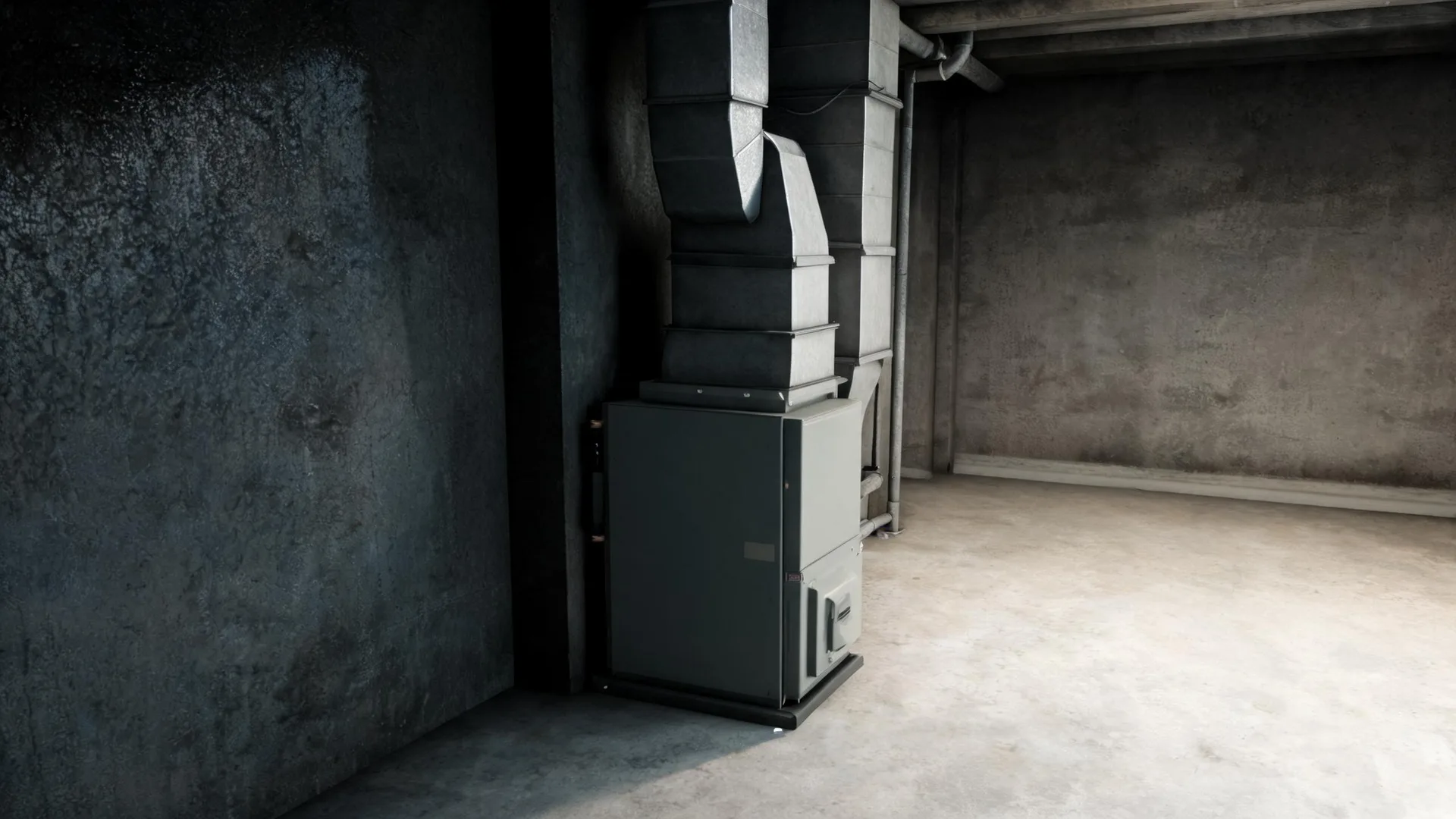
Sizing a furnace for this house is the first question a contractor has to settle before anything else on the quote is meaningful. Homes in Wicomico County, MD run heat about seven months a year, from October through April. A burner and heat exchanger that cycle through that many months accumulate stress on the ignition system, the flame sensor, and the seams of the heat exchanger itself. A unit that is undersized, or that was installed with duct runs that restrict airflow, works harder on every call for heat and shows the damage sooner. The contractor's load calculation has to account for the house's actual envelope before any equipment gets specified.
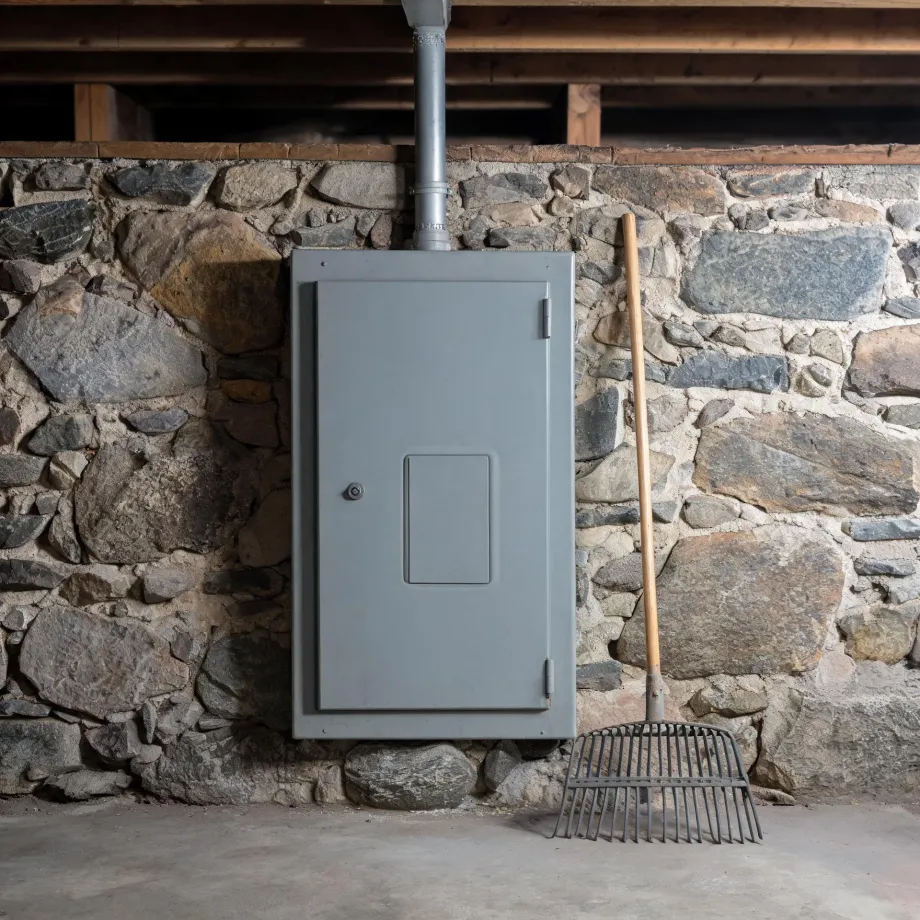
Existing ductwork is what a furnace installation in this county actually tests. Half the homes in Wicomico County, Maryland were built in 1984 or earlier (2020-2024 ACS 5-year). That means a large share of the houses here were ducted for equipment running on specs that a new furnace does not match, and a contractor has to establish whether those runs will carry the new system's air volume before the unit is ever ordered. If the ductwork cannot, the job scope shifts. The electrical service gets checked on the same visit, since panel capacity for the new draw has to be confirmed against what the house already has.
What Gets Installed With a New Furnace
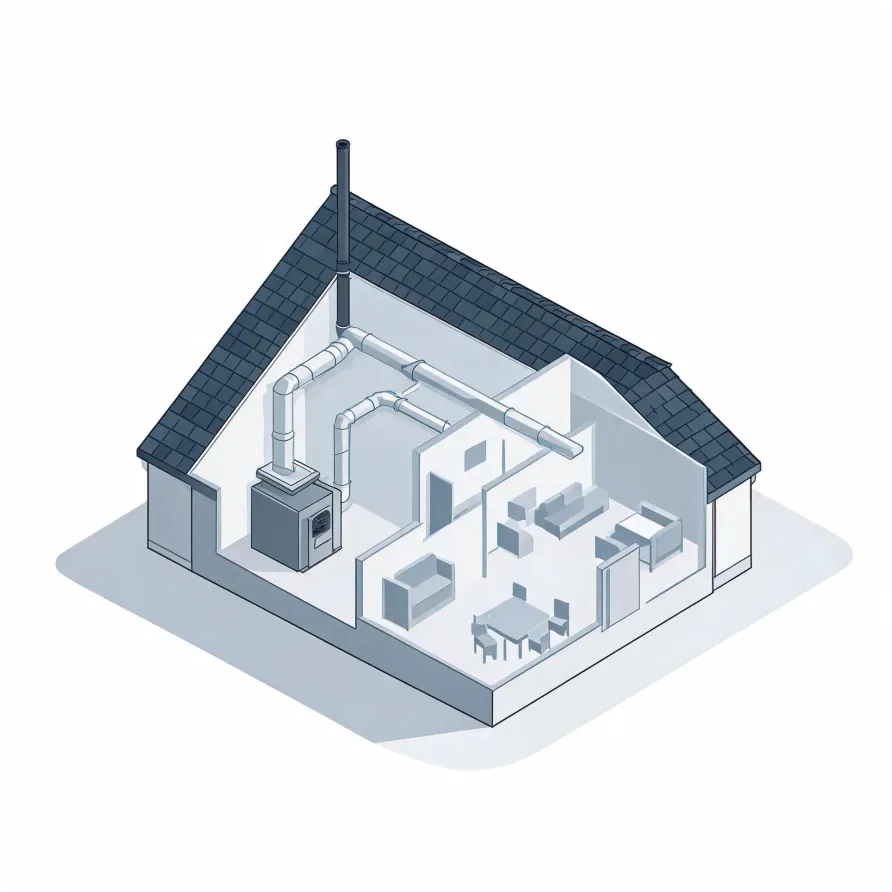
The furnace itself sits in a utility space, basement, or closet and is the unit a homeowner is most likely to recognize on sight. It houses the heat exchanger and the blower, which together warm air and push it through the house. The thermostat goes on an interior wall and is what the homeowner touches to set temperatures.
The flue pipe runs from the furnace to an exterior wall or through the roof, carrying combustion exhaust out of the house. A condensate drain line is added alongside the flue on high-efficiency units, routing moisture produced during the heating process to a floor drain. The contractor also fits a fresh-air intake where the system calls for one.
The drawing shows a typical layout, and a licensed contractor determines what the configuration looks like in your specific home.
Get matched in Wicomico CountyWicomico County, by the Numbers
92 severe weather events were recorded in Wicomico County, Maryland between 2015 and 2024.
NOAA National Centers for Environmental Information, Storm Events Database, bulk CSV export, events 2015-01-01 through 2024-12-31.Half the homes in Wicomico County, Maryland were built in 1984 or earlier (2020-2024 ACS 5-year).
U.S. Census Bureau, 2020-2024 American Community Survey 5-Year EstimatesWicomico County, Maryland holds 44,127 housing units (2020-2024 ACS 5-year).
U.S. Census Bureau, 2020-2024 American Community Survey 5-Year EstimatesOwners occupy 62.3% of the occupied homes in Wicomico County, Maryland (2020-2024 ACS 5-year).
U.S. Census Bureau, 2020-2024 American Community Survey 5-Year EstimatesFurnace Installation Rules for Wicomico County, Maryland5 sourced standards and codes
What the installation actually looks like
Non-weatherized gas furnaces manufactured on or after November 19, 2015 must reach 80.0 percent AFUE.
Non-weatherized oil-fired furnaces manufactured on or after November 19, 2015 must reach 83.0 percent AFUE.
Mobile home gas furnaces manufactured on or after November 19, 2015 must reach 80.0 percent AFUE.
Non-weatherized gas furnaces manufactured on or after December 18, 2028 must reach 95.0 percent AFUE, up from the 80.0 percent minimum that applies to units manufactured before that date.
Licensing Rules in Wicomico County, Maryland
Maryland requires a state licence before an individual provides, or assists in providing, heating, ventilation, air-conditioning or refrigeration services.
Severe Weather Events in Wicomico County
Wicomico County weather puts real demands on heating equipment, and those demands shape what a furnace needs to handle over its working life. What the county sees year to year is part of what makes sizing and installation a local decision.
92 severe weather events, 2015–2024. Source: NOAA National Centers for Environmental Information, Storm Events Database.