Tell us about the job
Takes about a minute. No obligation.
Sizing and installation quality are not abstract concerns for a furnace in Carroll County. Homes in Carroll County, MD run heat about seven months a year, from October through April. The burner and heat exchanger cycle through that entire stretch, and a system that was undersized at installation starts accumulating wear fast, with almost no off-season to mask the problem. A contractor quoting a replacement here has to run a load calculation before settling on equipment, because the local heating demand is what determines how hard the new system will work from its first winter forward.
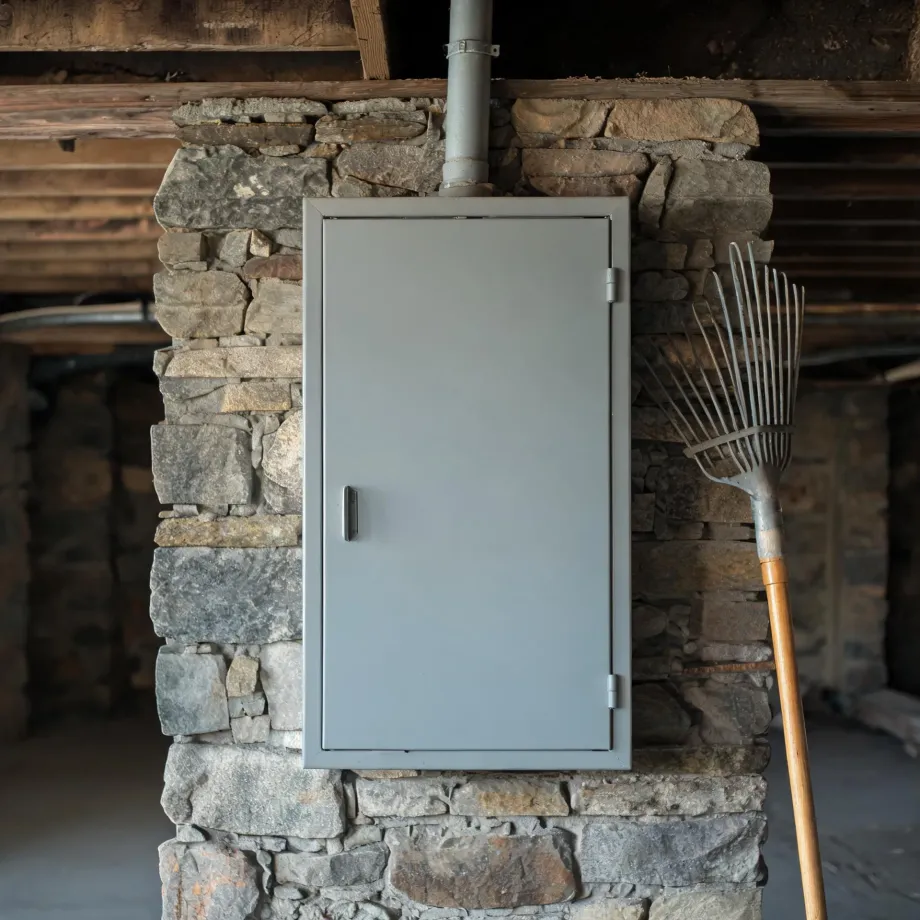
Existing ductwork is what a furnace installation in Carroll County turns on. Half the homes in Carroll County, Maryland were built in 1983 or earlier (2020-2024 ACS 5-year). That means a large share of the houses here were ducted for equipment long since discontinued, and a contractor sizing a new furnace has to assess whether those runs will carry it before anything else gets priced. A duct system that cannot move the air a new unit produces forces either a retrofit of the distribution or a different equipment selection. The electrical service gets the same look, since a panel that was adequate for what the house originally ran may not be for what goes in now.
What Gets Installed With a New Furnace
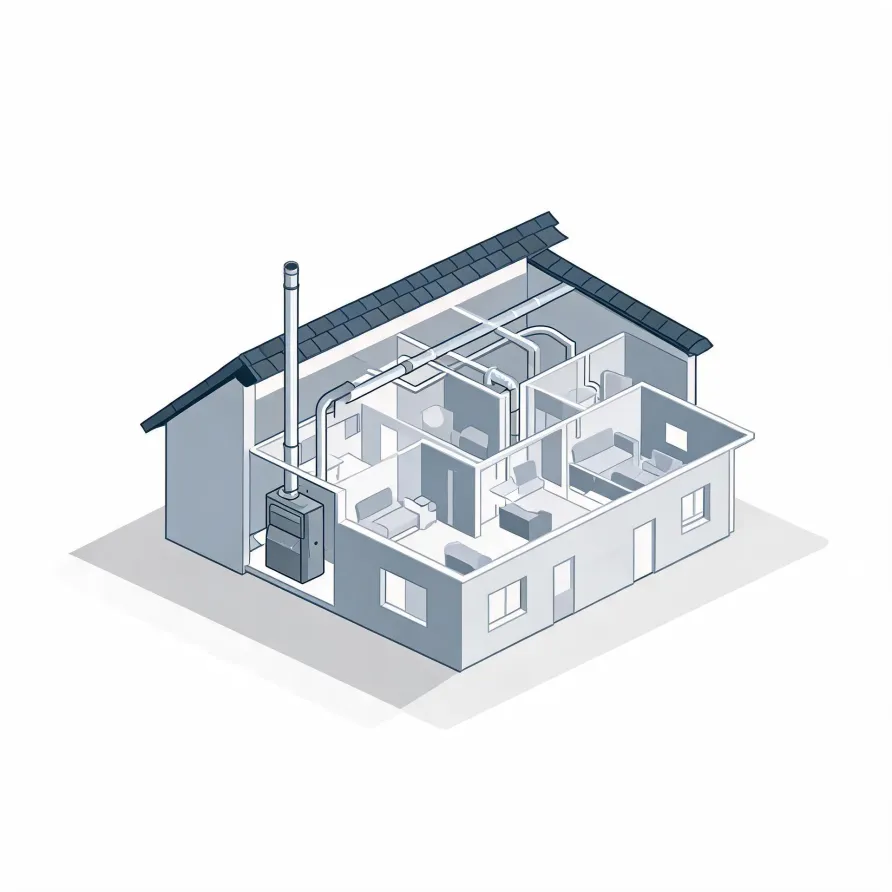
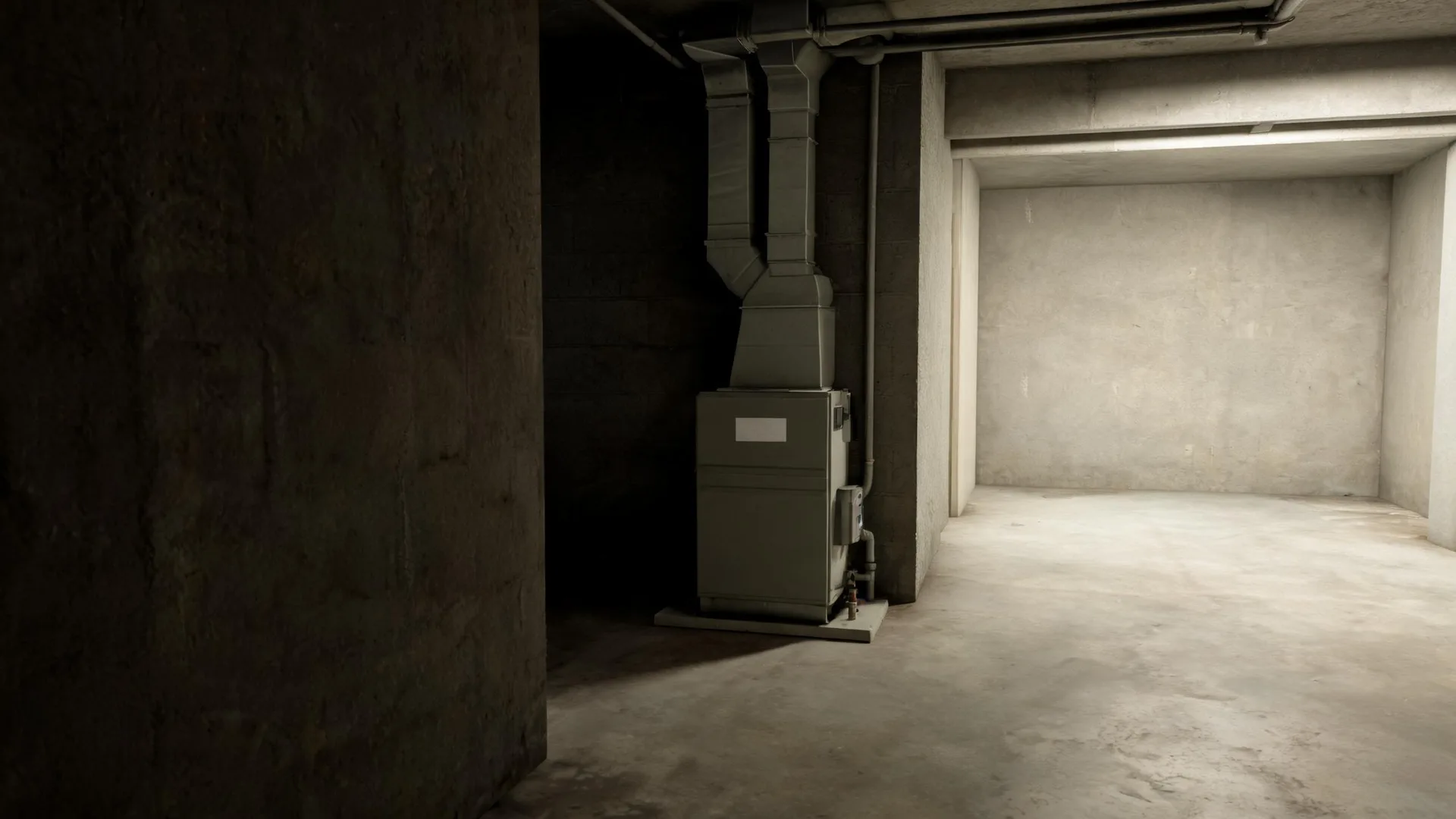
The furnace itself sits inside the house, most often in a basement, utility room, or closet. It is the unit that generates heat, pulling in air, heating it, and pushing it back out through the supply side of the duct system. The flue pipe runs from the furnace to an exterior wall or roof, carrying combustion exhaust out of the house.
The air handler, where it is a separate component, works alongside the furnace and typically occupies the same mechanical space. The thermostat mounts on an interior wall and is what the homeowner uses to call for heat. Refrigerant lines and a condensing coil are added when the installation includes cooling as well.
The drawing shows a general layout of these components, and a licensed contractor determines exactly what applies to this house and its configuration.
Get matched in Carroll CountyCarroll County, Maryland, by the numbers
215 severe weather events were recorded in Carroll County, Maryland between 2015 and 2024.
NOAA National Centers for Environmental Information, Storm Events Database, bulk CSV export, events 2015-01-01 through 2024-12-31.Half the homes in Carroll County, Maryland were built in 1983 or earlier (2020-2024 ACS 5-year).
U.S. Census Bureau, 2020-2024 American Community Survey 5-Year EstimatesCarroll County, Maryland holds 66,768 housing units (2020-2024 ACS 5-year).
U.S. Census Bureau, 2020-2024 American Community Survey 5-Year EstimatesOwners occupy 84.3% of the occupied homes in Carroll County, Maryland (2020-2024 ACS 5-year).
U.S. Census Bureau, 2020-2024 American Community Survey 5-Year EstimatesFurnace Installation Rules on the Books for Carroll County, Maryland5 codes, standards, and laws
What the installation looks like in Carroll County
Non-weatherized gas furnaces manufactured on or after November 19, 2015 must reach 80.0 percent AFUE.
Non-weatherized oil-fired furnaces manufactured on or after November 19, 2015 must reach 83.0 percent AFUE.
Mobile home gas furnaces manufactured on or after November 19, 2015 must reach 80.0 percent AFUE.
Non-weatherized gas furnaces manufactured on or after December 18, 2028 must reach 95.0 percent AFUE, up from the 80.0 percent minimum that applies to units manufactured before that date.
Licensing and Legal Requirements in Carroll County, Maryland
Maryland requires a state licence before an individual provides, or assists in providing, heating, ventilation, air-conditioning or refrigeration services.
Severe Weather Events in Carroll County
Extreme weather puts real stress on heating equipment, shortening service life and exposing weak points in systems that were sized or installed without local conditions in mind. Carroll County's weather record is part of what shapes the right installation decision here.
215 severe weather events, 2015–2024. Source: NOAA National Centers for Environmental Information, Storm Events Database.