



Profile view of a bearded man wearing a black baseball cap and a dark gray T-shirt against a plain light background.

Furnace on but house still cold in Maryland

Step 1 of 3: Equipment

A furnace that runs but never warms the house usually isn't heating the air enough, or the air isn't getting where it needs to go. Most Maryland homes heat with electric systems, and in a lot of them that means a heat pump that's stuck in a backup or defrost mode, pushing air that feels barely warm, or a furnace whose heating element or blower isn't pulling its weight. It can also be a thermostat set wrong, a clogged filter choking airflow, or ductwork losing heat before it reaches the rooms you live in. None of these fix themselves, and running the system longer just raises your bill without raising the temperature. Since heat here is electric for most houses, a system that's working harder than it should shows up fast on what you pay. Figuring out which of these it is takes someone who can check the equipment directly, not guesswork from the thermostat.

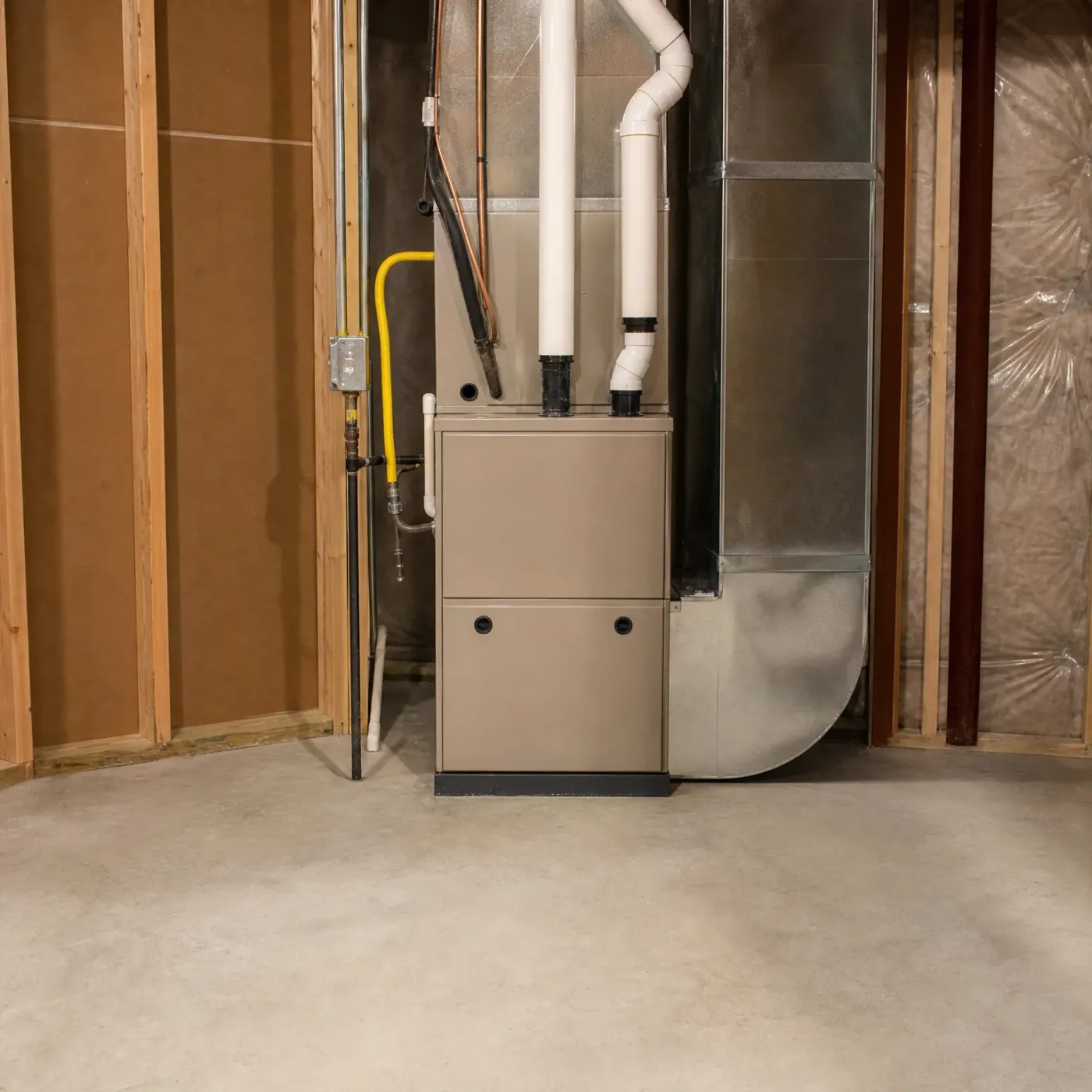
A beige high-efficiency furnace in an unfinished basement, with white PVC vent pipes, a yellow gas line, metal ductwork, and exposed wood framing on a concrete floor.
The furnace fires and runs its full cycle, pushing warm air out through the ducts at a steady rate.
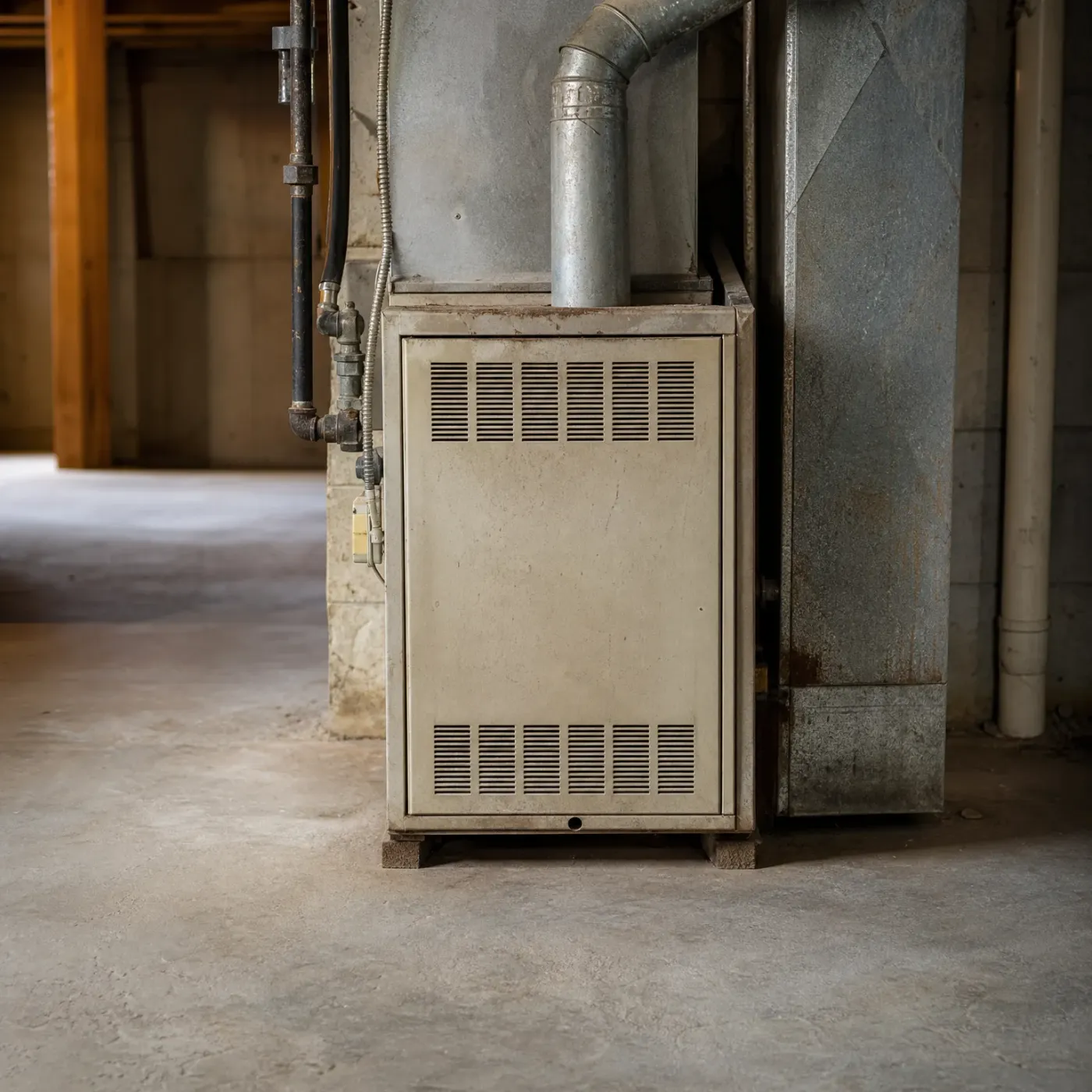
An older beige furnace with two louvered vent panels stands on a concrete basement floor, connected to galvanized ductwork and a metal flue pipe, with gas piping and flexible conduit on the wall behind.
Flames stay lit, the flue draws right, and the air coming out of the vents is actually warm.

Why Heat Pumps Run Cold

  • A heat pump switches to backup electric heat strips only when the outdoor coil can't pull enough heat from the air.
  • If the strips fail or the system won't shift into backup, the blower still runs but the air comes out barely warm.
  • A clogged filter restricts airflow, so the heat exchanger overheats and shuts the burner off before the room ever warms up.
  • Low refrigerant charge in a heat pump makes it run longer cycles that never reach the set temperature.
  • A thermostat set to the wrong mode can call for fan only, so air moves through the ducts with no heat behind it.
  • Defrost cycles on a heat pump pause heating for several minutes at a time, which feels like cold air even when the system is working right.

Most Maryland homes don't have a gas furnace doing the heating. They have a heat pump, and a heat pump moves heat instead of making it, pulling warmth out of the outdoor air even when that air is cold. When the outdoor coil can't pull enough heat to keep up, the system switches over to electric heat strips in the air handler to cover the difference. That switch is where a lot of these problems start. If the strips have burned out, or the control board that triggers backup heat has failed, the blower keeps running on schedule but there's nothing warming the air passing through it. You feel moving air that never gets past lukewarm.

A dirty filter causes a different problem. It chokes airflow across the heat exchanger or coil, the unit overheats, and a safety switch cuts the burner or compressor off early, before the space has had time to warm. Low refrigerant charge does something similar from another angle. The system keeps running, the cycles stretch longer than they should, and the house still never reaches the number on the thermostat. Thermostat settings matter too. A system switched to fan-only moves air through every vent in the house with no heat source running behind it, and it looks identical to a heating failure unless you check the mode. And some of what feels broken isn't. Every heat pump pauses to defrost the outdoor coil in cold weather, and for several minutes the vents blow cool air on purpose. That's normal. A tech checking strips, charge, and airflow can tell you which of these is actually happening in your house.

A man with grey hair and stubble in a dark sweater sits on a grey sofa indoors, looking off to the side, with a potted plant and a sunlit window behind him.
A man with gray hair, a beard and glasses, wearing a dark green sweater, sits on a gray sofa in a sunlit living room with a potted plant, table lamp and wooden sideboard behind him.
A middle-aged man with graying hair and a short beard sits on a blue sofa in a living room, looking toward a window, with a bookshelf, lamp and framed picture in the background.
A man with graying curly hair and a dark green sweater sits on a gray sofa in a sunlit living room, looking off to the side, with a framed picture, shelving, an armchair and a window with sheer curtains behind him.
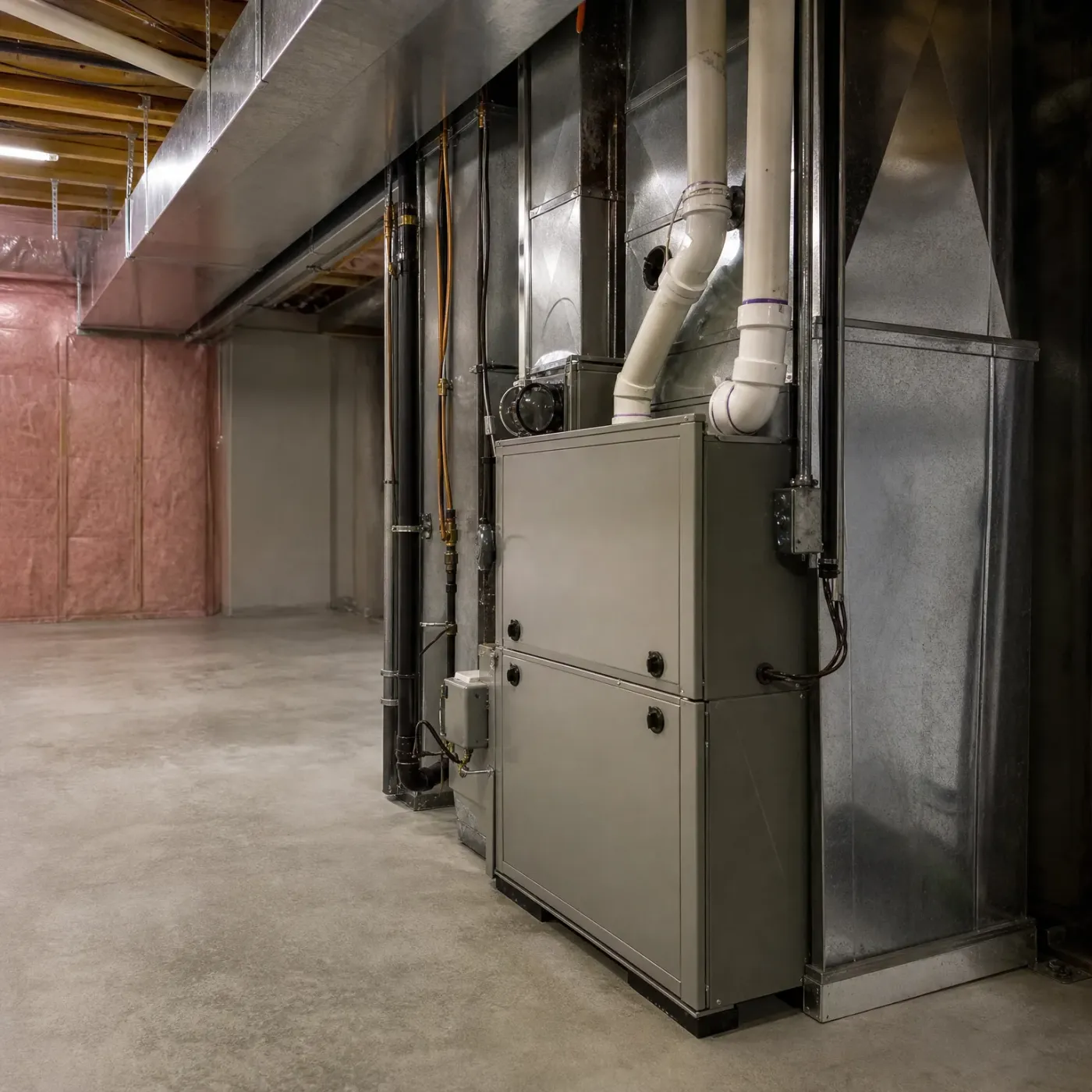
An unfinished basement with a concrete floor, pink insulation on one wall, exposed joists, galvanized sheet-metal ductwork, PVC vent pipes, and a tall gray furnace with attached gas and electrical lines.

Skip calling around

Your request goes to one pro, not a list of companies.

One form replaces the calls you'd make to find a furnace pro.

Find a licensed pro

No fee to send it, and nothing to sign.

Backup Heat or Normal Furnace Run

Heat pump running backup heat

  • Electric strips can warm the air even when a sensor or relay inside the air handler has already failed, so the blower runs but output stays weak.
  • A breaker just for the strips can trip on its own without tripping the main furnace breaker, leaving the blower running on room-temperature air.
  • The outdoor unit may be caked in ice or frost, which keeps the system locked in defrost and running on strips alone for long stretches.
  • A thermostat set wrong for a heat pump system can call for backup heat far more than it should, driving up the bill without fixing the cold.
  • Refrigerant leaking slowly over a season leaves the outdoor coil unable to pull in heat, so the house leans on backup strips that can't keep up alone.

Furnace heating normally

  • Flames or heating elements cycle on and off at the rate the thermostat calls for, and the air at the vents matches that call.
  • A dirty filter restricts airflow across the heat exchanger without stopping the heat itself, so rooms warm slower but still warm.
  • Ductwork that leaks or runs through an unheated space loses some of that heat before it reaches the room, even though the furnace did its job.
  • A thermostat placed near a drafty window or exterior wall can shut the system off early, reading the room as warmer than it is.
  • Closed or blocked vents in a few rooms starve them of air while the rest of the house heats on schedule.
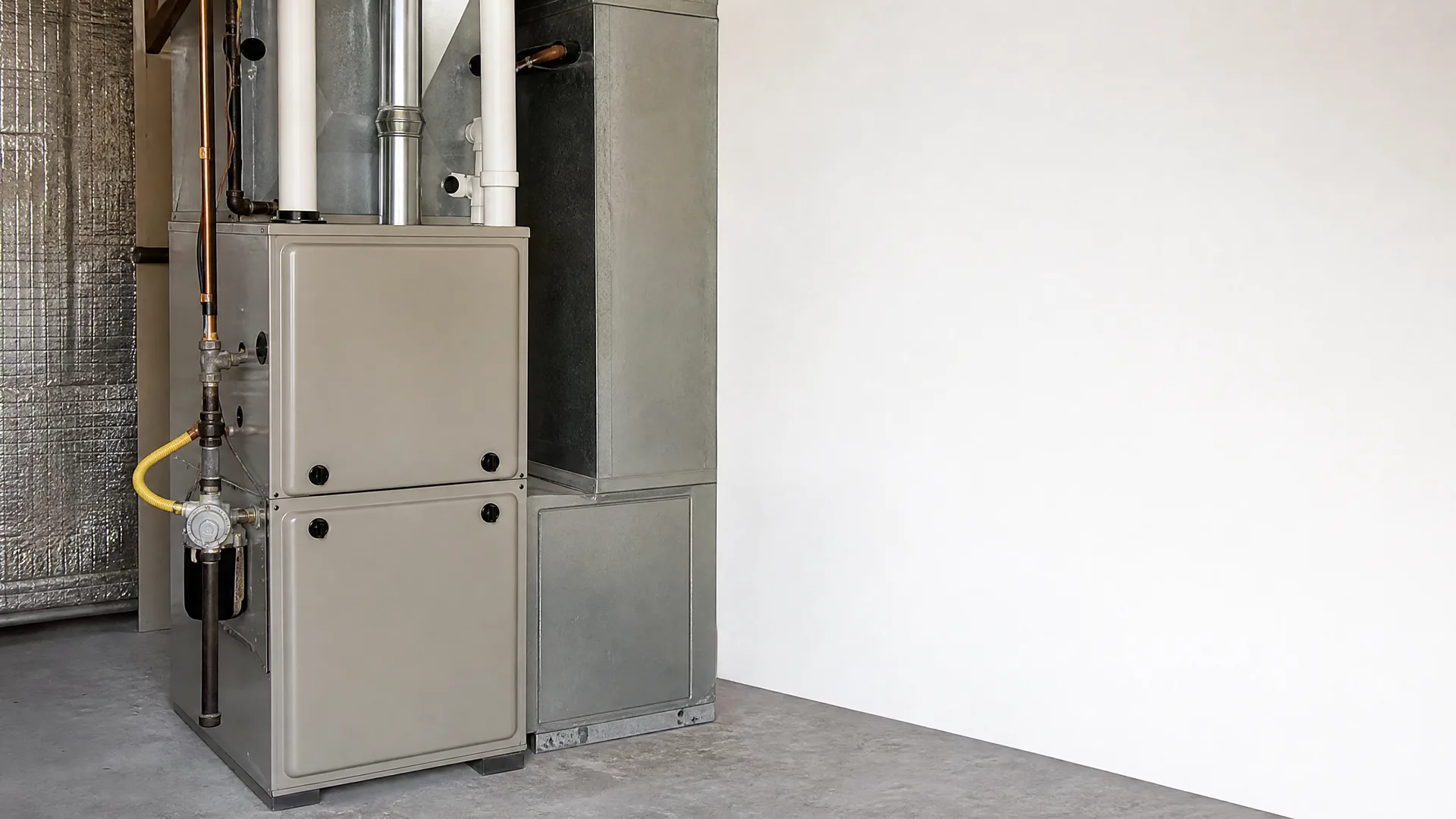
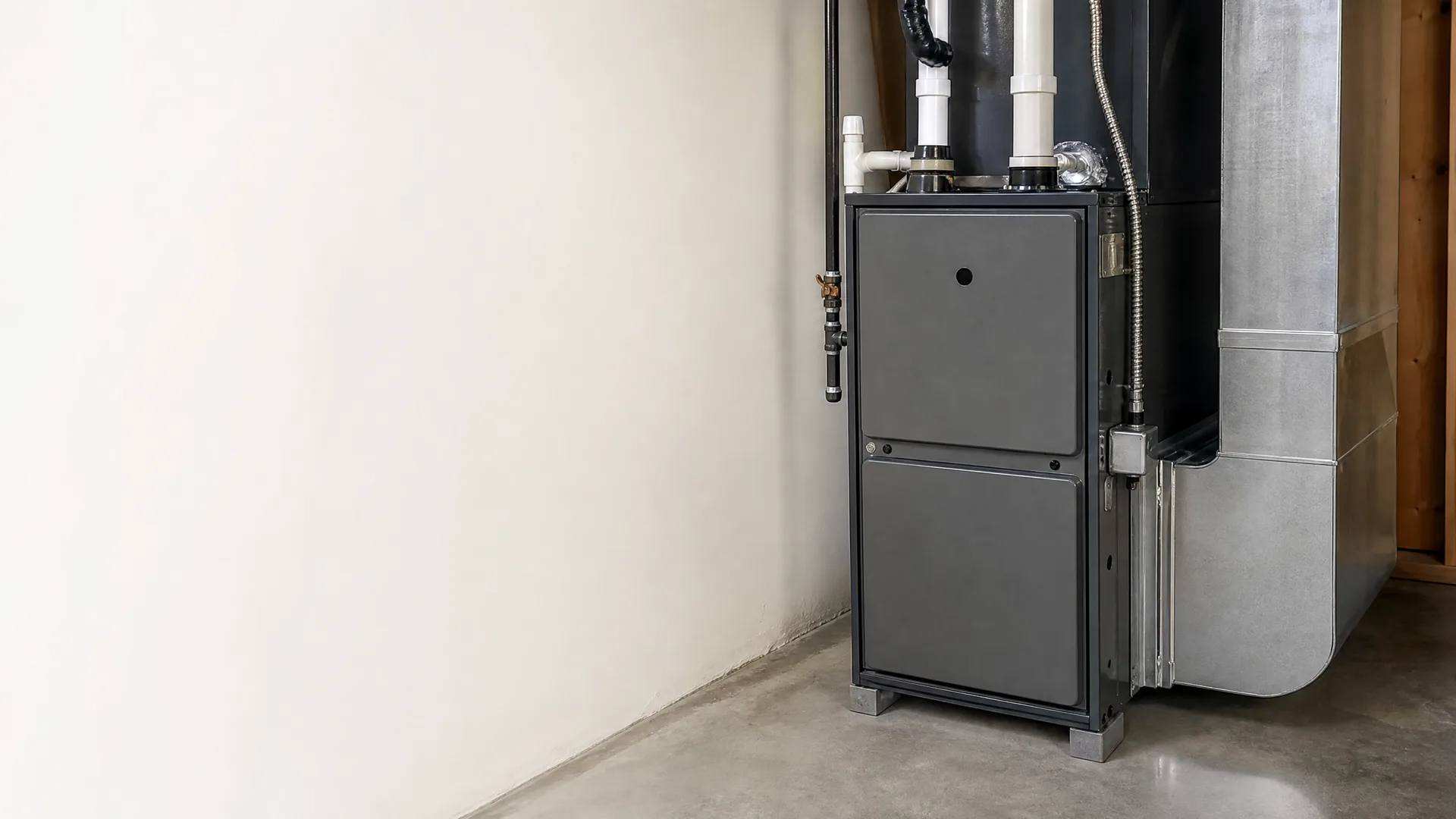
A beige residential gas furnace with white PVC vent pipes, copper and yellow gas lines, and adjacent sheet-metal ductwork stands on a concrete floor beside a plain white wall.

Why the blower matters as much as the heat

A heat pump's air handler moves a set volume of air across the coil or the strips. If the filter is clogged or a return is blocked, less air passes through, so what comes out the vents carries less heat even though the equipment is working. Thermostats read the room, not the duct, so the system keeps running past the point where it's actually keeping up, because nothing tells it otherwise.

A gray high-efficiency furnace with white PVC vent pipes and metal ductwork stands on a concrete floor beside a plain off-white wall in a basement.

Checking the air handler's heat strips

Electric heat strips draw a lot of current, enough that most air handlers run them on their own breaker separate from the blower. That breaker can trip without tripping the main panel, and there's nothing on the thermostat that shows it happened. The blower keeps moving air through the ducts, so the system looks like it's running, but without the strips, that air is only as warm as whatever the outdoor coil managed to pull from the cold air outside.

Winter nights average 27°F statewide

At 27°F, a heat pump outside is working hard to pull any warmth from that air. If it can't keep up and the backup strips don't kick in right, you'll feel it fast on a night that cold.

NOAA nClimDiv 1991-2020 county normals weighted by homes

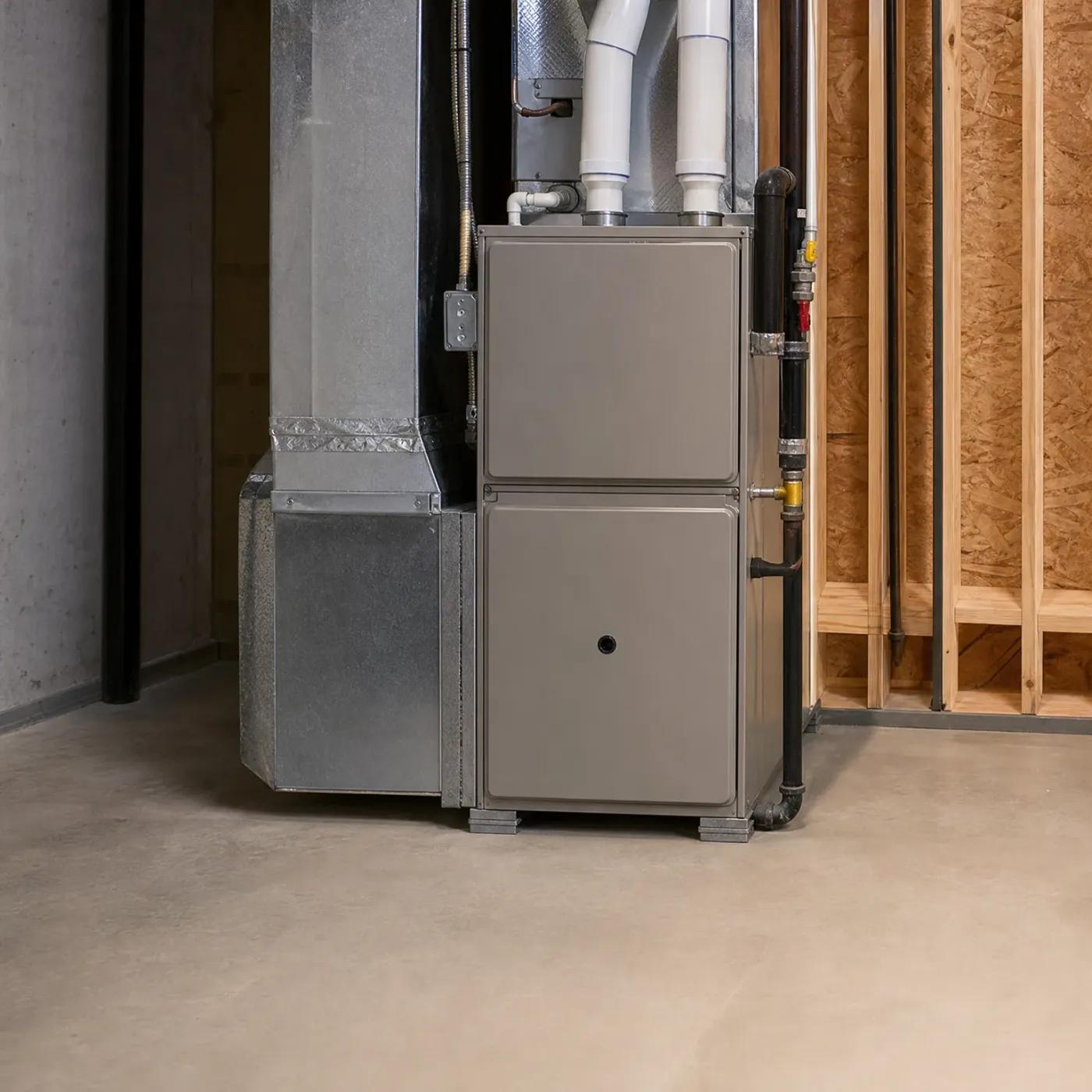
A gray high-efficiency furnace in a basement, connected to sheet-metal ductwork on the left and white PVC vent pipes above, with black gas and drain piping and an exposed wood-stud wall with OSB sheathing on the right.

Running the way it should

The burners light, the blower pushes air through the ducts, and the exhaust pipes vent it outside without issue. A furnace set up like this holds a steady temperature through a Maryland winter without the heat strips or backup system ever having to step in.
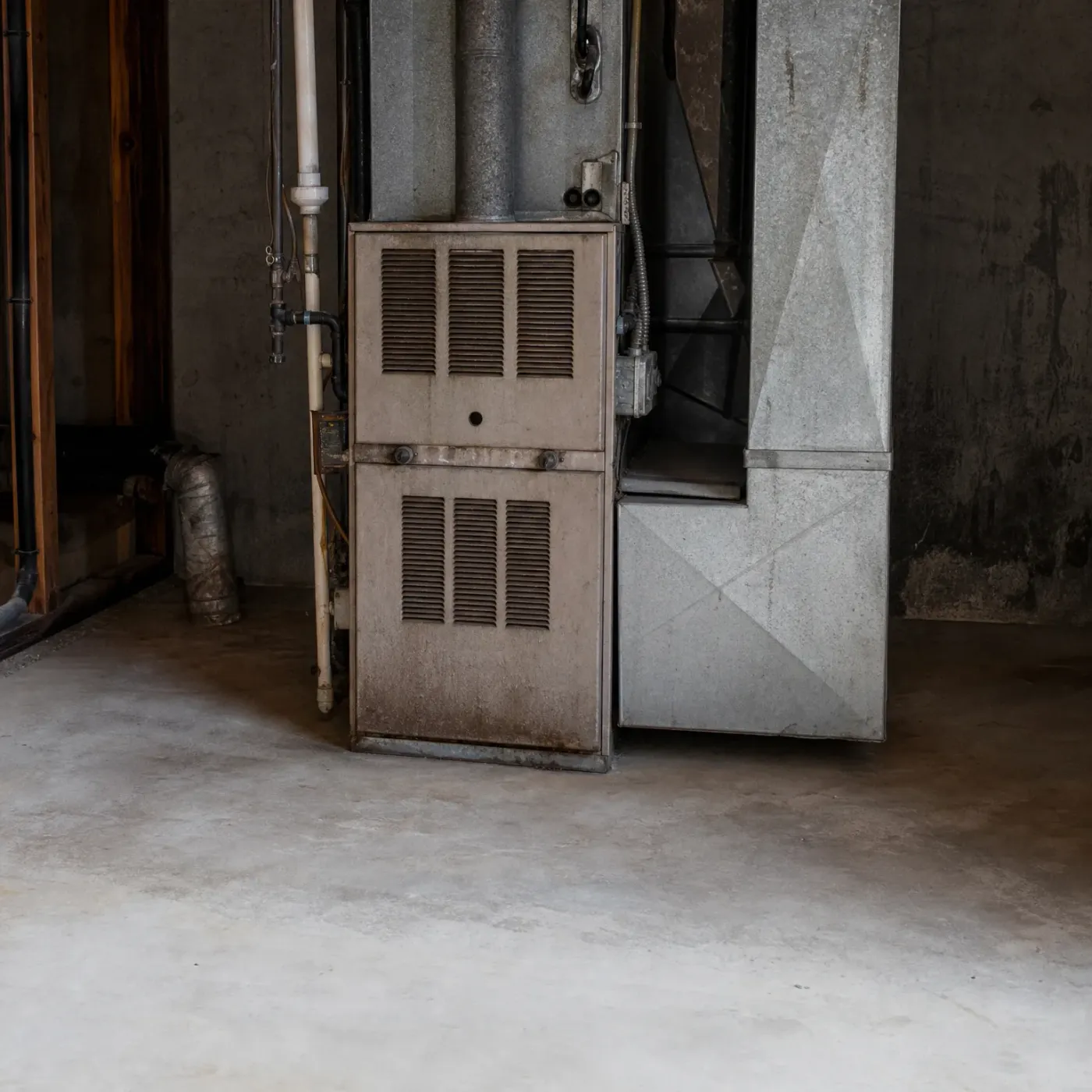
An older gas furnace with two louvered front panels stands on a concrete basement floor beside galvanized sheet-metal ductwork, pipes, and a weathered concrete wall.

Age and moisture catching up with it

Rust on the panels and dampness on the walls around it point to a furnace that's been fighting its environment for years. Corrosion on the burners or the heat exchanger can keep it from heating the air fully even while it keeps running.

A closed laptop and a cream mug of coffee on a coaster sit on a dark wooden table, with a potted plant at left and a kitchen counter, tiled backsplash and shelf of ceramics in the background.

A furnace that runs and a house that's still cold means something specific failed

Warm air isn't reaching the rooms, or the air being made isn't warm enough. A stuck defrost cycle, a backup heat strip that never kicked in, a blower moving too little air across the coil. Each has a different cause and a different fix, and a licensed technician can tell which one you've got by checking the system in front of them, not by guessing over the phone.

Finding that technician is its own chore. Searching for someone who works on your type of system, calling a few companies, explaining the same cold rooms and the same furnace that keeps running, then sitting with quotes that don't line up because each contractor saw something different. One licensed contractor local to Maryland, matched to your situation, means you explain it once to someone who services this equipment all winter and knows what tends to go wrong in it.

A living room corner with a light beige sofa holding a textured taupe cushion, a large ceramic vase of olive branches by a window, a framed neutral artwork on the wall, and a dark bowl with stacked books in the foreground.
Kitchen corner with cream upper cabinets, oak lower cabinets, white marble-look countertop, beige tile backsplash, a ceramic vase of greenery, a wooden cutting board and bowl, and a black-framed window at right.
Interior corner of a room with a white-framed window and wide sill, beige walls with panel molding, a wooden cabinet holding a ceramic vase with a green leafy plant, and blurred shrubs and trees outside.
A wood-framed armchair with beige cushions and a woven lumbar pillow sits in a corner beside a large window overlooking green trees, with a tall ceramic vase holding leafy branches on the left and plaster walls and wood flooring.
Interior corner with a white-framed window above a sill, beige walls with baseboard molding, a greige shaker-style cabinet with brass knobs and a potted plant on top, light wood flooring and a woven jute rug.
A dark-framed six-pane window with white trim and sill set in gray horizontal lap siding, with hydrangea shrubs below and a white column and shingled roof section at left.

Describe it once

The pro who reaches out is licensed in Maryland.

Find a local pro

Sending the form costs nothing.