



Chesapeake Furnace
Profile view of a bearded man wearing a dark baseball cap and a dark gray T-shirt against a plain off-white background.

Signs of a cracked heat exchanger in Maryland

Step 1 of 3: Equipment

What are the signs of a cracked heat exchanger in a furnace?

A furnace with a cracked heat exchanger can leak carbon monoxide into the house, which is why this question comes up fast once someone suspects it. Most Maryland homes heat with electricity, but if yours runs on gas or oil, knowing what to watch for matters, especially with the furnace running hard through a Maryland winter.

A smell like formaldehyde, soot around the furnace, or a flame that flickers instead of burning steady

A cracked heat exchanger lets exhaust gas mix with the air your furnace is supposed to be heating. That shows up as a strange smell, a yellow flame instead of blue, black soot near the burner, or a carbon monoxide detector going off. Some people notice headaches or feeling sick only when the furnace is running, then fine once it shuts off or they leave the house. None of these signs are small. A crack in the exchanger lets combustion gas into the air moving through your ducts, and that gas includes carbon monoxide. If you notice any of this, the furnace needs to be shut off and checked before it runs again, not watched for a while to see if it gets worse.

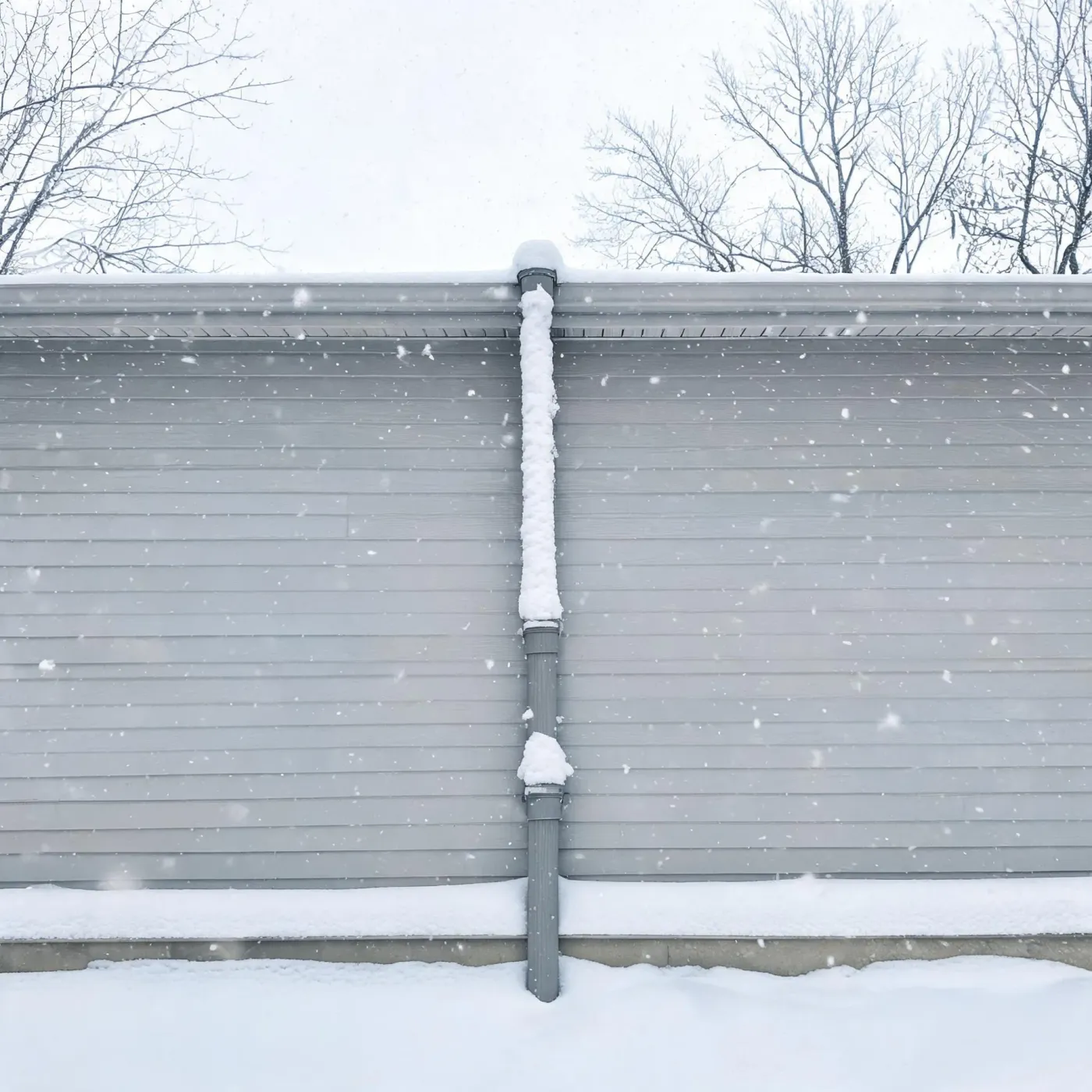
Gray horizontal lap siding on a house exterior with a snow-encrusted downspout running from the gutter to the ground, bare trees behind the roofline, and snow falling.

On a cold night here, statewide lows average 27°F, according to NOAA. On a furnace with a cracked heat exchanger, that kind of cold means long, steady burner cycles to hold the house at temperature, and a longer cycle gives cracked metal more time to leak exhaust into the air moving through your ducts. You might notice the smell of exhaust near a supply vent, or a furnace that runs a long stretch before it finally clicks off. Furnaces with this kind of damage are more dangerous on the coldest nights of the year, exactly when you're relying on the furnace the most.

NOAA nClimDiv 1991-2020 county normals weighted by homes

A woman in a cream sweater with her hair in a bun laughs while seated at a stone counter holding a glass of red wine, in a dimly lit interior with a sofa, houseplants and a large window at night.
A woman with long dark hair in a cream knit sweater laughs while looking off to the side, seated in front of a dimly lit kitchen with an island, stools, open shelving and a potted plant, with a glass of red wine in the foreground.
A smiling woman with long dark wavy hair in a light knit sweater sits at a marble counter with a glass of red wine, with a dimly lit living room and kitchen in the background.
A smiling woman with long wavy brown hair in a beige sweater sits at a white marble counter with a glass of red wine, with a living room, dining table and kitchen cabinets behind her.

The heat exchanger keeps the burner flame and its exhaust separate from the air headed into your ducts. Once it cracks, usually at a weld seam or a bend that flexes the most through each heating cycle, flue gas can cross into that supply air instead of going up the vent pipe. You might notice it as a smell when the blower starts, or as soot around the burner compartment. Some furnaces catch the problem themselves. The limit switch is built to shut the system down when airflow isn't acting the way it should, and a disrupted exchanger can trigger that. A carbon monoxide detector can catch what you can't smell or see. If it only goes off while the furnace is running, and stays quiet otherwise, that pattern points straight at the heat exchanger rather than something else in the house. None of these signs on their own proves a crack, but together they're what a technician checks first.

How a Cracked Heat Exchanger Shows Itself

  • The heat exchanger is the metal chamber that separates the burner flame from the air your blower pushes through the ducts.
  • A crack lets flue gas cross into that supply air instead of going up the vent pipe and out of the house.
  • Most cracks start at a weld seam or a bend, where the metal flexes most as it heats and cools each cycle.
  • A soot trail near the burner compartment or a strange smell when the blower kicks on both point to that kind of leak.
  • Some furnaces trip their limit switch and shut down on their own once a crack gets bad enough to disrupt airflow.
  • A carbon monoxide detector that alarms only while the furnace is running, not at other times, often means the leak is coming from that chamber.
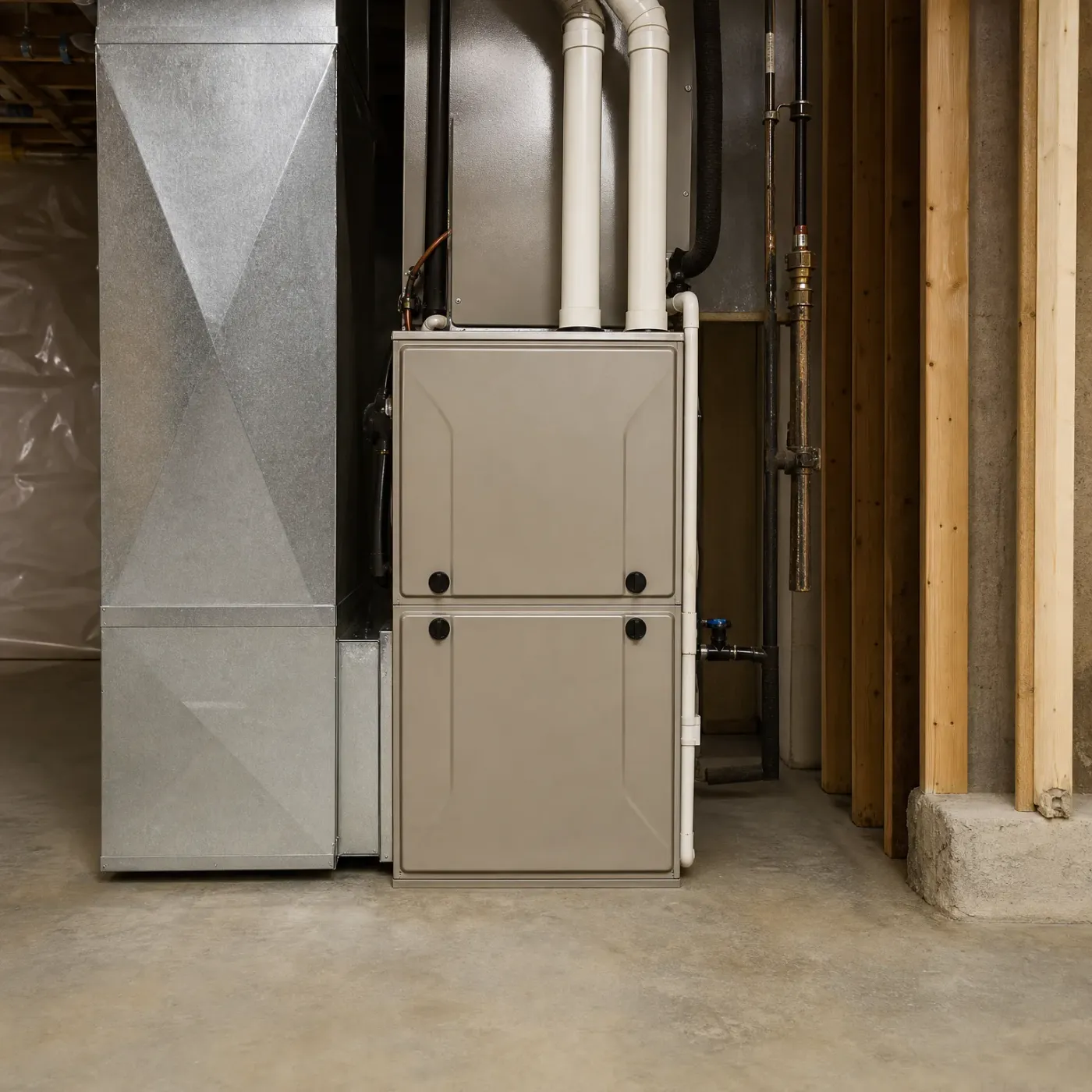
A beige high-efficiency furnace with white PVC vent pipes stands beside galvanized sheet-metal ductwork in a basement with a concrete floor, exposed wood studs, and metal piping along the wall.
A furnace like this runs clean: steady flame, sealed exchanger, exhaust going straight out through the PVC pipe.
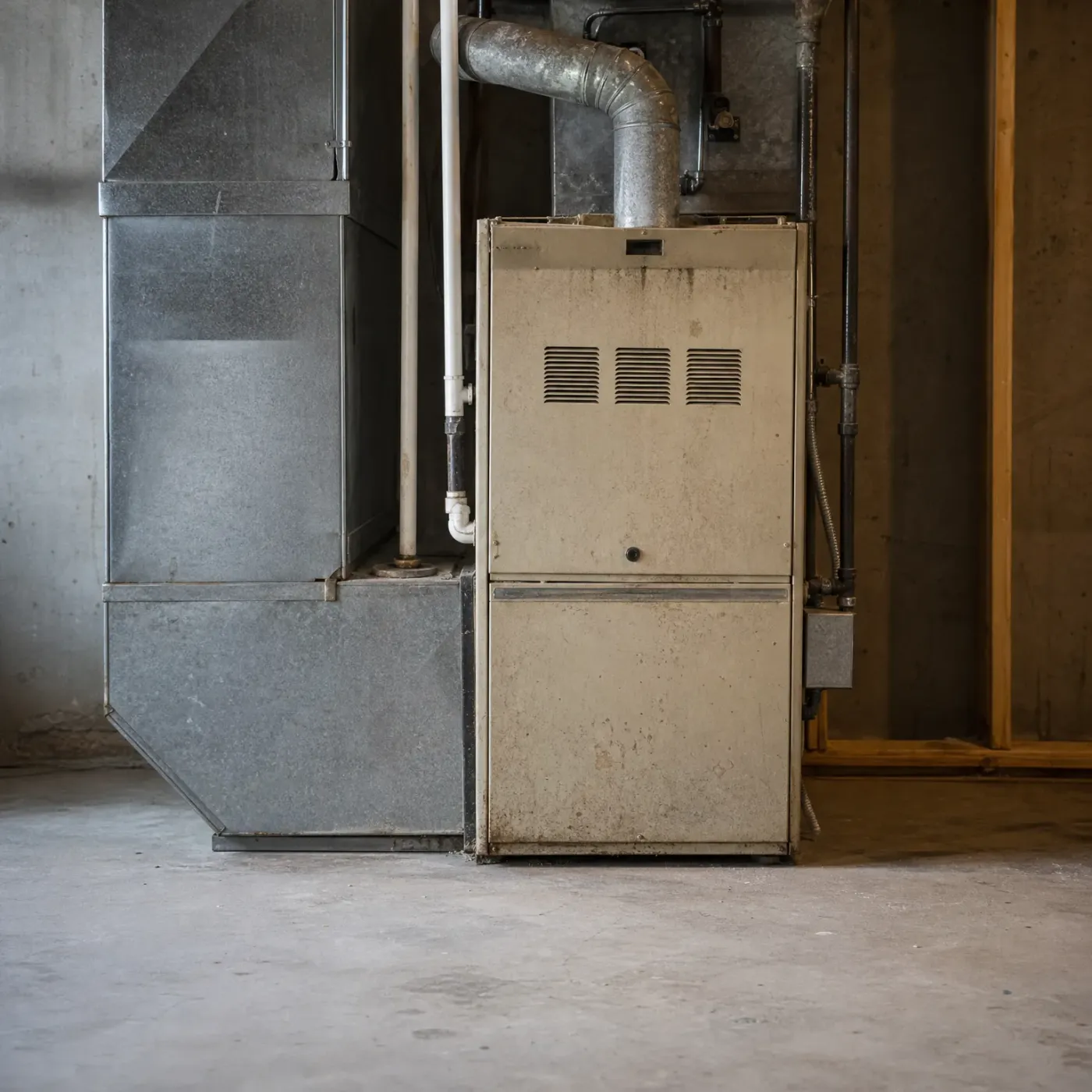
An older beige furnace with a louvered vent panel stands on a concrete basement floor beside galvanized sheet-metal ductwork, a metal flue pipe and vertical pipes along a concrete wall.
A cracked exchanger often still looks fine from the outside, with the real damage hidden inside the cabinet and flue.

If your furnace is the one gas or oil appliance in a house that otherwise runs on electricity, you may not think about it much past setting the thermostat and closing the closet door. A cracked exchanger changes that. You might notice a faint odor near the furnace closet, or headaches that ease when you leave the house and come back when you're inside it, especially after the burner has been running a while on a cold night. A furnace cycling for long stretches to keep up with a 27°F night is doing exactly the kind of run that gives a crack more time to leak. Carbon monoxide has no smell on its own, so a working CO detector near the furnace and bedrooms matters more here than in a house heated by baseboard or a heat pump. The furnace itself may keep running like nothing's wrong. That's the part that puts a household at risk: the appliance doesn't fail outright, it just quietly stops doing its one other job, keeping combustion gas out of the air you breathe.

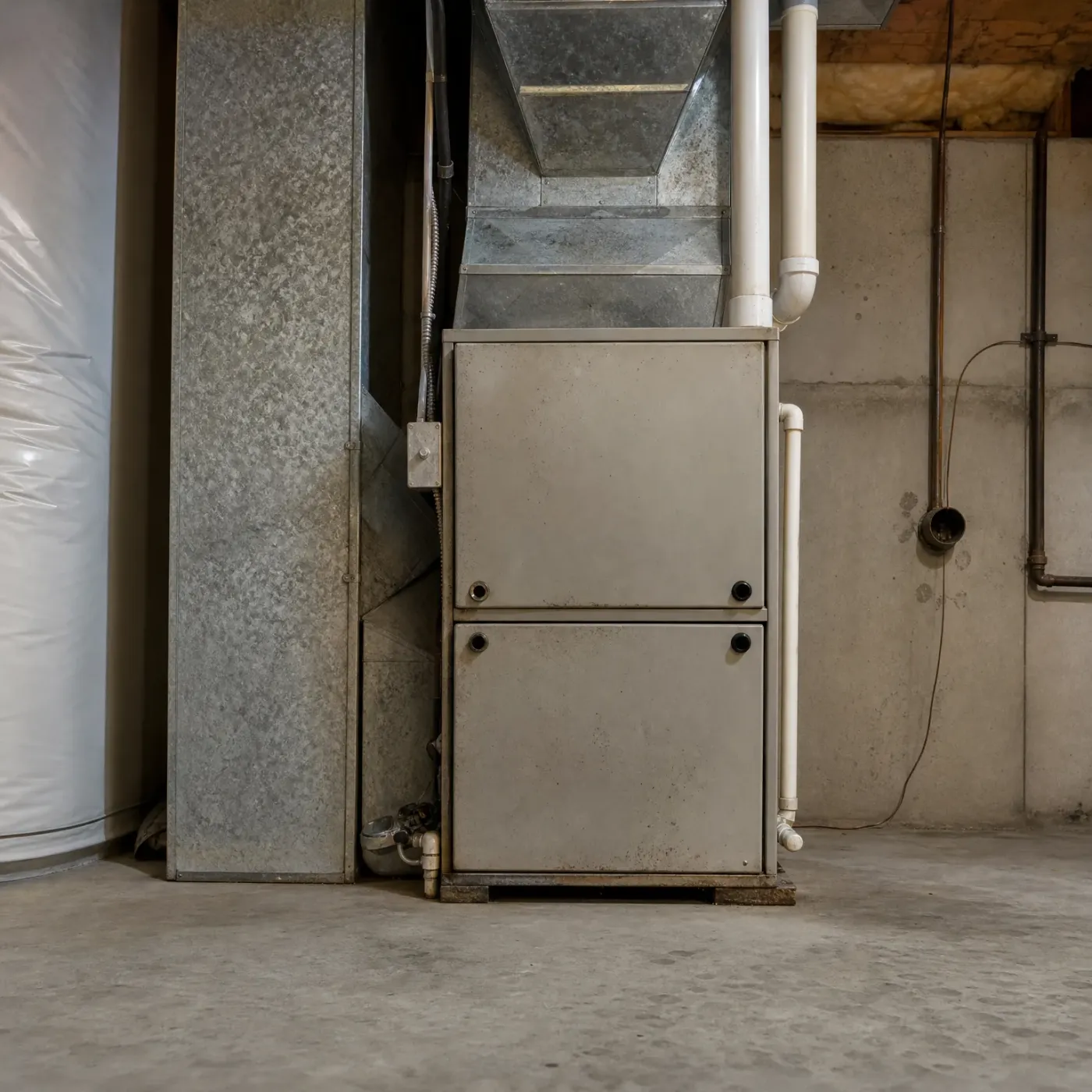
A gray furnace cabinet in a basement, connected to galvanized sheet-metal ductwork and white PVC pipes, against a concrete wall with exposed metal piping and insulation overhead.
Before you get your furnace repair
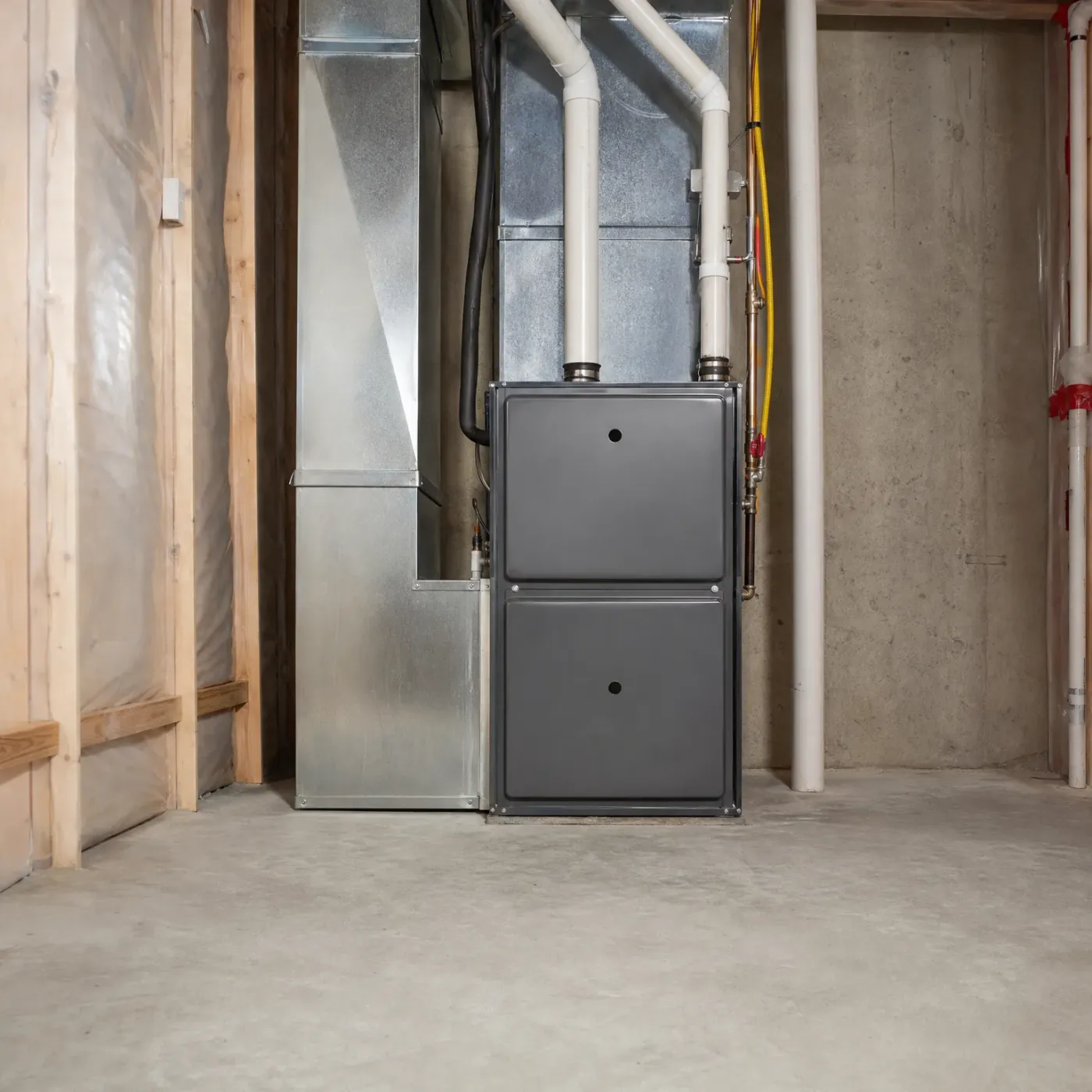
A gray high-efficiency furnace with two PVC vent pipes stands in an unfinished basement beside sheet-metal ductwork, a framed and plastic-covered wall, and a bare concrete wall with vertical pipes.
After you get your furnace repair

Skip calling around

A cracked heat exchanger isn't something to sit on while you check reviews and wait for callbacks. Most Maryland furnaces run on gas or oil even in homes where everything else is electric, which means this is the one appliance in the house most owners never had reason to learn about until now. Finding someone who actually works on heat exchangers, not just filters and thermostats, usually means a string of calls, explaining the smell or the soot mark over and over, then sitting with quotes you can't really compare because you don't know what you're looking at. Submit the request here and it goes to one licensed contractor working near you, someone who sees this failure every winter in Maryland furnaces and knows where the cracks usually start and what they look like once you're inside the cabinet. You get one call back, from someone who already understands the problem, instead of five strangers competing for the job. With flue gas possibly getting into your supply air, that's time better spent keeping the house warm and getting it looked at than spent sorting through contractors on your own.

Why age makes cracks more likely

Heat exchangers crack from years of heating and cooling as the burner cycles on and off. Each cycle expands the metal, then lets it contract again, and that back and forth eventually opens a seam at the weld or the bend. A furnace that's run for many winters has gone through thousands of those cycles. It's not one bad part failing outright. It's ordinary metal fatigue, the same way a paperclip snaps after enough bends. The furnace can still heat the house fine while this happens, which is part of why the crack goes unnoticed for a while.


Why a whistle can mean more

A thin, high-pitched whistle near the furnace cabinet sometimes comes from moving air finding a gap it shouldn't. Air pushed by the blower is at a different pressure than the gas inside the exchanger, and a crack lets that pressure difference make noise as air passes through it. Not every whistle means a cracked exchanger, blower housings and loose panels make similar sounds. But a whistle that shows up only when the burner is firing, and goes quiet when it shuts off, is worth having a technician trace back to the exchanger itself rather than assuming it's just a loose screw.

Winter nights average 27°F statewide

At 27°F, your burner has to run long enough to push warm air through every return before it shuts off. A cracked exchanger spends more of that cycle venting flue gas into the duct air you're breathing instead of out the flue.

NOAA nClimDiv 1991-2020 county normals weighted by homes

Where This Leaves You

  • A cracked heat exchanger means flue gas mixing into the air your blower pushes through the house, not just a furnace running poorly.
  • The warning signs are a change in flame color, soot near the cabinet, a faint odor, or a carbon monoxide alarm sounding.
  • Cold nights near 27°F make the risk worse because long burner cycles give a crack more time to leak.
  • A furnace this old or showing these signs needs a local contractor to pull the burner assembly and look at the exchanger directly.
  • A technician who services furnaces in Maryland all winter has likely already found this exact crack in a unit like yours.
  • One licensed contractor takes the call, inspects the exchanger, and tells you straight whether it needs replacing or the furnace needs to come out.

A cracked heat exchanger isn't a guess. Flame color, soot, a faint odor, an alarm going off. These are signs you can see and smell, and together they tell you the burner and the air your blower moves aren't staying separate the way they're supposed to. Cold nights near 27°F don't cause the crack, but they make a furnace run longer cycles, and a longer cycle is more time for flue gas to cross into the ductwork. None of that gets settled by watching the thermostat. It gets settled by someone pulling the burner assembly and looking at the metal directly, which isn't a step you can do from the hallway closet.

That part is straightforward once you have the right person on it. A contractor who works on furnaces in Maryland through the winter has seen this crack before, in a furnace like yours, in a house heated the same way yours is. You're not explaining the problem from scratch to someone guessing at it for the first time. One contractor takes the call, looks at the exchanger, and tells you directly whether it needs replacing or the whole furnace is past that point. No comparing estimates from three different companies, no repeating the same symptoms on four phone calls. Just the inspection, and a straight answer about what the furnace needs next.

Interior corner with a lit stone fireplace, built-in wood shelving holding a bowl, books and a pale ceramic vase, a potted olive branch and woven basket on a round table, and an upholstered chair with a fringed throw and cushions.
A large pale planter with a leafy green shrub sits on a stone front step of a gray clapboard house, beside a column, dark-framed windows, a wooden porch chair with a cushion, and clipped hedges in low sunlight.
A wooden front door with divided-light glass panes and sidelights on a cream clapboard house, approached by wide wooden steps and a stone path flanked by trimmed boxwood shrubs, potted plants, and overhanging tree branches.
Sunlit corner of a room with linen curtains at a white-framed window showing green tree leaves, an upholstered armchair with a cushion at right, and a round wooden table holding a ceramic bowl in the lower left.
A beige upholstered armchair with a matching cushion and a knitted fringed throw sits in a corner by two tall windows, beside a round wooden side table holding a bowl and a ceramic vase of leafy branches, on a wood floor with a woven rug.

Describe it once

Your request goes to one pro, not a list of companies.

Find a licensed furnace pro

No charge to send it. You decide if you hire them.