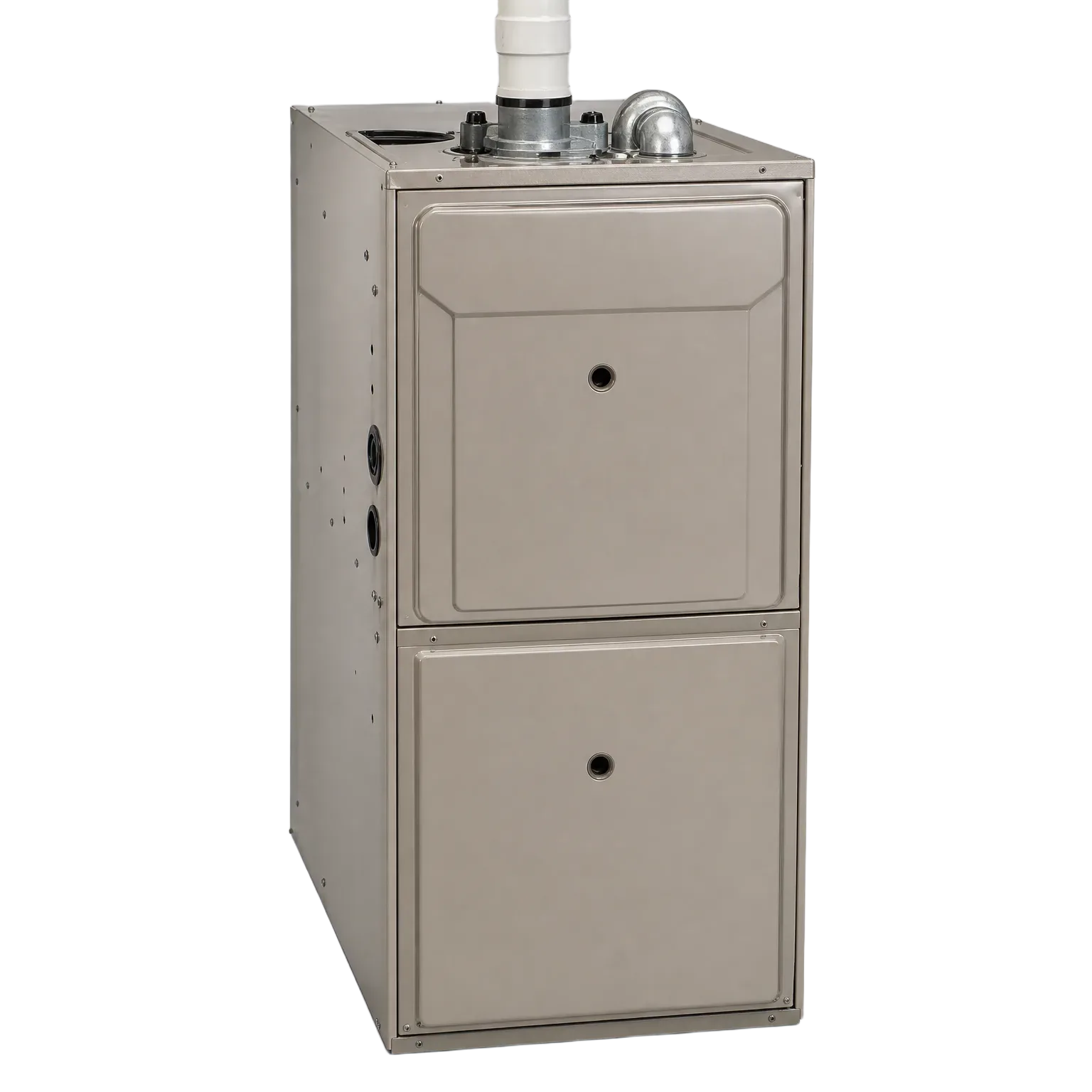
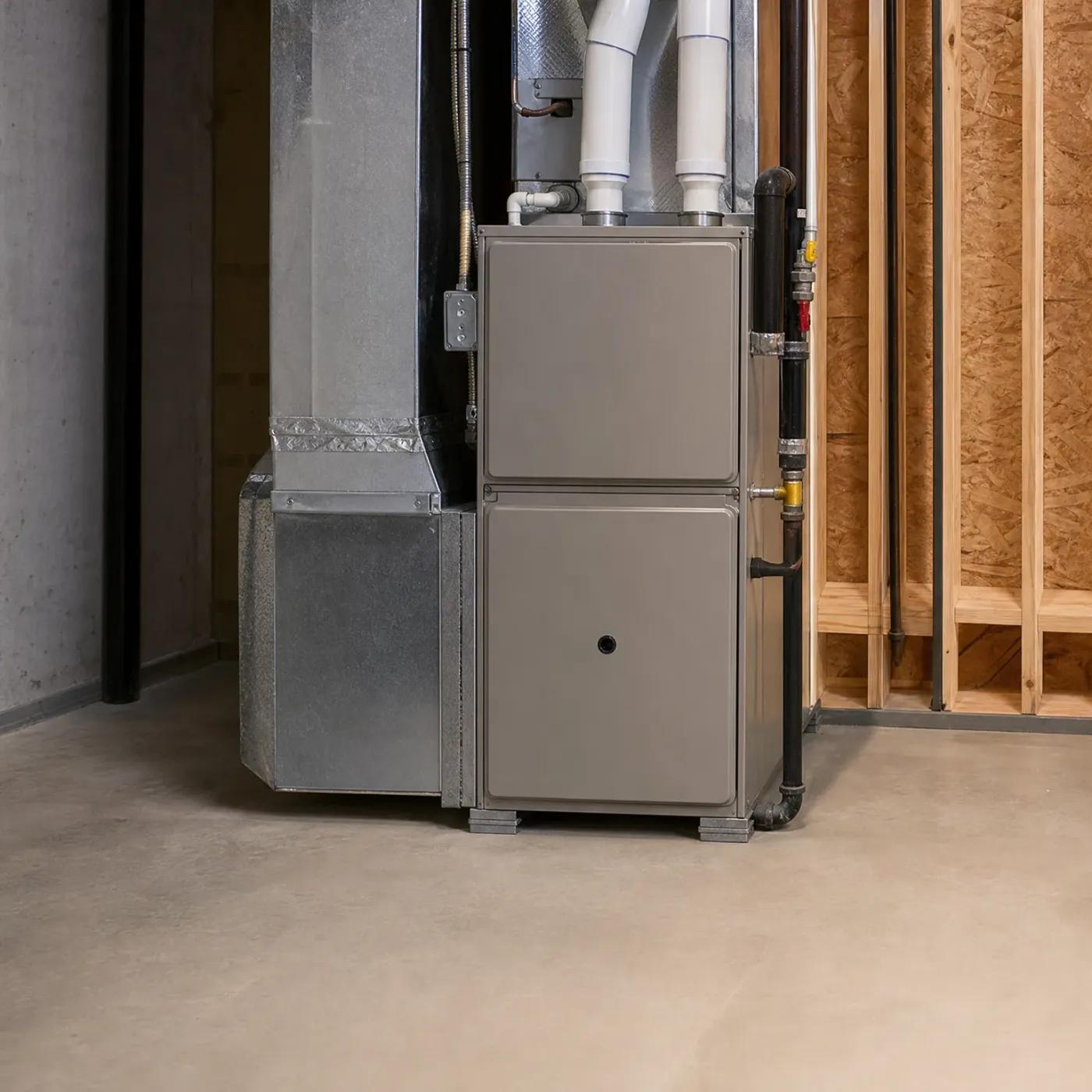
A gray high-efficiency furnace with PVC venting, copper and plastic piping, and a condensate pump sits beside sheet-metal ductwork in a concrete-floored basement.

Send one request and you're done looking

Signs your furnace won't last a Maryland winter

Most Maryland homes don't heat with a furnace, but if yours is one of the ones that does, a hard freeze is a bad time to find out it's failing. This page walks through the warning signs, from short cycling to a yellow flame, so you know what's serious. Once you fill out the form, finding help isn't on you anymore.

Send my request

A furnace that won't make it through a Maryland winter usually tells you first. It short cycles, running for a few minutes and shutting off before the house warms up, because a cracked heat exchanger or a failing limit switch is tripping it early. It blows air that's gone lukewarm instead of hot, a sign the burners aren't firing clean or the ignition system is wearing out. You might see a yellow or flickering flame where it used to burn blue, which points to a combustion problem that gets worse with use, not better. Rooms that used to heat evenly now have cold spots, or the furnace runs most of the day just to hold a temperature it used to reach in minutes. Any one of these can wait until a stretch of single digit nights in January, and that's when the furnace quits for good, not on a mild afternoon in October.

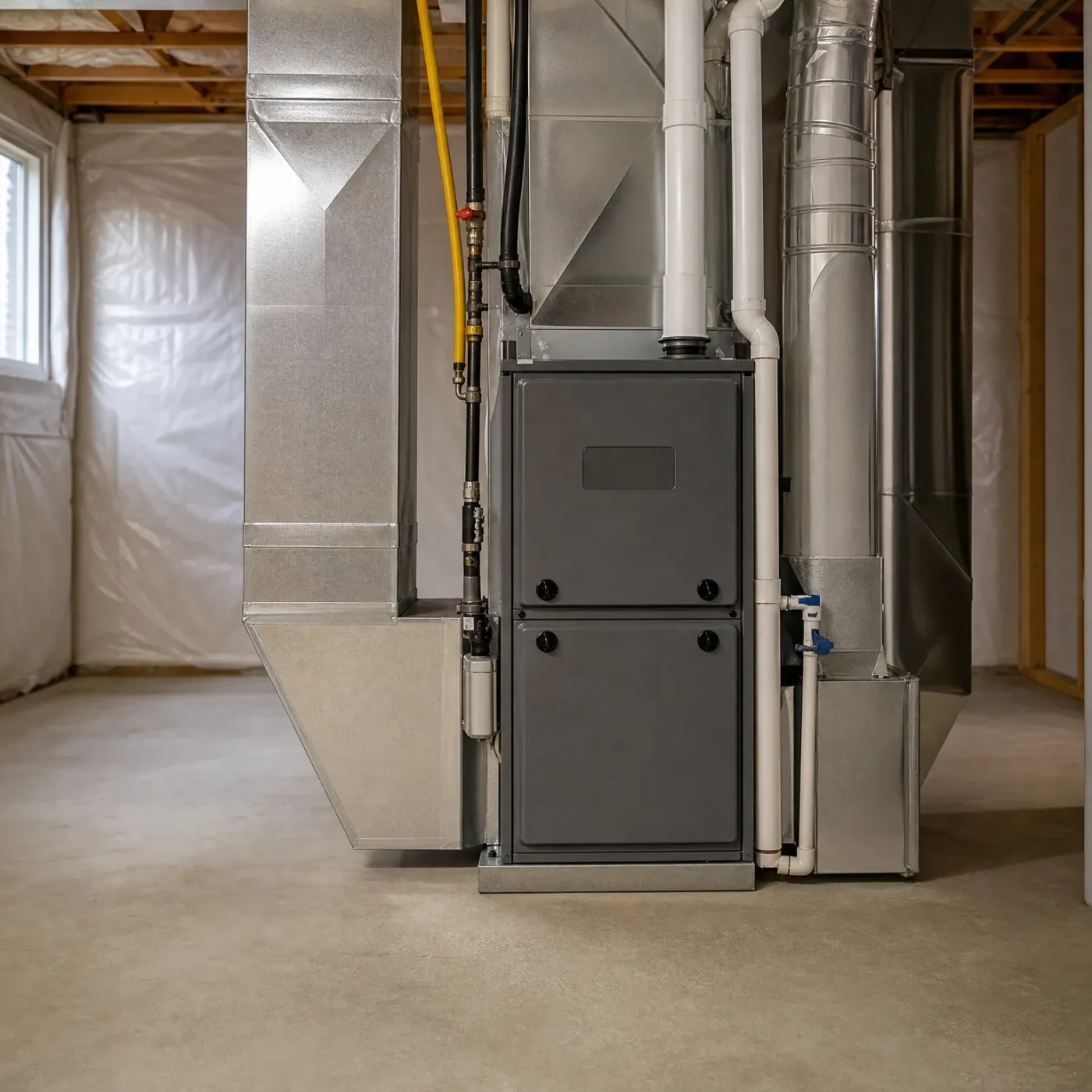
A gray high-efficiency furnace in a basement, connected to sheet-metal ductwork on the left and white PVC vent pipes above, with black gas and drain piping and an exposed wood-stud wall with OSB sheathing on the right.

Furnace running clean

This is what a furnace should look like. The burner lights on the first try, the flame stays blue, and the unit cycles on and off on its own schedule, not because something is tripping it early. The pipes and ductwork are tight, and nothing around the unit is rusted or wet.
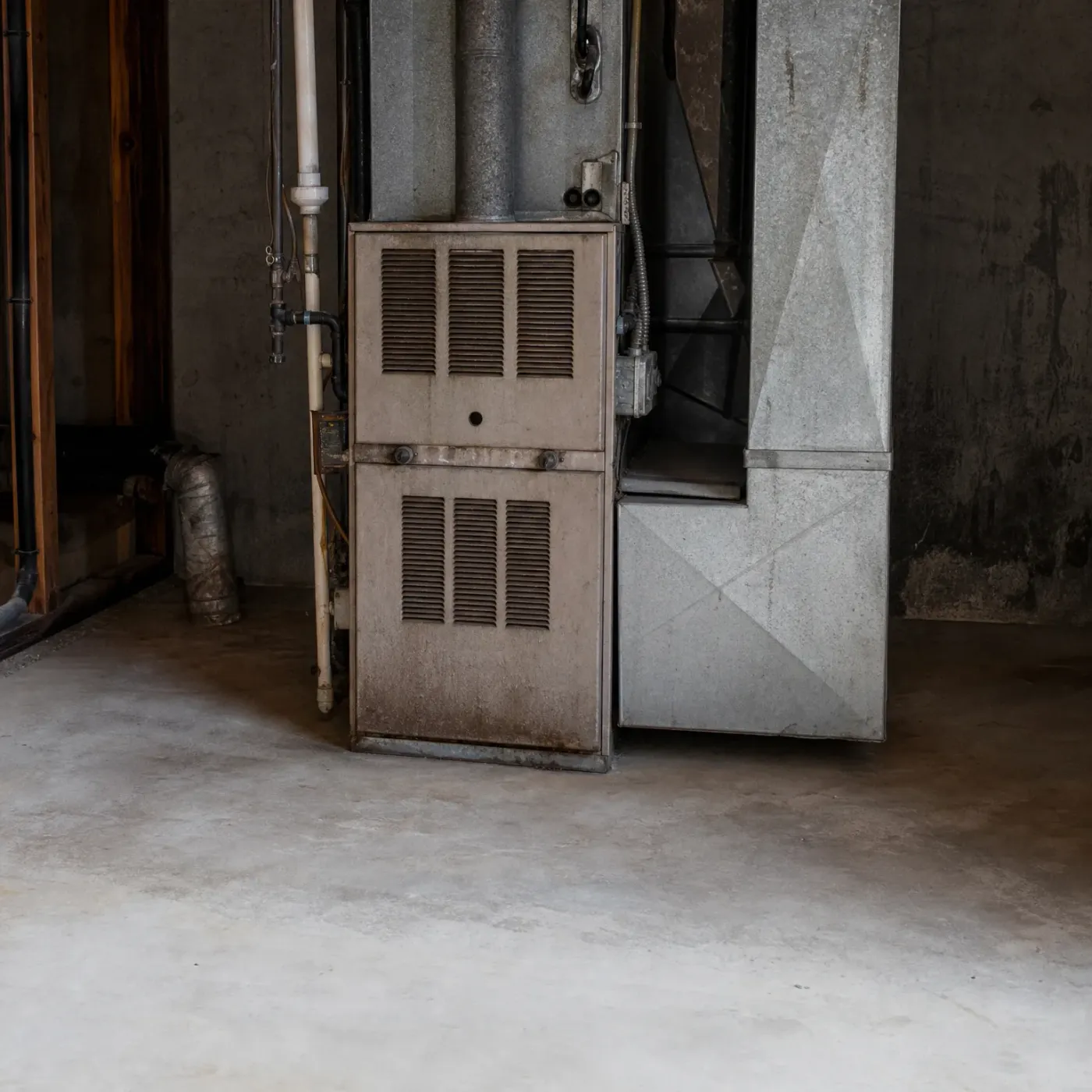

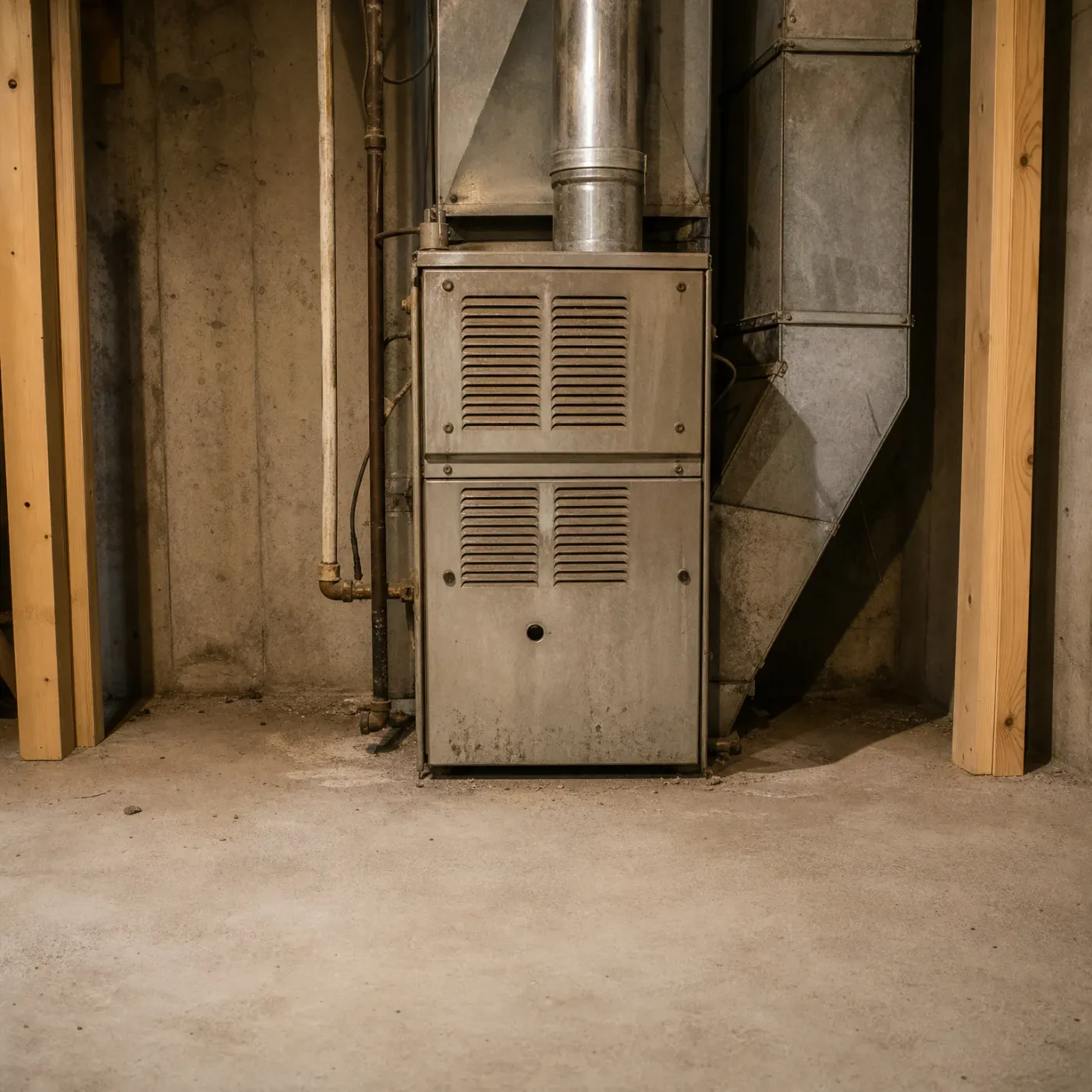
An older gas furnace with two louvered front panels stands on a concrete basement floor beside galvanized sheet-metal ductwork, pipes, and a weathered concrete wall.

Furnace in trouble

An older furnace like this one has had years to wear down. Rust on the cabinet or staining on the floor around it often means a leak somewhere nearby, and a unit that's been through enough winters starts failing in ways a repair can't always reach. If yours looks like this, have it checked before the next cold snap.

A woman with long light-brown hair in a gray knit sweater sits in a living room looking off to the side, with a sectional sofa, houseplant, lamp, wooden table and large windows behind her.
A woman in a chunky gray turtleneck sweater sits indoors looking off to the side, with a blurred dining table, chairs, pendant lamp and window behind her.
A woman in a cream knit sweater with her hair in a bun stands near a window, looking off to the side, with a gray sofa, houseplant and open kitchen with pendant lights blurred behind her.
A woman with long brown hair in a cream knit sweater stands near a window, looking to the side, with a white sofa, shelving, and a hallway visible behind her.

What a cracked heat exchanger means

A heat exchanger is the metal chamber that separates the flame from the air blown into your house. When it cracks, the furnace can push combustion gas into that airstream instead of keeping it vented outside. Most furnaces built this way are designed to shut down rather than keep running once a crack is detected, which is why short cycling is often the first sign, not a side effect. It's also why this isn't a wait-and-see repair. A furnace doing this has already failed the one job that matters most, keeping the flame and the air you breathe apart.

Why the ignition system matters most here

The igniter has to get the burner lit every single time the thermostat calls for heat, and in a Maryland winter that can mean dozens of cycles a day. A weak igniter might still light the furnace on a mild December afternoon and fail outright during a January cold snap, which is exactly when you need it most. That's the pattern worth paying attention to: a furnace that struggles to start more on the coldest nights isn't being unlucky. It's telling you the ignition system is already near the end of what it can do, right before the season asks the most of it.

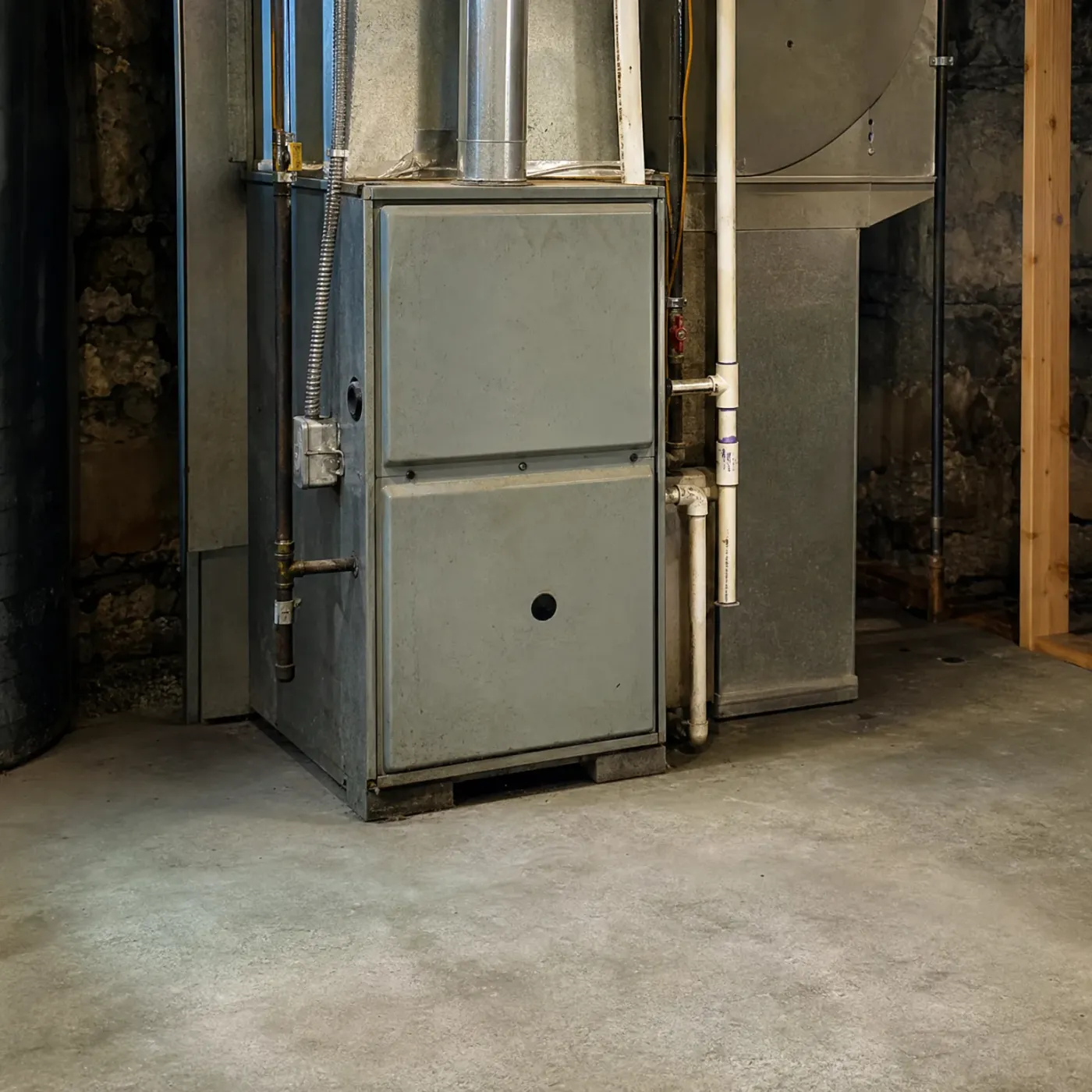
A gray sheet-metal furnace with flue pipe and adjacent ductwork stands against a stone basement wall on a concrete floor, with white PVC and metal pipes running nearby.
Before you get your furnace repair
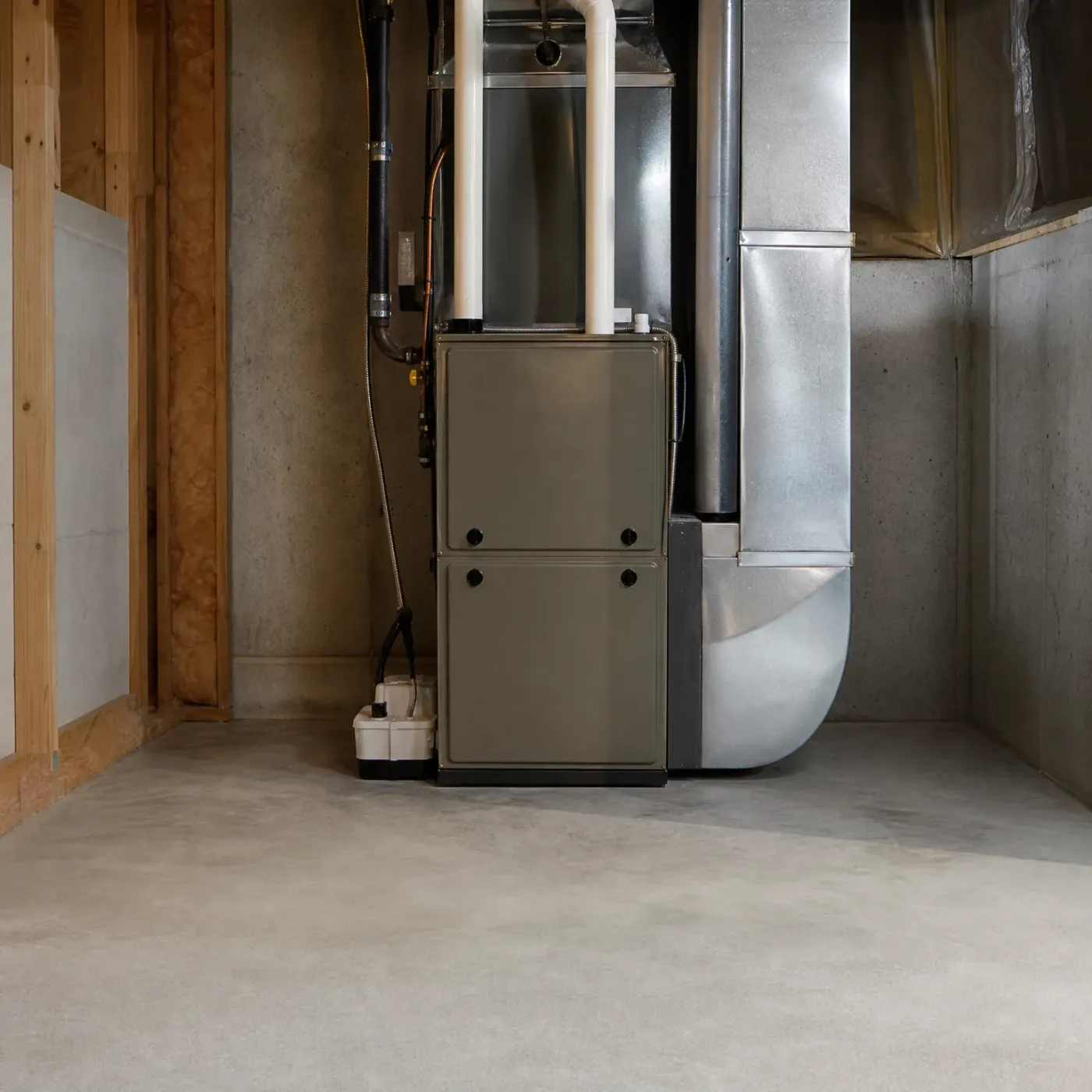
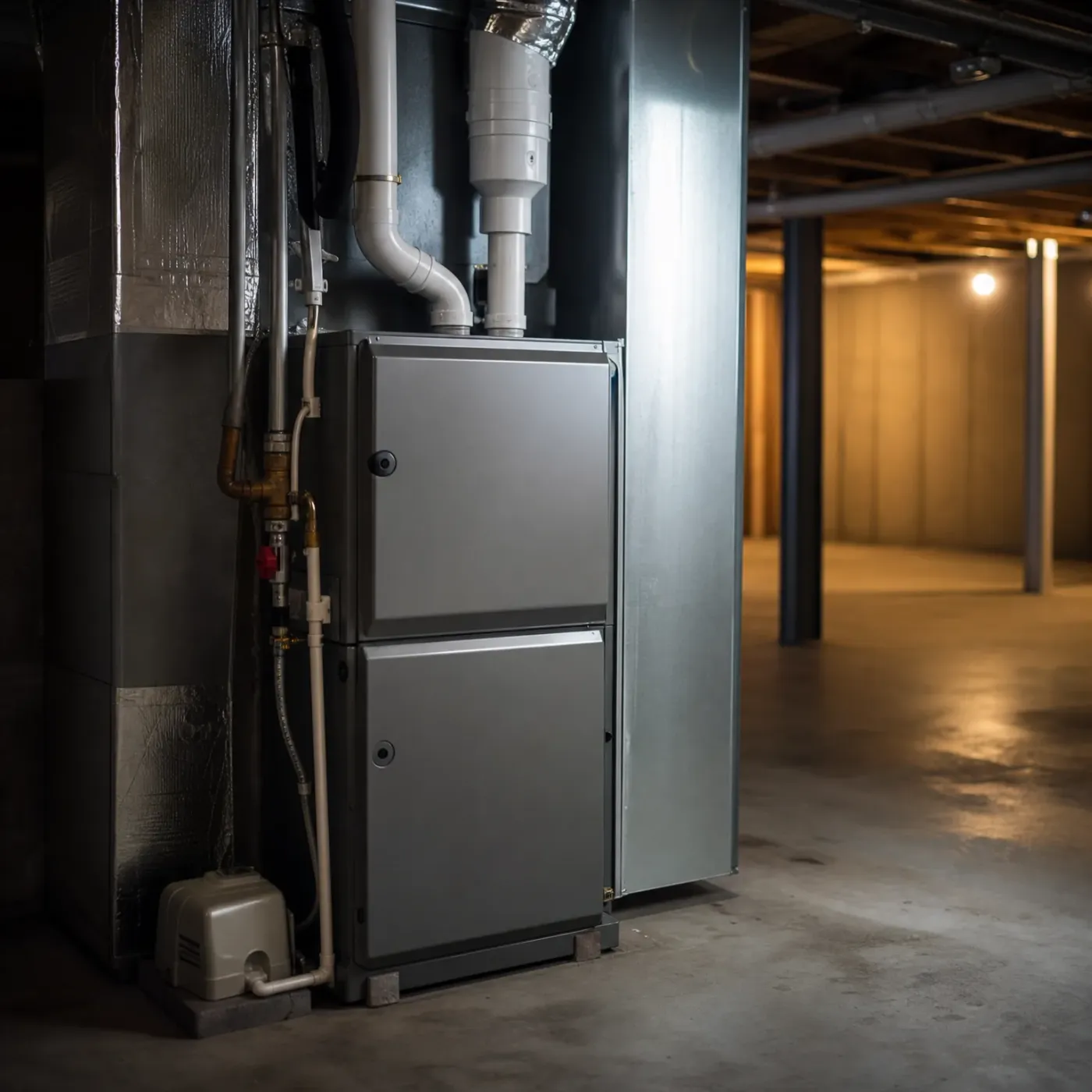
A gray high-efficiency furnace with white PVC vent pipes stands against a concrete basement wall beside sheet-metal ductwork, a small condensate pump on the floor, and exposed wood framing at left.
After you get your furnace repair
  1. The thermostat calls for heat and opens the gas valve

  2. The igniter glows hot enough to light the burners

  3. Burners fire and heat the metal heat exchanger

  4. The blower turns on once the exchanger reaches temperature

A gray gas furnace stands on a concrete basement floor, connected to sheet-metal ductwork, white PVC vent pipes, and a yellow gas line, with plastic sheeting covering the walls.
The burner flame is steady and blue, the ductwork and gas lines are tight, and the cabinet is clean with no rust or scorch marks.
A metal furnace with louvered panels stands against a concrete basement wall, connected to sheet-metal ductwork and a round flue pipe, with wooden framing posts and a pipe nearby.
Dust has built up around the cabinet, the metal shows age, and a furnace left like this is more likely to fail on the coldest night.
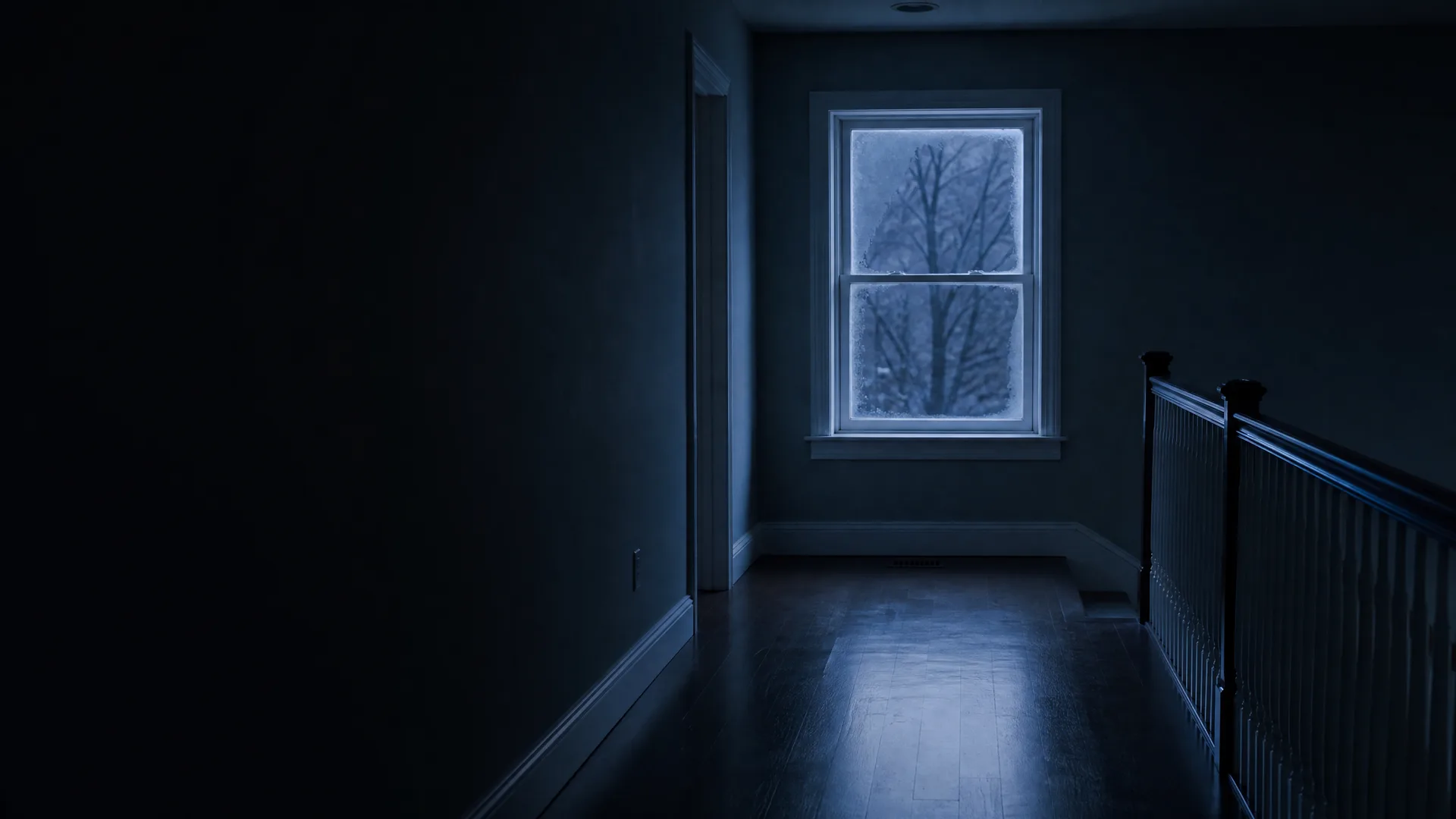
A dark interior hallway with a dark wood floor, a floor vent, a doorway on the left, and a stair railing on the right, lit only by a tall double-hung window showing bare tree branches outside.

It's 2 a.m. on a night in January, cold enough that the windows have frosted at the edges. You wake up for no reason you can name and the hallway floor is freezing under your feet. No air is moving out of the vents. You stand there in the dark listening for the furnace to kick on, and it doesn't. Down the hall your kids' doors are shut, and you think about how cold their rooms will be by morning if this doesn't get fixed. A furnace that's been slipping for weeks will usually quit like this, at the worst hour, on the coldest night it's had to work.

Finding a pro stops being your job

The pro who reaches out is licensed in Maryland.

No charge to send it. You decide if you hire them.

Worth calling someone about

A furnace making it to fifteen years or so, still heating the house evenly, but starting to short cycle or take longer to kick on, is usually worth repairing rather than replacing. A new igniter, a new limit switch, a cleaned flame sensor, these are the kinds of fixes that buy a furnace several more winters. If the heat exchanger is sound and the rest of the unit has been maintained, there's no reason to junk it over one bad part. A tech who works on these year-round in Maryland can tell you in one visit whether what's wrong is the kind of thing worth fixing.

Worth talking about replacement

A furnace that's cracked a heat exchanger, or one old enough that parts are getting hard to find, is a different conversation. Once the exchanger goes, patching it isn't really an option, and a furnace that keeps tripping its limit switch or won't hold a blue flame after repeated service calls is telling you something about the whole unit, not just one part. With electric heat costing what it does in Maryland, a furnace that's lost efficiency on top of failing is worth weighing against a new one rather than paying to keep nursing it along.

A woman with dark hair in a bun sits wrapped in a chunky knit blanket on a couch with a child resting his head on her shoulder, eyes closed, beside a lit lamp and bookshelf indoors.
A smiling older woman with gray hair in a cream knit sweater stands in a dimly lit kitchen beside a window showing snow outside, with a round loaf of bread on the counter in the foreground.

Winter nights average 27°F statewide

On a January night, the house itself does little to help your furnace. An overnight low near 27°F means it has to run long stretches just to hold the thermostat setting, and a unit that's already struggling to keep up will show it on nights like that.

NOAA nClimDiv 1991-2020 county normals weighted by homes

What the Signs Are Telling You

  • Short cycling, a yellow flame, or a furnace that takes longer and longer to kick on all point the same way: don't wait for a hard freeze to find out.
  • A furnace that's cycling early or struggling to keep the house even is telling you now, while there's still time to get it looked at.
  • Fixing a cracked heat exchanger, a bad limit switch, or a dirty flame sensor costs less than finding out your furnace quit on the coldest night of the year.
  • The furnace that fails usually gave warning first, in the weeks before, not out of nowhere.
  • A contractor who services furnaces in Maryland all winter has seen which parts give out first and checks those before the cold sets in.
  • One licensed local contractor takes the job, so you're not fielding calls from several companies trying to win the work.

A furnace that's going to struggle this winter has usually already said so. Short cycling, a flame that's gone yellow instead of blue, a longer wait every time it kicks on. None of that is random, and none of it fixes itself once the real cold sets in. The parts behind these signs, a cracked heat exchanger, a failing limit switch, a flame sensor coated in residue, are the same parts that give out on a hard freeze night if nobody's looked at them first. That's the whole point of catching this now instead of in January. A repair done while the furnace is still limping along costs less and takes less out of your week than one done at 2 a.m. when the house has gone cold and everyone in it is awake because of it.

You don't need to figure out which part it is before you call someone. That's not your job, and guessing at it from a search result isn't going to get you closer. What helps is getting it in front of someone who works on furnaces in Maryland winters every year and already knows what tends to fail first in a system that's been running the way yours has. One licensed contractor, local to you, takes the job from here. Not three companies competing for the work and blowing up your phone, just the one who's going to actually show up and look at it.

The signs are the easy part to notice. What you do with them is the part that decides whether this winter is routine or a problem.

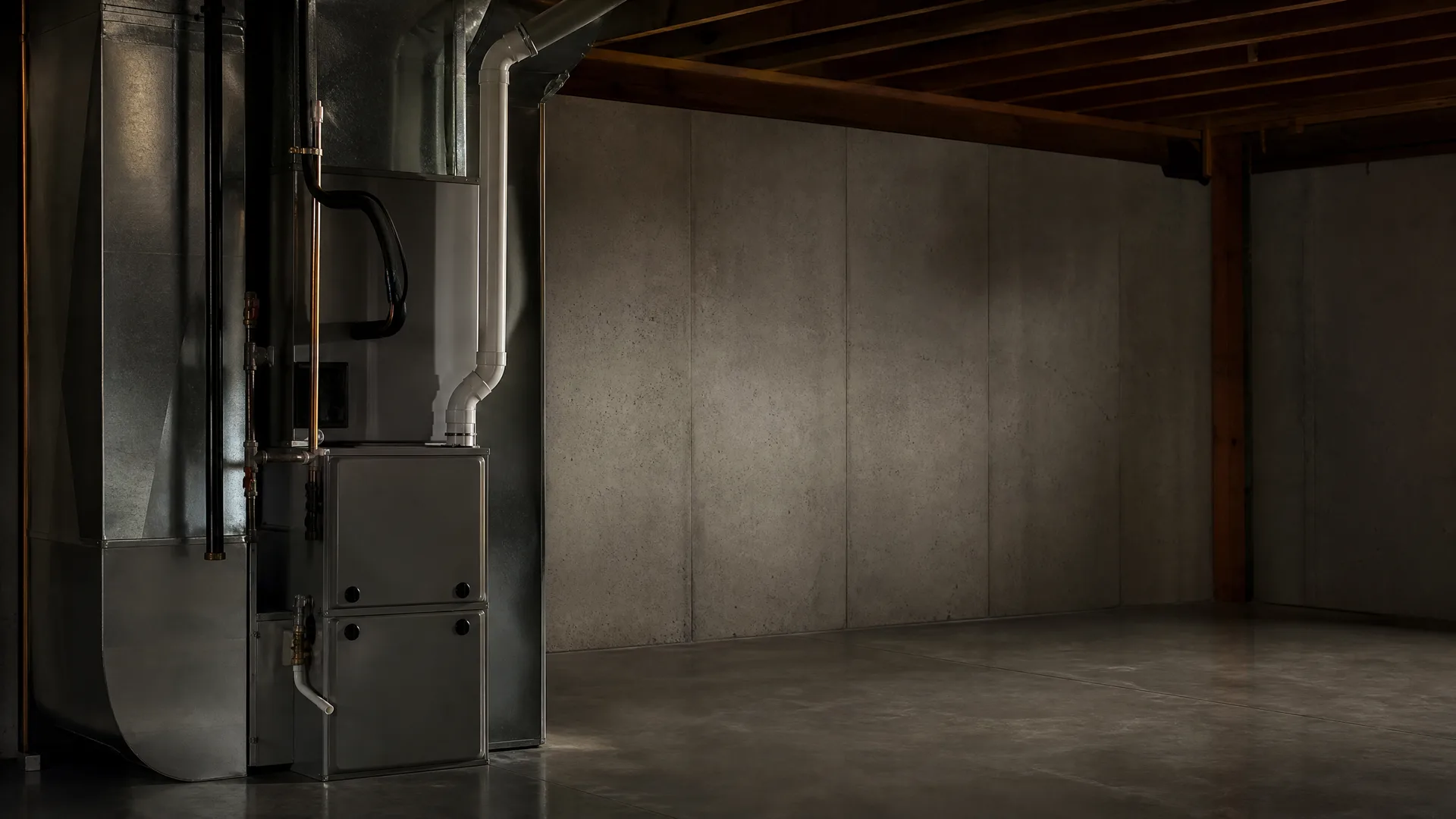
A dimly lit basement with concrete floor and walls, exposed wood joists, and a furnace with sheet-metal ductwork and copper piping on the left side.

Let someone else find the pro

Only one pro gets your request, so you hear from one company.

Step 1 of 3: Equipment