Tell us about the job
Takes about a minute. No obligation.
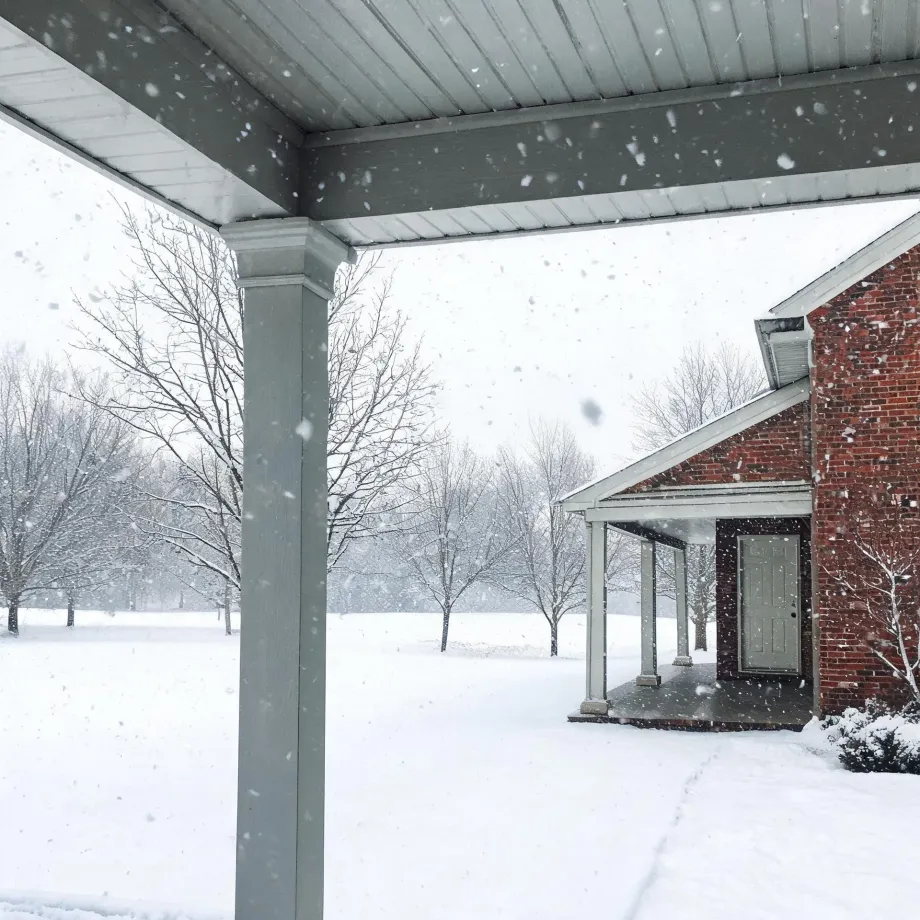
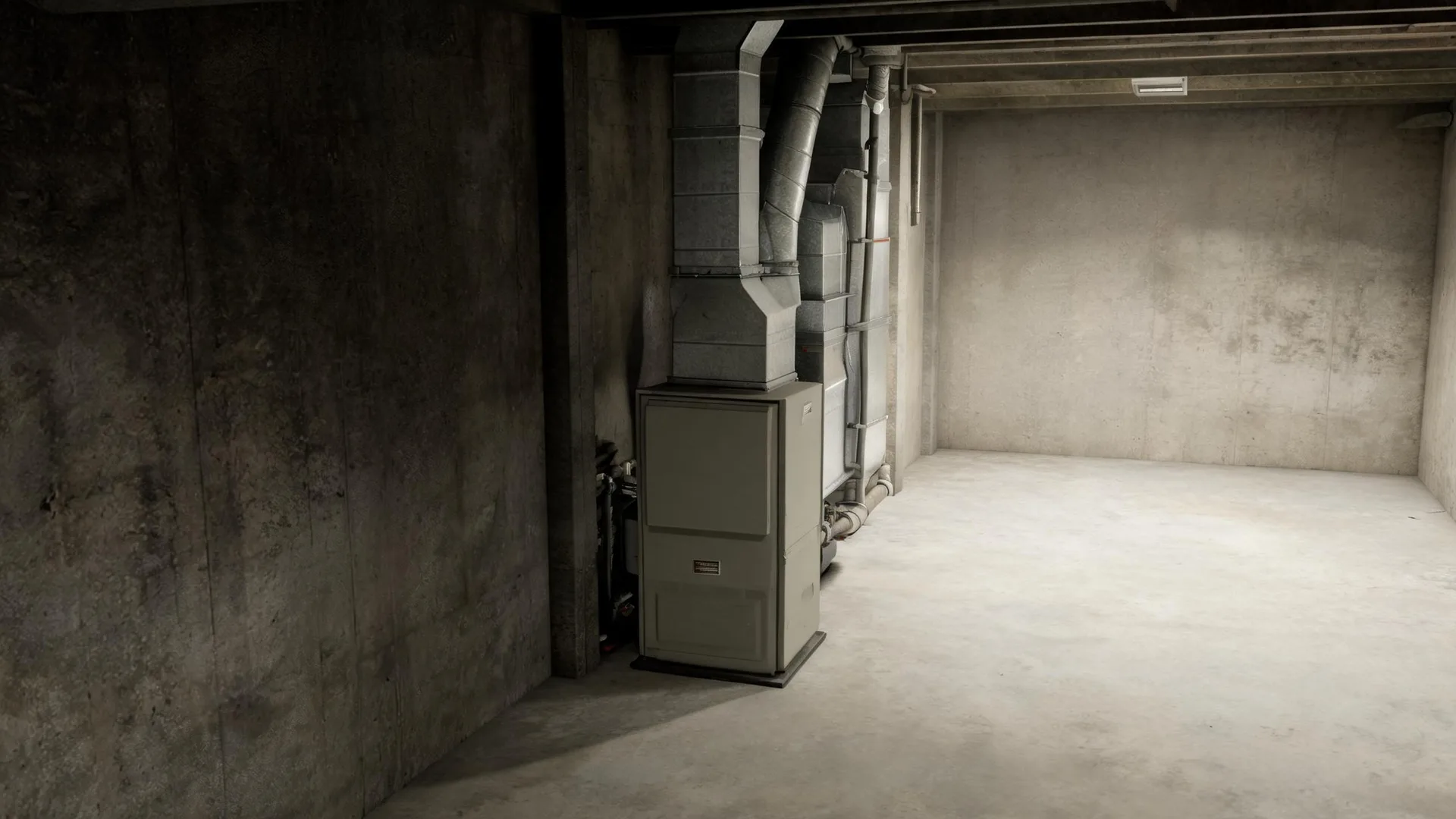
A contractor quoting furnace installation in Kent County has to size the unit around what the burner and heat exchanger will actually carry, not around what fits the mechanical room. Homes in Kent County, MD run heat about seven months a year, from October through April. The ignition system fires at the start of each cycle, the heat exchanger flexes under combustion heat, and both do that repeatedly across a season that leaves little idle time for the metal to recover. A unit that is undersized runs longer cycles to keep up, which concentrates that wear on fewer parts. Getting the load calculation right before the equipment is ordered is what separates an install that holds up from one that shows cracks in the heat exchanger ahead of schedule.
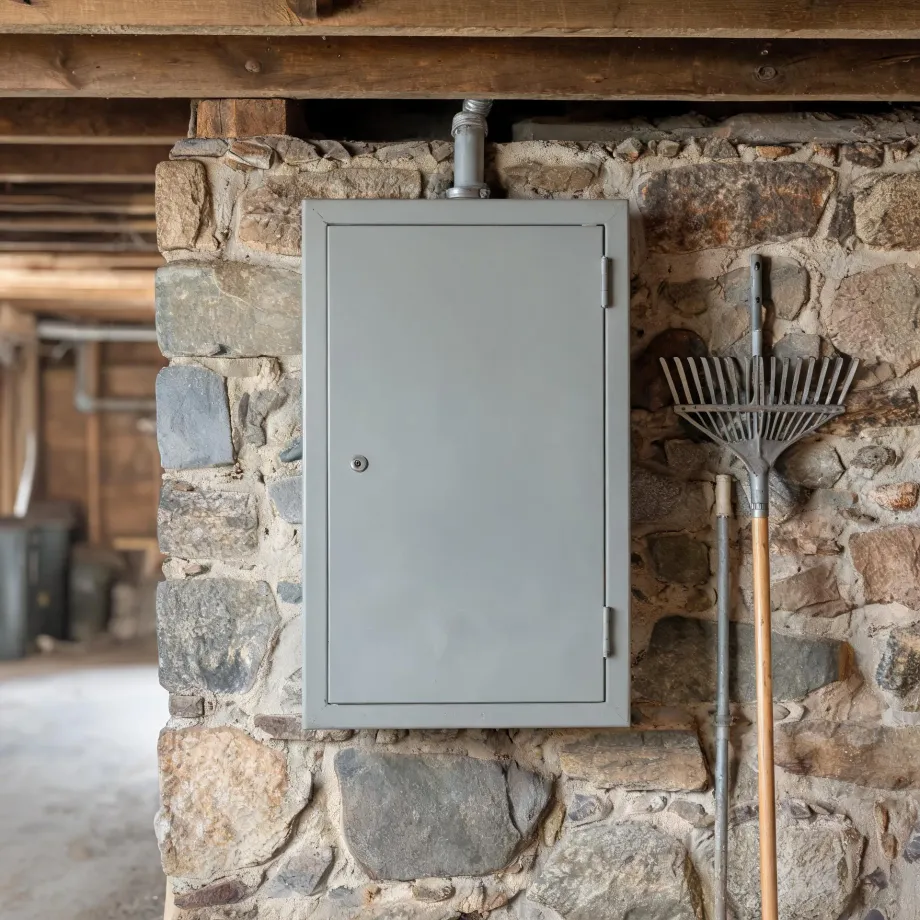
Ductwork in a house does not get replaced every time the furnace does. What a contractor finds in the walls and crawlspaces here is often a layout built around something that has been gone for decades, and a new furnace has to be sized to move air through it, not the other way around. Half the homes in Kent County, Maryland were built in 1978 or earlier (2020-2024 ACS 5-year). That gap between the building and whatever runs in it now is where furnace installation decisions actually get made: whether existing runs can carry the airflow a new unit needs, and whether the electrical service supports what that unit draws at startup.
What a Furnace Installation Covers
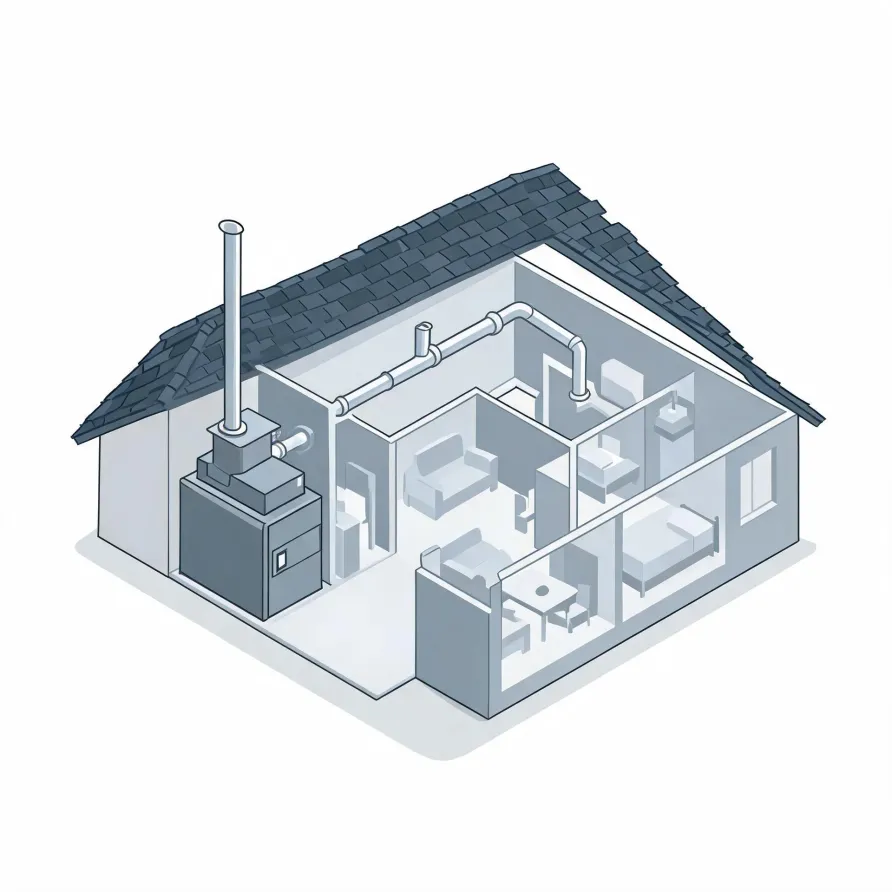
The furnace itself sits inside the house, most often in a basement, utility room, or closet. It is the unit that produces heat, drawing in air, warming it, and sending it back out through the supply side of the duct system. The flue pipe exits the unit and runs to an exterior wall or up through the roof to carry combustion gases out.
The thermostat mounts on an interior wall and is the control point for the whole system, telling the furnace when to fire and when to stop. Alongside the furnace sits the air handler or blower cabinet if one is part of the setup, and the filter housing where incoming air is cleaned before it moves through the system.
The drawing shows a general layout of these components, and a licensed contractor determines exactly what applies to your house.
Get matched in Kent CountyKent County, Maryland, by the numbers
110 severe weather events were recorded in Kent County, Maryland between 2015 and 2024.
NOAA National Centers for Environmental Information, Storm Events Database, bulk CSV export, events 2015-01-01 through 2024-12-31.Half the homes in Kent County, Maryland were built in 1978 or earlier (2020-2024 ACS 5-year).
U.S. Census Bureau, 2020-2024 American Community Survey 5-Year EstimatesKent County, Maryland holds 10,363 housing units (2020-2024 ACS 5-year).
U.S. Census Bureau, 2020-2024 American Community Survey 5-Year EstimatesOwners occupy 72.5% of the occupied homes in Kent County, Maryland (2020-2024 ACS 5-year).
U.S. Census Bureau, 2020-2024 American Community Survey 5-Year EstimatesCodes & Standards Governing Furnace Installation in Kent County, Maryland5 sourced rules and standards
What the Installation Actually Looks Like
Non-weatherized gas furnaces manufactured on or after November 19, 2015 must reach 80.0 percent AFUE.
Non-weatherized oil-fired furnaces manufactured on or after November 19, 2015 must reach 83.0 percent AFUE.
Mobile home gas furnaces manufactured on or after November 19, 2015 must reach 80.0 percent AFUE.
Non-weatherized gas furnaces manufactured on or after December 18, 2028 must reach 95.0 percent AFUE, up from the 80.0 percent minimum that applies to units manufactured before that date.
Licensing and Legal Requirements in Kent County, Maryland
Maryland requires a state licence before an individual provides, or assists in providing, heating, ventilation, air-conditioning or refrigeration services.
Severe Weather in Kent County, Maryland
Heating equipment in Kent County works against whatever the local climate throws at it, and that workload shapes what a furnace needs to handle over its life. What holds up here is a local question, and installation decisions should be grounded in local conditions.
110 severe weather events, 2015–2024. Source: NOAA National Centers for Environmental Information, Storm Events Database.