Tell us about the job
Takes about a minute. No obligation.
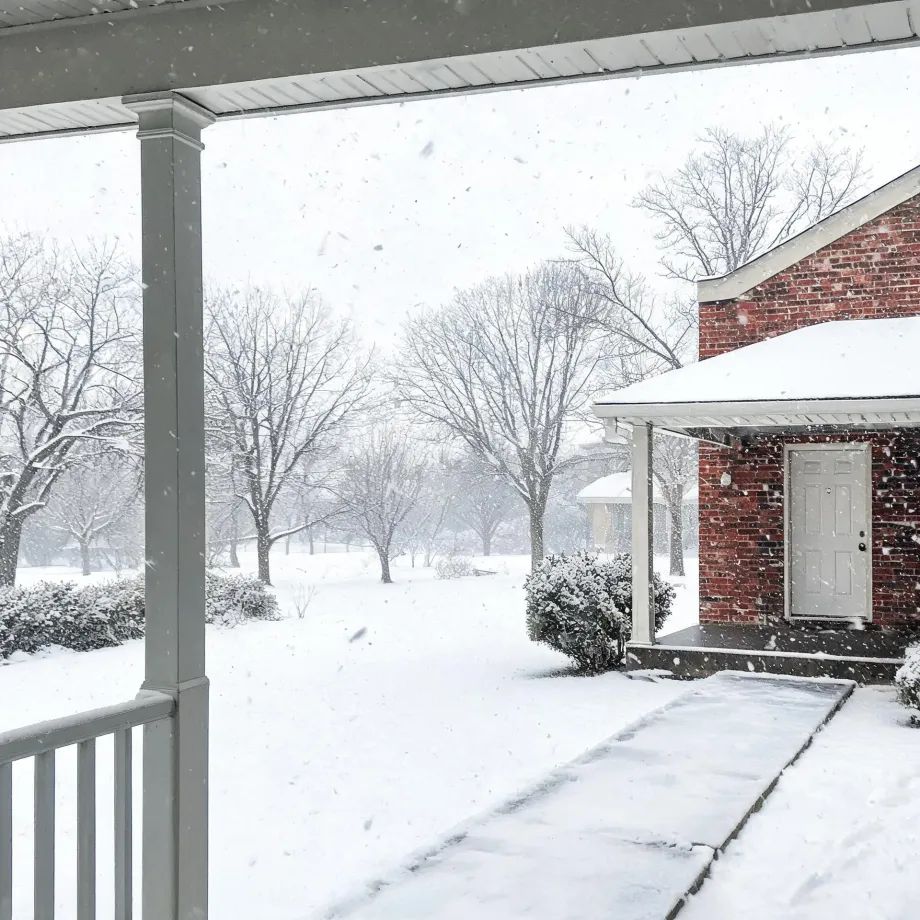
Sizing a furnace for this county means accounting for a burner and heat exchanger that cycle through cold month after cold month with little rest in between. Homes in St. Mary's County, MD run heat about seven months a year, from October through April. A contractor pricing an installation here factors that sustained demand into the equipment selection before anything else, because a unit that runs close to its limits for that stretch degrades at its weakest points first: the igniter, the heat exchanger, the blower motor. A furnace that is undersized or installed with shortcuts in the duct sealing and airflow balance will show those failures sooner here than it would somewhere a heating season is short.
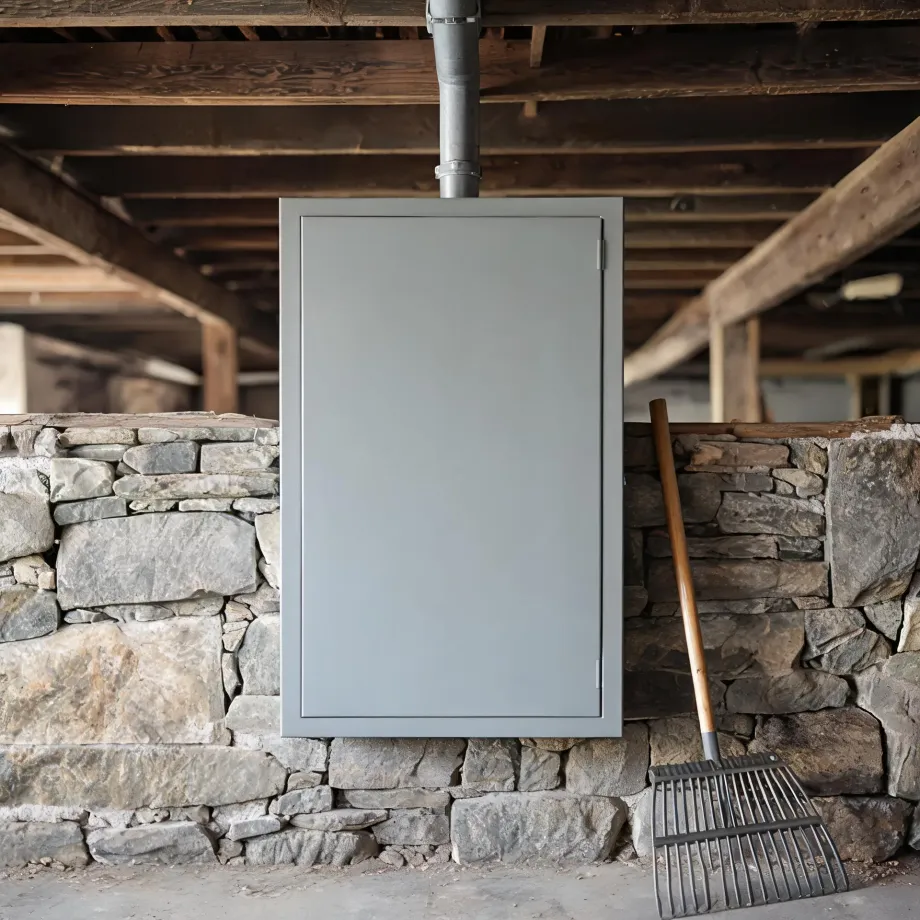
Ductwork sized and routed for an older system does not automatically carry a new furnace without adjustment. Half the homes in St. Mary's County, Maryland were built in 1992 or earlier (2020-2024 ACS 5-year). That spread across the housing stock means a contractor quoting a furnace installation here has to treat the existing duct layout as an open question, checking whether the runs, the returns, and the static pressure the system will see are compatible with what the new unit needs. Where they are not, the duct work itself becomes part of the job. The electrical side follows the same logic: a service panel installed for a smaller load gets measured, not assumed.
What Gets Installed With a New Furnace
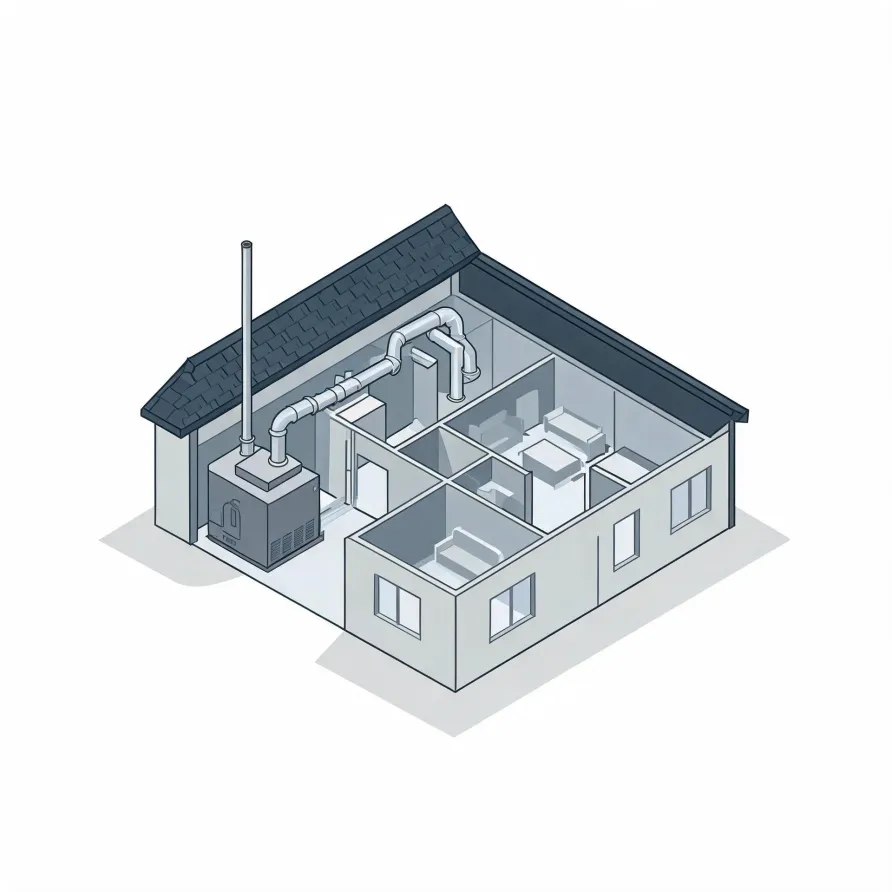
The furnace itself sits in a utility space, a basement, or a closet at the center of the house. It is the unit that produces heat, drawing in air, warming it, and pushing it out into the supply side of the system. A flue or vent pipe runs from the furnace to an exterior wall or through the roof to carry combustion gases out of the house.
The air handler or blower compartment works with the furnace to move conditioned air through the home. A thermostat mounts on an interior wall and serves as the control point for the whole system, telling the furnace when to fire and when to stop.
The drawing shows a general layout of these components, and a licensed contractor determines what the configuration looks like in your specific house.
Get matched in St. Mary's CountySt. Mary's County, by the numbers
192 severe weather events were recorded in St. Mary's County, Maryland between 2015 and 2024.
NOAA National Centers for Environmental Information, Storm Events Database, bulk CSV export, events 2015-01-01 through 2024-12-31.Half the homes in St. Mary's County, Maryland were built in 1992 or earlier (2020-2024 ACS 5-year).
U.S. Census Bureau, 2020-2024 American Community Survey 5-Year EstimatesSt. Mary's County, Maryland holds 46,385 housing units (2020-2024 ACS 5-year).
U.S. Census Bureau, 2020-2024 American Community Survey 5-Year EstimatesOwners occupy 73.2% of the occupied homes in St. Mary's County, Maryland (2020-2024 ACS 5-year).
U.S. Census Bureau, 2020-2024 American Community Survey 5-Year EstimatesFurnace Installation Rules for St. Mary's County, Maryland5 sourced standards and codes
What the installation looks like from your end
Non-weatherized gas furnaces manufactured on or after November 19, 2015 must reach 80.0 percent AFUE.
Non-weatherized oil-fired furnaces manufactured on or after November 19, 2015 must reach 83.0 percent AFUE.
Mobile home gas furnaces manufactured on or after November 19, 2015 must reach 80.0 percent AFUE.
Non-weatherized gas furnaces manufactured on or after December 18, 2028 must reach 95.0 percent AFUE, up from the 80.0 percent minimum that applies to units manufactured before that date.
Licensing and Legal Requirements in St. Mary's County, Maryland
Maryland requires a state licence before an individual provides, or assists in providing, heating, ventilation, air-conditioning or refrigeration services.
Severe Weather Events in St. Mary's County
St. Mary's County weather puts real load on heating equipment, and that load shapes what a furnace needs to handle over its working life. How hard a system runs, and how often, is a local question before it is a technical one.
192 severe weather events, 2015–2024. Source: NOAA National Centers for Environmental Information, Storm Events Database.