Tell us about the job
Takes about a minute. No obligation.
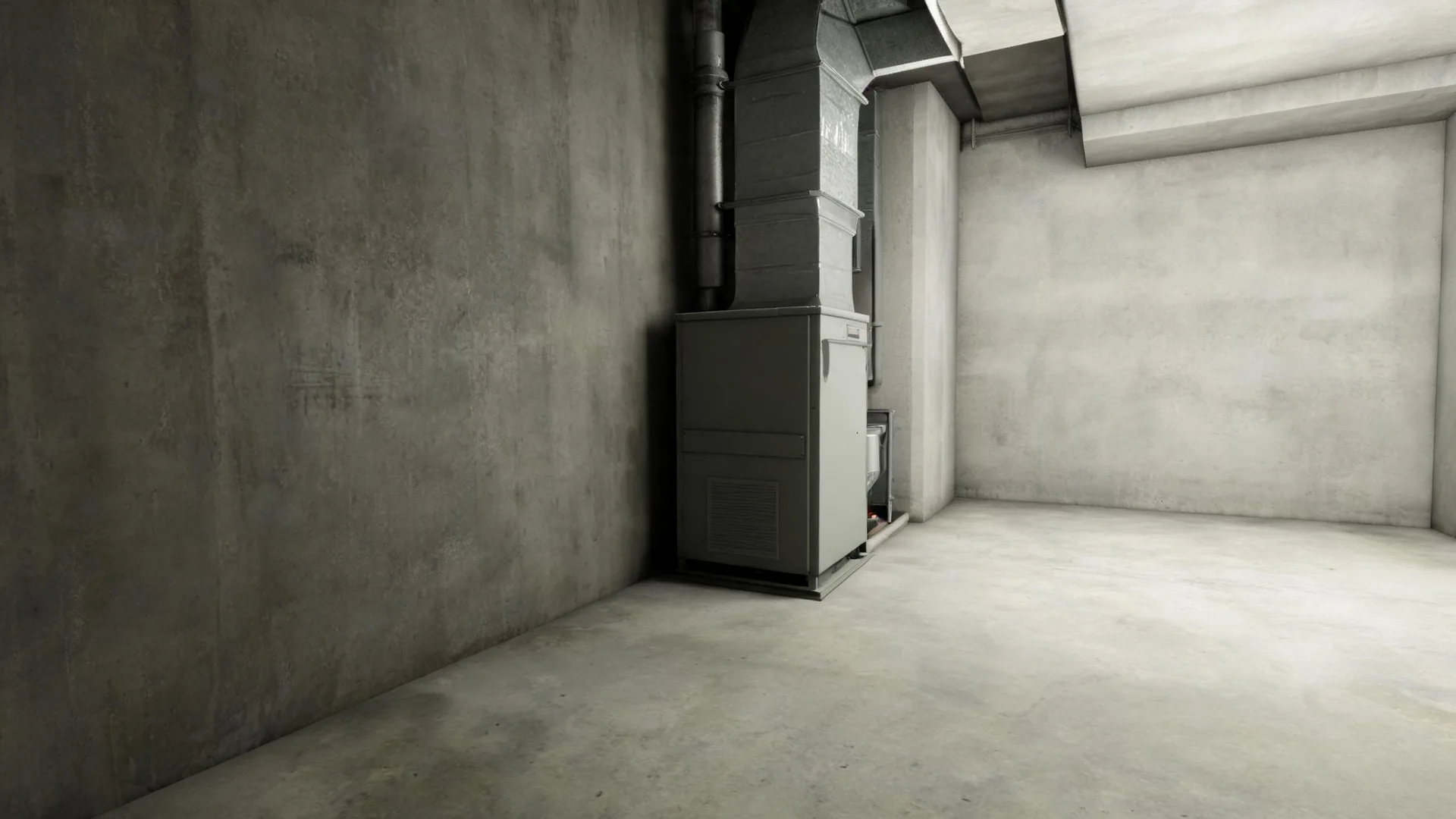
The burner, heat exchanger, and ignition system in a St. Mary's County furnace cycle hard every fall and keep cycling until spring. Homes in St. Mary's County, MD run heat about seven months a year, from October through April. A contractor quoting a repair here looks at those components before anything else, because the hours they log each year compound into cracks, scale, and igniter fatigue that a casual inspection can miss. If a heat exchanger is showing stress fractures, the season length explains why, and the repair scope follows from that finding.
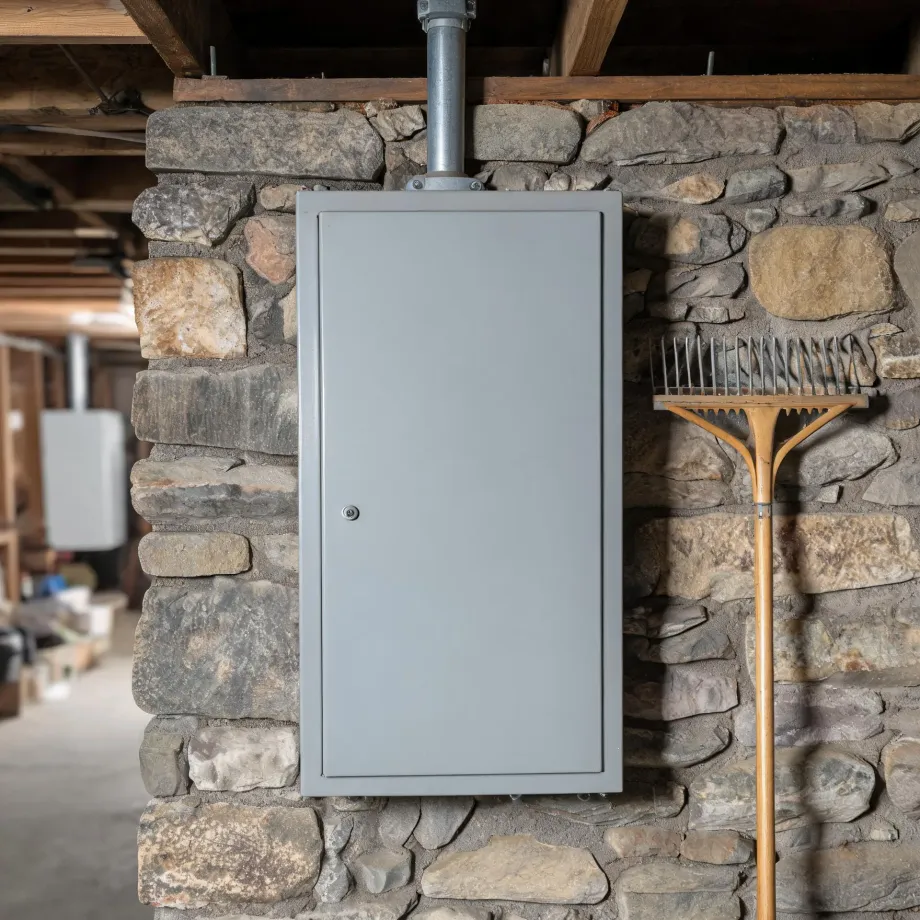
Furnaces in houses here have often outlasted the original equipment by a generation, which means a contractor opening a unit for repair is working inside a system assembled from different eras: the furnace itself, the ductwork around it, and the wiring serving it may all have different histories. Half the homes in St. Mary's County, Maryland were built in 1992 or earlier (2020-2024 ACS 5-year). That spread matters for parts. A heat exchanger or inducer motor in a furnace this county's housing stock typically houses may come from a manufacturer run that ended years ago, and sourcing it changes both the timeline and the cost of the repair before any labor is quoted.
The Parts of a Furnace a Contractor Checks First
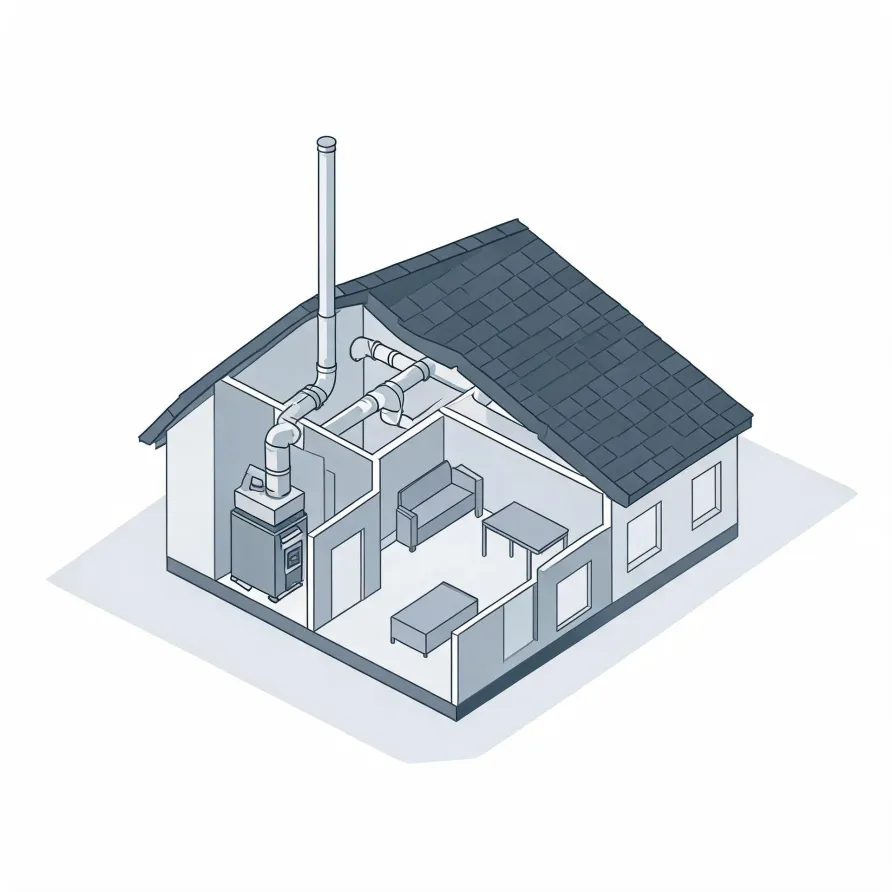
The furnace itself sits in a mechanical room, basement, or utility closet and is the piece a contractor goes to first. Inside it, the heat exchanger is the part most worth understanding: it separates combustion gases from the air your home breathes, and a crack or failure there is what shuts a system down for safety reasons. The burners, which fire inside that exchanger, are another early stop.
The blower motor sits within the furnace cabinet and pushes conditioned air out through the supply side of your ductwork. The flue or exhaust vent runs from the cabinet up and out of the house, carrying combustion byproducts away. The thermostat on the wall and the control board inside the cabinet are what tell every other part when and how to run, and both are common points of failure when the system behaves erratically.
The drawing shows a representative layout, and a licensed contractor determines which components apply and what condition they are in for your specific home.
Get matched in St. Mary's CountySt. Mary's County, by the record
192 severe weather events were recorded in St. Mary's County, Maryland between 2015 and 2024.
NOAA National Centers for Environmental Information, Storm Events Database, bulk CSV export, events 2015-01-01 through 2024-12-31.Half the homes in St. Mary's County, Maryland were built in 1992 or earlier (2020-2024 ACS 5-year).
U.S. Census Bureau, 2020-2024 American Community Survey 5-Year EstimatesSt. Mary's County, Maryland holds 46,385 housing units (2020-2024 ACS 5-year).
U.S. Census Bureau, 2020-2024 American Community Survey 5-Year EstimatesOwners occupy 73.2% of the occupied homes in St. Mary's County, Maryland (2020-2024 ACS 5-year).
U.S. Census Bureau, 2020-2024 American Community Survey 5-Year EstimatesCodes & Standards Covering Furnace Repair in St. Mary's County, Maryland5 sourced rules and standards
What HVAC Repair Looks Like in St. Mary's County
Non-weatherized gas furnaces manufactured on or after November 19, 2015 must reach 80.0 percent AFUE.
Non-weatherized oil-fired furnaces manufactured on or after November 19, 2015 must reach 83.0 percent AFUE.
Mobile home gas furnaces manufactured on or after November 19, 2015 must reach 80.0 percent AFUE.
Non-weatherized gas furnaces manufactured on or after December 18, 2028 must reach 95.0 percent AFUE, up from the 80.0 percent minimum that applies to units manufactured before that date.
Licensing Rules for HVAC Repair in St. Mary's County, Maryland
Maryland requires a state licence before an individual provides, or assists in providing, heating, ventilation, air-conditioning or refrigeration services.
Severe Weather Events in St. Mary's County
Extreme weather puts real strain on furnace components, and that strain compounds over time. How hard a furnace works through a given stretch of years is largely a function of what the local climate throws at it, which is why the record below matters for repair and service decisions in St. Mary's County.
192 severe weather events, 2015–2024. Source: NOAA National Centers for Environmental Information, Storm Events Database.