Tell us about the job
Takes about a minute. No obligation.
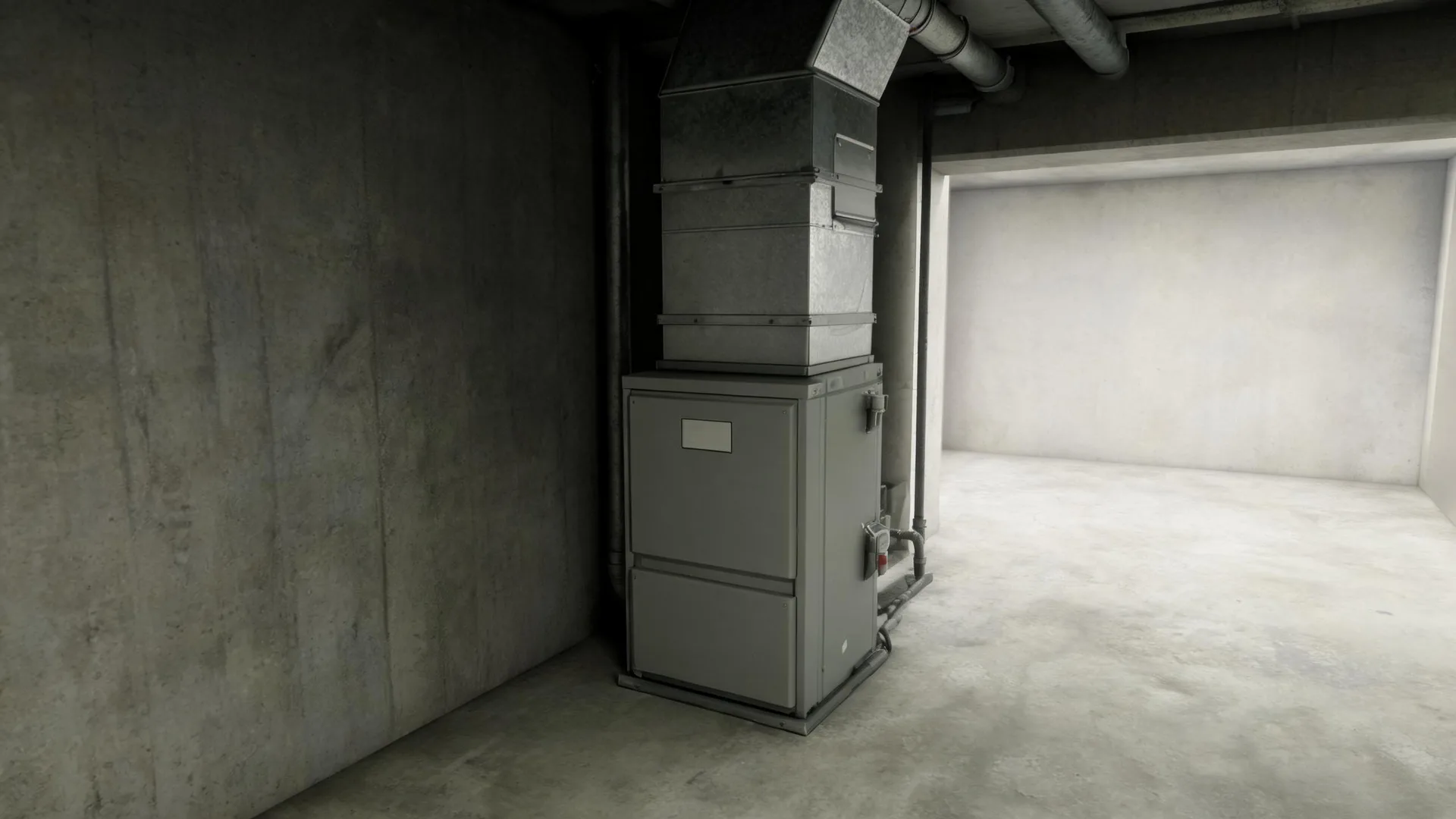
The burner and heat exchanger in a Harford County furnace cycle hard every fall through spring, and the ignition system fires up alongside them every time the thermostat calls. Homes in Harford County, MD run heat about seven months a year, from October through April. That kind of sustained cycling leaves its mark on the heat exchanger first. Cracks, corrosion along the seams, and igniter degradation are what a contractor finds when the call comes in, and those are the components they price before moving further into the unit.
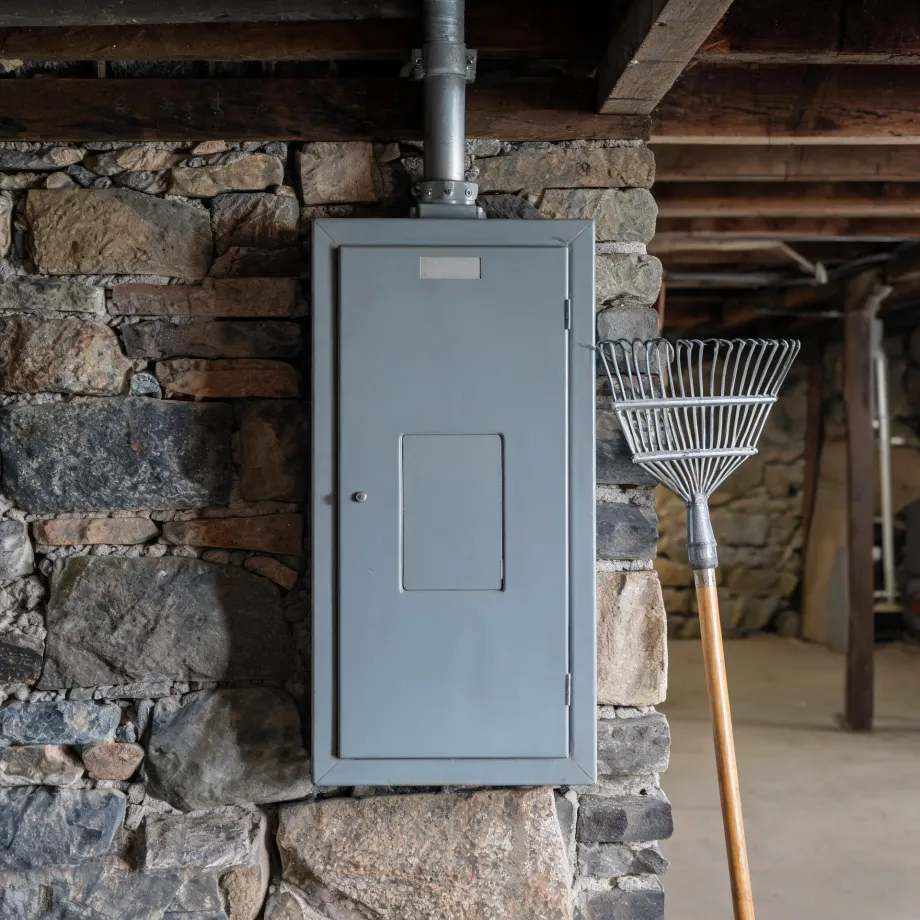
Half the homes in Harford County, Maryland were built in 1986 or earlier (2020-2024 ACS 5-year). A furnace that has run through that many heating seasons accumulates wear in specific places: the heat exchanger develops stress fractures along the fold seams, the burner ports clog or corrode in ways that vary from unit to unit, and the limit switches that protect the system age at their own rate. None of those conditions show up on the outside. A contractor opening the cabinet in a house from this part of the county's housing distribution is finding what that particular unit actually has, which sets the repair scope and the parts list.
The Parts of a Furnace a Contractor Checks First
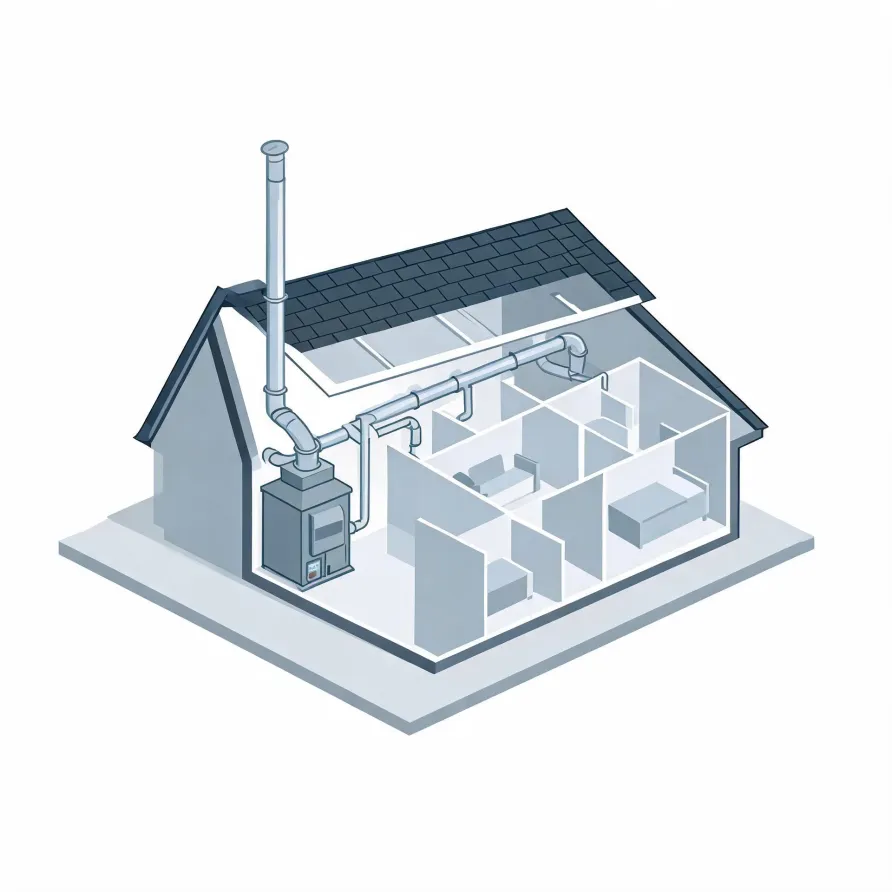
The furnace itself sits in the basement, utility room, or closet and is the piece a contractor goes to first. Inside it, the heat exchanger and burner assembly are the most common sources of a heating failure. A cracked heat exchanger or a burner that will not fire cleanly is what turns a cold house into a repair call.
The blower motor pushes conditioned air into the supply side of the duct system and draws return air back in. Alongside it, the flue or exhaust vent runs from the furnace to an exterior wall or through the roof, carrying combustion gases out of the house. The control board ties all of it together, and a fault there can read as a symptom in almost any other part.
The drawing shows a typical furnace layout, and a licensed contractor determines which components apply to your specific system and what work each one needs.
Get matched in Harford CountyHarford County, by the numbers
368 severe weather events were recorded in Harford County, Maryland between 2015 and 2024.
NOAA National Centers for Environmental Information, Storm Events Database, bulk CSV export, events 2015-01-01 through 2024-12-31.Half the homes in Harford County, Maryland were built in 1986 or earlier (2020-2024 ACS 5-year).
U.S. Census Bureau, 2020-2024 American Community Survey 5-Year EstimatesHarford County, Maryland holds 105,468 housing units (2020-2024 ACS 5-year).
U.S. Census Bureau, 2020-2024 American Community Survey 5-Year EstimatesOwners occupy 79.7% of the occupied homes in Harford County, Maryland (2020-2024 ACS 5-year).
U.S. Census Bureau, 2020-2024 American Community Survey 5-Year EstimatesCodes & Standards for Furnace Repair in Harford County, Maryland5 sourced rules & standards
What HVAC Repair Looks Like in Harford County
Non-weatherized gas furnaces manufactured on or after November 19, 2015 must reach 80.0 percent AFUE.
Non-weatherized oil-fired furnaces manufactured on or after November 19, 2015 must reach 83.0 percent AFUE.
Mobile home gas furnaces manufactured on or after November 19, 2015 must reach 80.0 percent AFUE.
Non-weatherized gas furnaces manufactured on or after December 18, 2028 must reach 95.0 percent AFUE, up from the 80.0 percent minimum that applies to units manufactured before that date.
Licensing Rules for HVAC Repair in Harford County, Maryland
Maryland requires a state licence before an individual provides, or assists in providing, heating, ventilation, air-conditioning or refrigeration services.
Severe Weather Events in Harford County
Harsh weather puts real hours on a furnace. What happens outside in Harford County shapes how hard the equipment inside has to work, and that workload accumulates.
368 severe weather events, 2015–2024. Source: NOAA National Centers for Environmental Information, Storm Events Database.