Tell us about the job
Takes about a minute. No obligation.
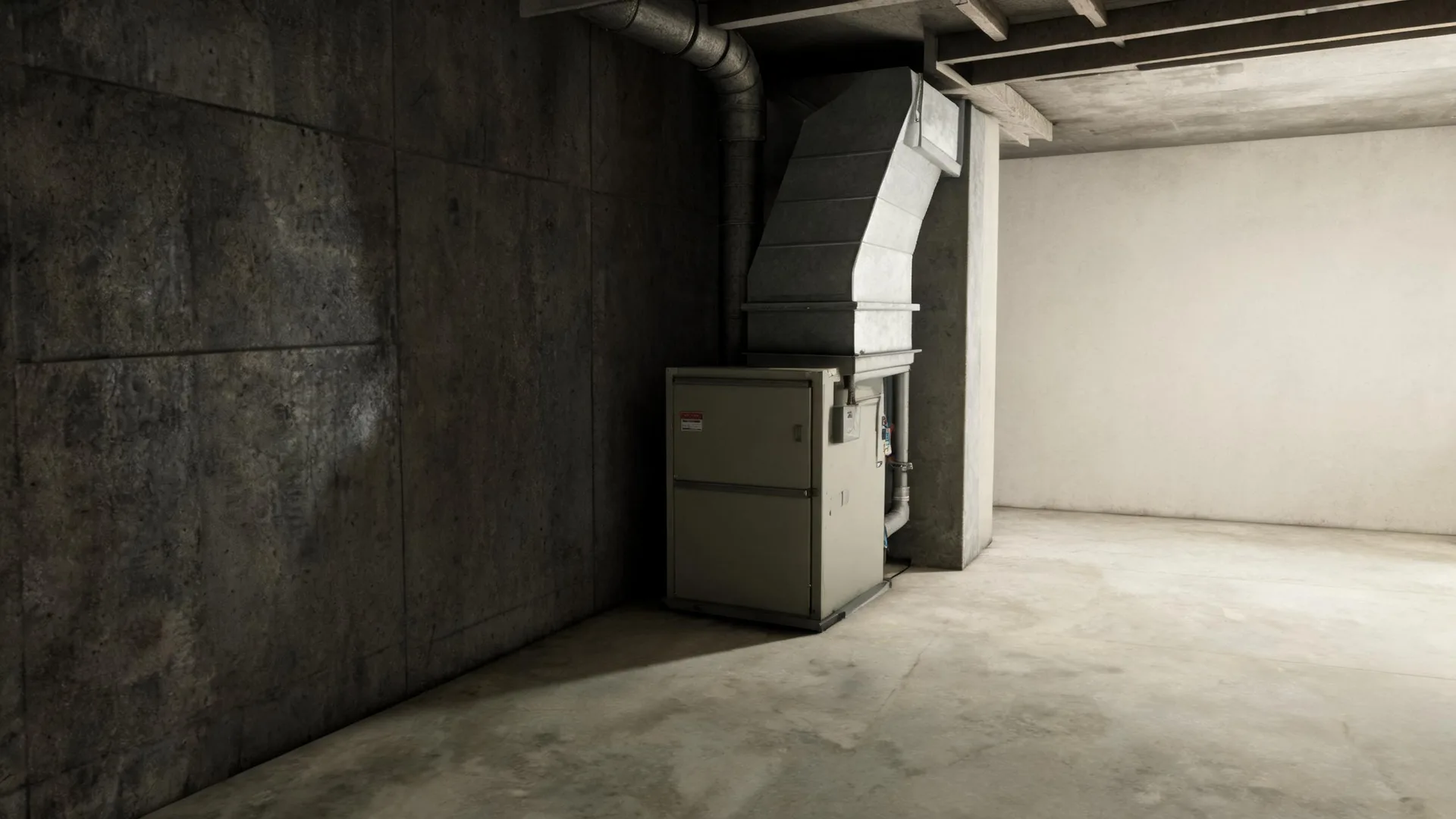
The burner and ignition system on a Queen Anne's County furnace accumulate wear steadily, cycling through cold months before standing idle through warm ones. Homes in Queen Anne's County, MD run heat about seven months a year, from October through April. A contractor quoting a furnace repair here looks at the igniter, the flame sensor, and the heat exchanger early, because those are the parts that absorb the load the season applies. Cracks in the heat exchanger and degraded igniters are what repeated cycling produces, and a diagnosis that skips them is incomplete before it starts.
Furnaces in houses like the ones that make up most of this county's stock have often been swapped in over the years, but the ductwork and wiring around them stayed. Half the homes in Queen Anne's County, Maryland were built in 1990 or earlier (2020-2024 ACS 5-year). That matters for repair work because what a contractor finds once a furnace is open frequently does not match what a supply house stocks for a current-generation unit. The part that failed may be available, or it may require sourcing from a specialty distributor, and that difference changes how long the repair takes and what it costs before anyone touches a wrench.
The Parts of a Furnace a Contractor Checks First
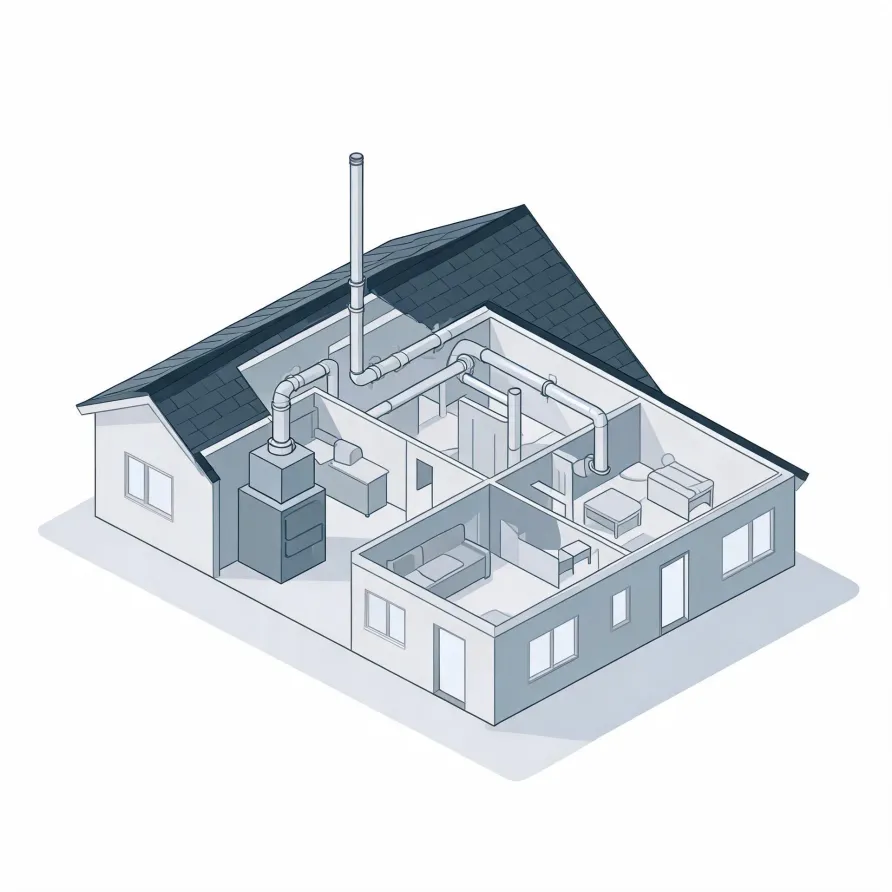
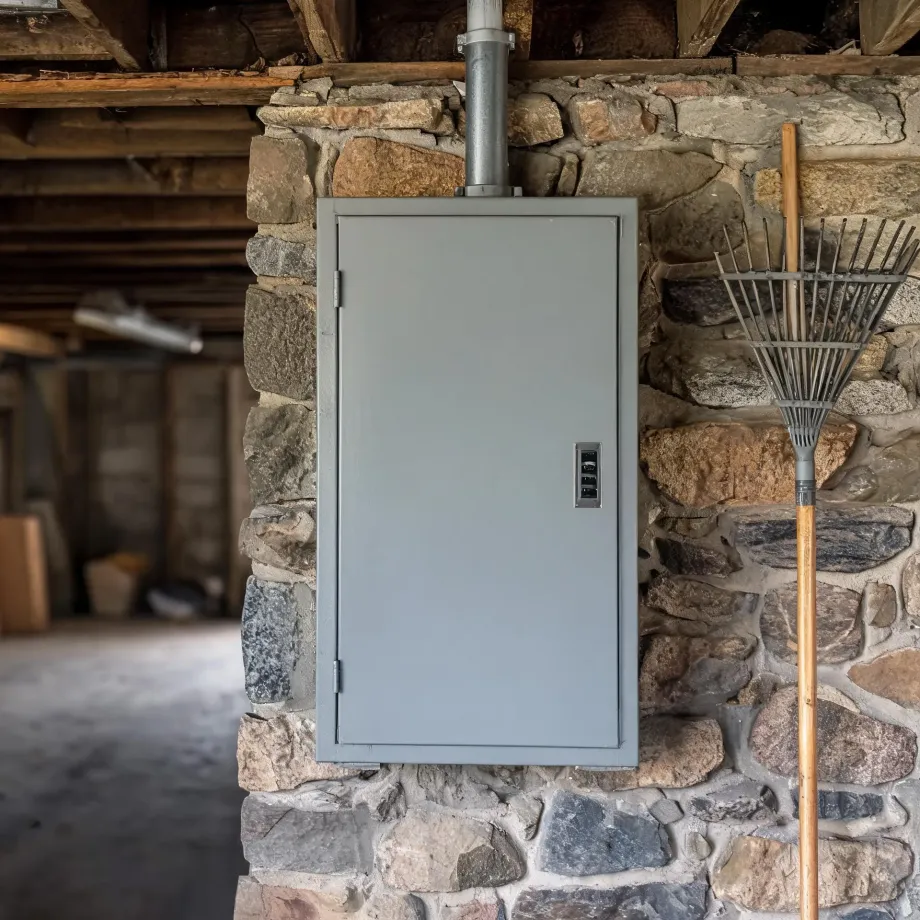
The furnace itself sits in a mechanical room, basement, or utility closet and is the piece a contractor goes to first. Inside it, the heat exchanger is the part that most often explains a heating failure or a carbon monoxide concern. The burners, igniter, and flame sensor all work together to start and sustain combustion, and any one of them can stop the system cold.
The blower motor moves conditioned air out of the furnace and into the house, and when it fails the furnace runs but nothing reaches the rooms. The flue pipe carries combustion gases outside, and the draft inducer motor pulls those gases through before each cycle begins. Both sit close to the furnace cabinet and both are on a contractor's checklist.
The drawing shows a typical furnace layout, and a licensed contractor determines which components apply to your specific home and situation.
Get matched in Queen Anne's CountyQueen Anne's County, by the record
132 severe weather events were recorded in Queen Anne's County, Maryland between 2015 and 2024.
NOAA National Centers for Environmental Information, Storm Events Database, bulk CSV export, events 2015-01-01 through 2024-12-31.Half the homes in Queen Anne's County, Maryland were built in 1990 or earlier (2020-2024 ACS 5-year).
U.S. Census Bureau, 2020-2024 American Community Survey 5-Year EstimatesQueen Anne's County, Maryland holds 22,038 housing units (2020-2024 ACS 5-year).
U.S. Census Bureau, 2020-2024 American Community Survey 5-Year EstimatesOwners occupy 82.9% of the occupied homes in Queen Anne's County, Maryland (2020-2024 ACS 5-year).
U.S. Census Bureau, 2020-2024 American Community Survey 5-Year EstimatesRules and Standards Governing Furnace Repair in Queen Anne's County, Maryland5 sourced rules and standards
What Happens During an HVAC Repair in Queen Anne's County
Non-weatherized gas furnaces manufactured on or after November 19, 2015 must reach 80.0 percent AFUE.
Non-weatherized oil-fired furnaces manufactured on or after November 19, 2015 must reach 83.0 percent AFUE.
Mobile home gas furnaces manufactured on or after November 19, 2015 must reach 80.0 percent AFUE.
Non-weatherized gas furnaces manufactured on or after December 18, 2028 must reach 95.0 percent AFUE, up from the 80.0 percent minimum that applies to units manufactured before that date.
Licensing Rules for HVAC Repair in Queen Anne's County, Maryland
Maryland requires a state licence before an individual provides, or assists in providing, heating, ventilation, air-conditioning or refrigeration services.
Severe Weather Events in Queen Anne's County
Weather puts a workload on heating equipment that steady indoor conditions never would. Every hard swing in outdoor conditions is a draw on a furnace, and how hard those swings hit Queen Anne's County shapes what local equipment has to handle over its lifetime.
132 severe weather events, 2015–2024. Source: NOAA National Centers for Environmental Information, Storm Events Database.