Tell us about the job
Takes about a minute. No obligation.
A furnace repair in Washington County starts with the parts that have been doing the real work. Homes in Washington County, MD run heat about seven months a year, from October through April. The burner, the heat exchanger, and the ignition system cycle every time the thermostat calls for heat, and they cycle repeatedly across a long stretch of cold months. Cracks in a heat exchanger or a worn igniter show up in that kind of accumulated use. A contractor diagnosing a furnace here checks those components before touching anything else, because that is where the load lands.
Furnace repairs here start with what is inside the unit once it is open, and that is rarely a straightforward read. Half the homes in Washington County, Maryland were built in 1974 or earlier (2020-2024 ACS 5-year). A system installed into ductwork and wiring put in for something earlier runs under conditions that leave their mark on the heat exchanger, the inducer, and the burner assembly in ways that differ house to house. A part that looks like a standard replacement on the outside may have been working against pressures or drafting conditions the original builder never anticipated. That is what shapes the repair scope, and what a contractor has to confirm before pricing the job.
The Parts of a Furnace a Contractor Checks First
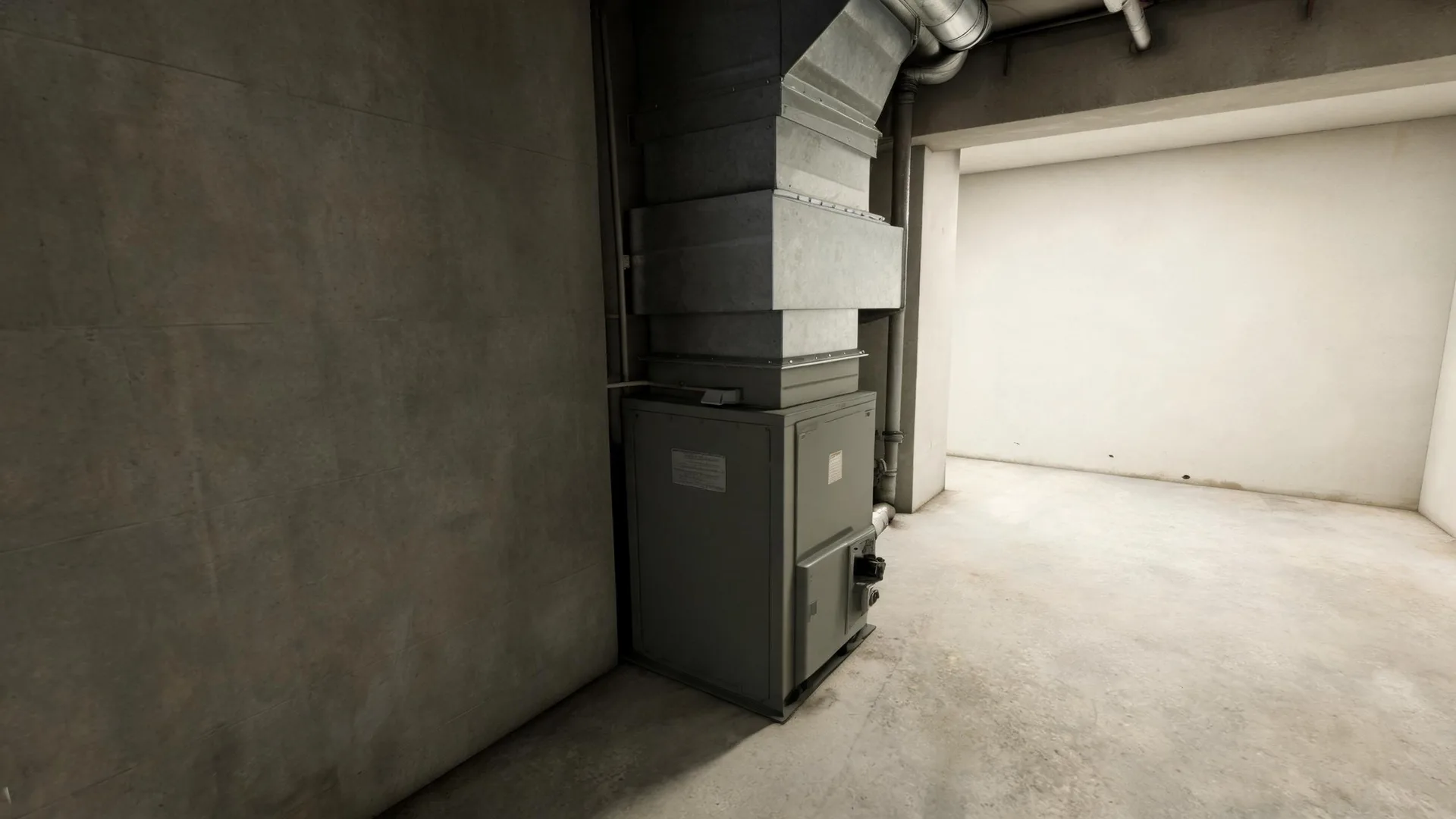
The furnace itself sits in the basement, utility room, or crawlspace and is the piece a contractor goes to first. Inside it, the heat exchanger and burner assembly are the most common sources of trouble. A cracked heat exchanger, a dirty or failed burner, and a faulty igniter each produce distinct symptoms, and a contractor reads those symptoms to know where to start.
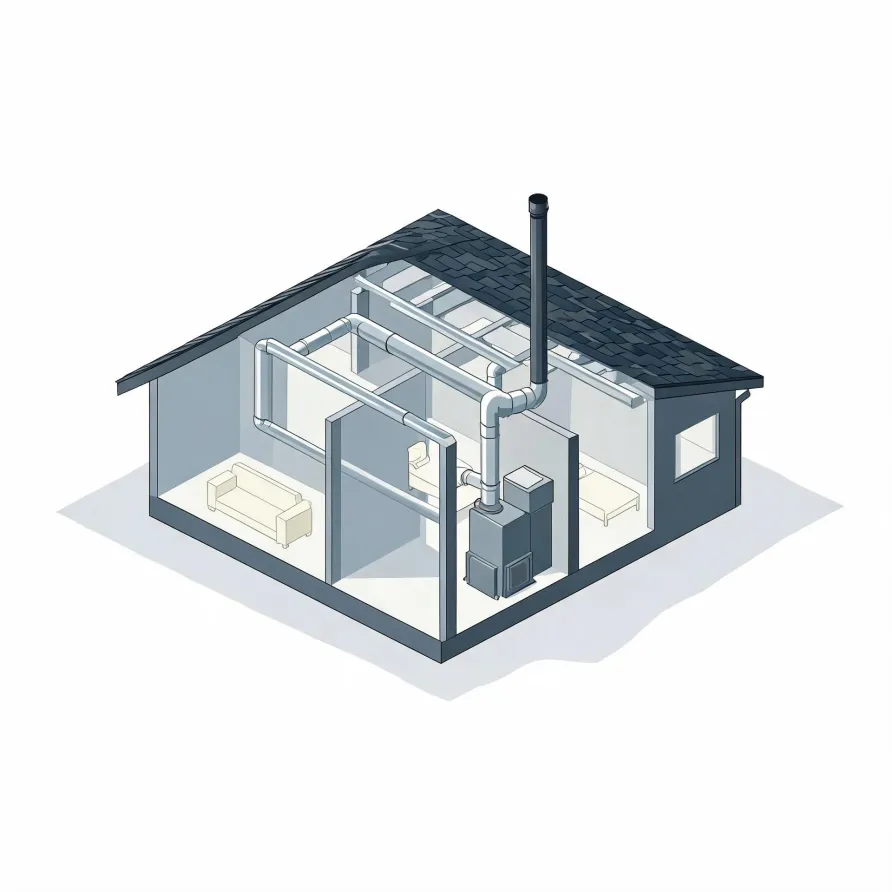
The blower motor and its fan wheel sit inside the furnace cabinet and push conditioned air out through the supply side of your duct system. The flue pipe runs from the top of the furnace to an exterior vent and carries combustion gases out of the house. The thermostat on the wall is the last piece a contractor checks when the system is not responding at all.
The drawing shows the general layout of a furnace system, and a licensed contractor determines which components apply to your particular house.
Get matched in Washington CountyWashington County, Maryland, by the numbers
201 severe weather events were recorded in Washington County, Maryland between 2015 and 2024.
NOAA National Centers for Environmental Information, Storm Events Database, bulk CSV export, events 2015-01-01 through 2024-12-31.Half the homes in Washington County, Maryland were built in 1974 or earlier (2020-2024 ACS 5-year).
U.S. Census Bureau, 2020-2024 American Community Survey 5-Year EstimatesWashington County, Maryland holds 64,145 housing units (2020-2024 ACS 5-year).
U.S. Census Bureau, 2020-2024 American Community Survey 5-Year EstimatesOwners occupy 66.8% of the occupied homes in Washington County, Maryland (2020-2024 ACS 5-year).
U.S. Census Bureau, 2020-2024 American Community Survey 5-Year EstimatesCodes & Standards Covering Furnace Repair in Washington County, Maryland5 sourced rules and standards
What Happens When a Contractor Comes Out
Non-weatherized gas furnaces manufactured on or after November 19, 2015 must reach 80.0 percent AFUE.
Non-weatherized oil-fired furnaces manufactured on or after November 19, 2015 must reach 83.0 percent AFUE.
Mobile home gas furnaces manufactured on or after November 19, 2015 must reach 80.0 percent AFUE.
Non-weatherized gas furnaces manufactured on or after December 18, 2028 must reach 95.0 percent AFUE, up from the 80.0 percent minimum that applies to units manufactured before that date.
Licensing and Legal Requirements in Washington County, Maryland
Maryland requires a state licence before an individual provides, or assists in providing, heating, ventilation, air-conditioning or refrigeration services.
Severe Weather Events in Washington County
Extreme weather puts real stress on heating equipment. How hard a furnace works over its life is partly a function of what the local climate demands of it, and that makes this a Washington County question.
201 severe weather events, 2015–2024. Source: NOAA National Centers for Environmental Information, Storm Events Database.