Tell us about the job
Takes about a minute. No obligation.
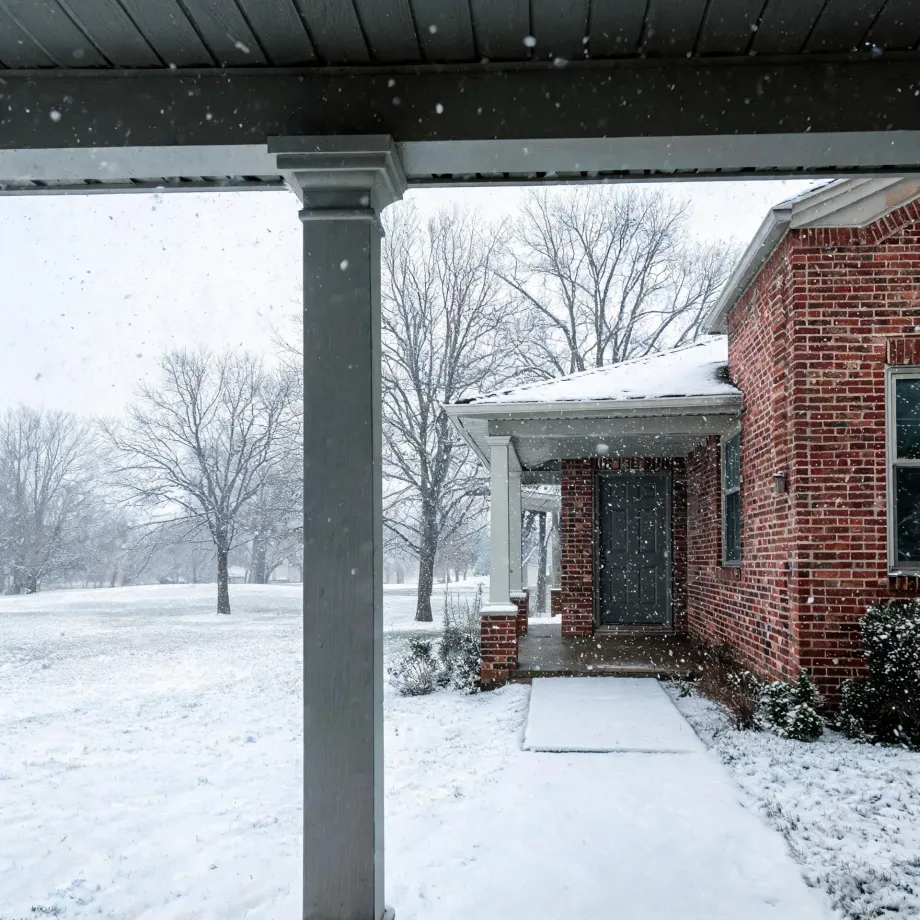
Sizing a furnace here is not a generic calculation. Homes in Allegany County, MD run heat about eight months a year, from October through May. The burner, heat exchanger, and ignition system carry that load across nearly the full calendar year, and a system that is undersized for the house runs longer cycles, which accelerates wear on those parts specifically. A contractor quoting an installation in this county has to establish the actual heat load of the structure before settling on equipment capacity, because a unit that fits the price point but not the load will show the mismatch in the heat exchanger before most homeowners expect it.
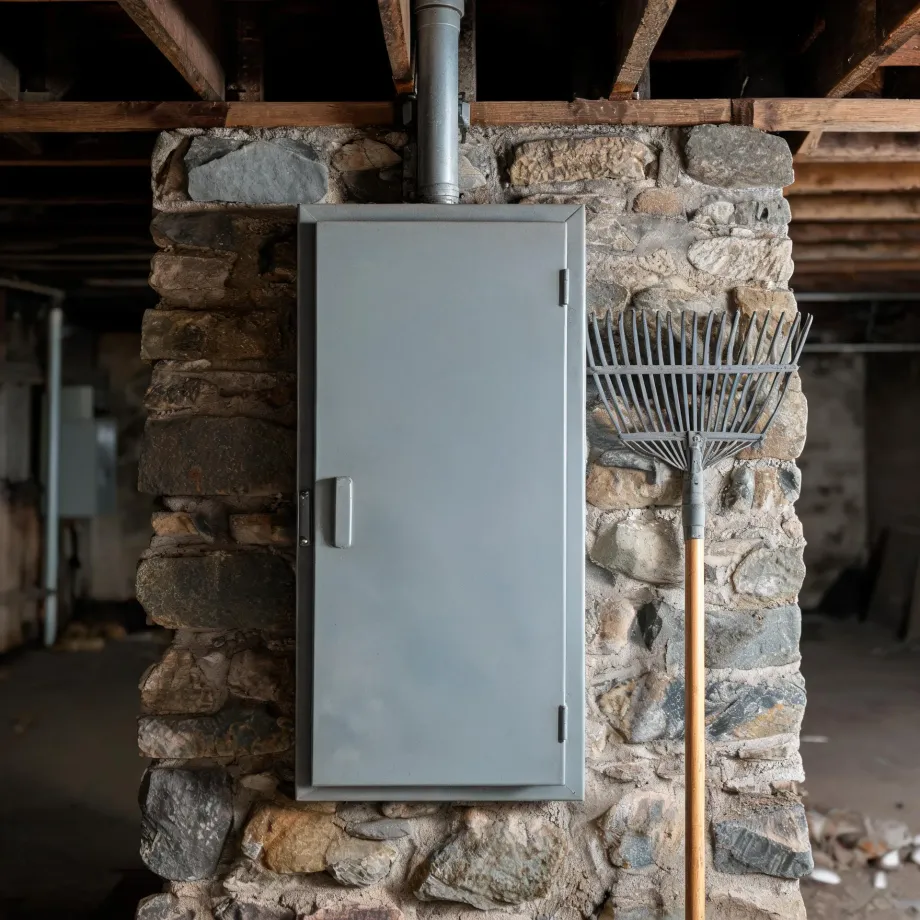
Ductwork laid down for a coal or oil furnace was not sized for the airflow a modern gas system needs, and in much of Allegany County that older ductwork is still in the walls. Half the homes in Allegany County, Maryland were built in 1959 or earlier (2020-2024 ACS 5-year). A contractor quoting a furnace installation here opens the job by tracing what is already in the house: trunk sizes, run lengths, whether the existing distribution can carry the new equipment without creating pressure problems on every branch. That audit shapes the quote. A house whose ductwork passes it gets a straightforward swap; one that does not gets a different scope entirely before the new furnace ever arrives.
What Gets Installed With a New Furnace
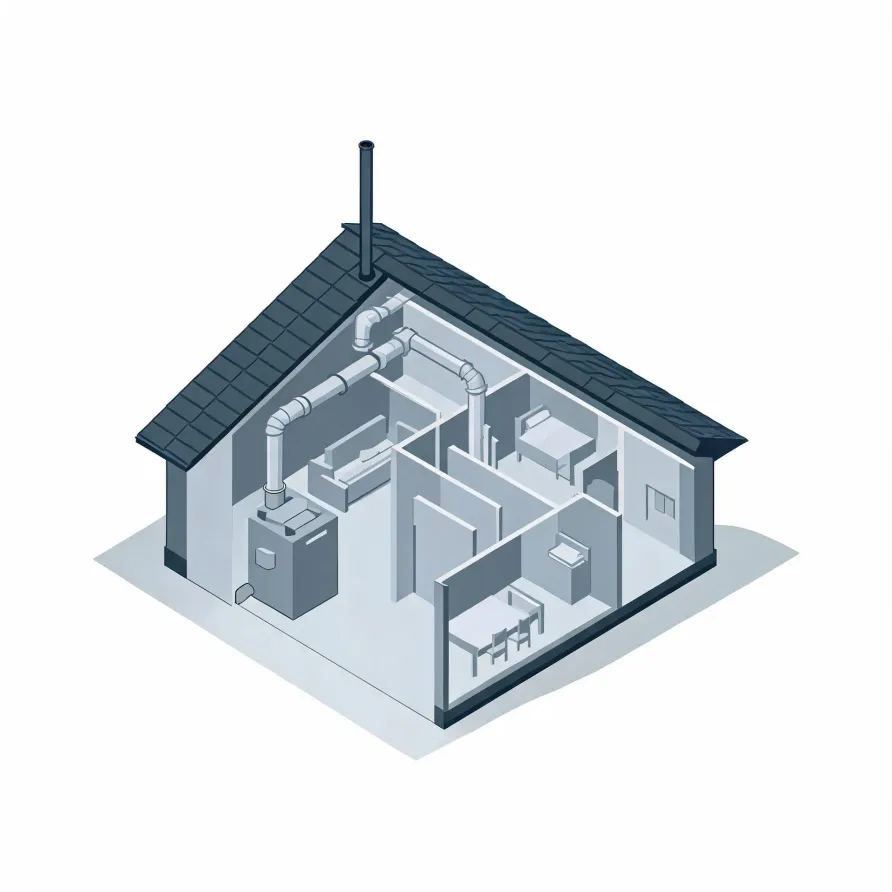
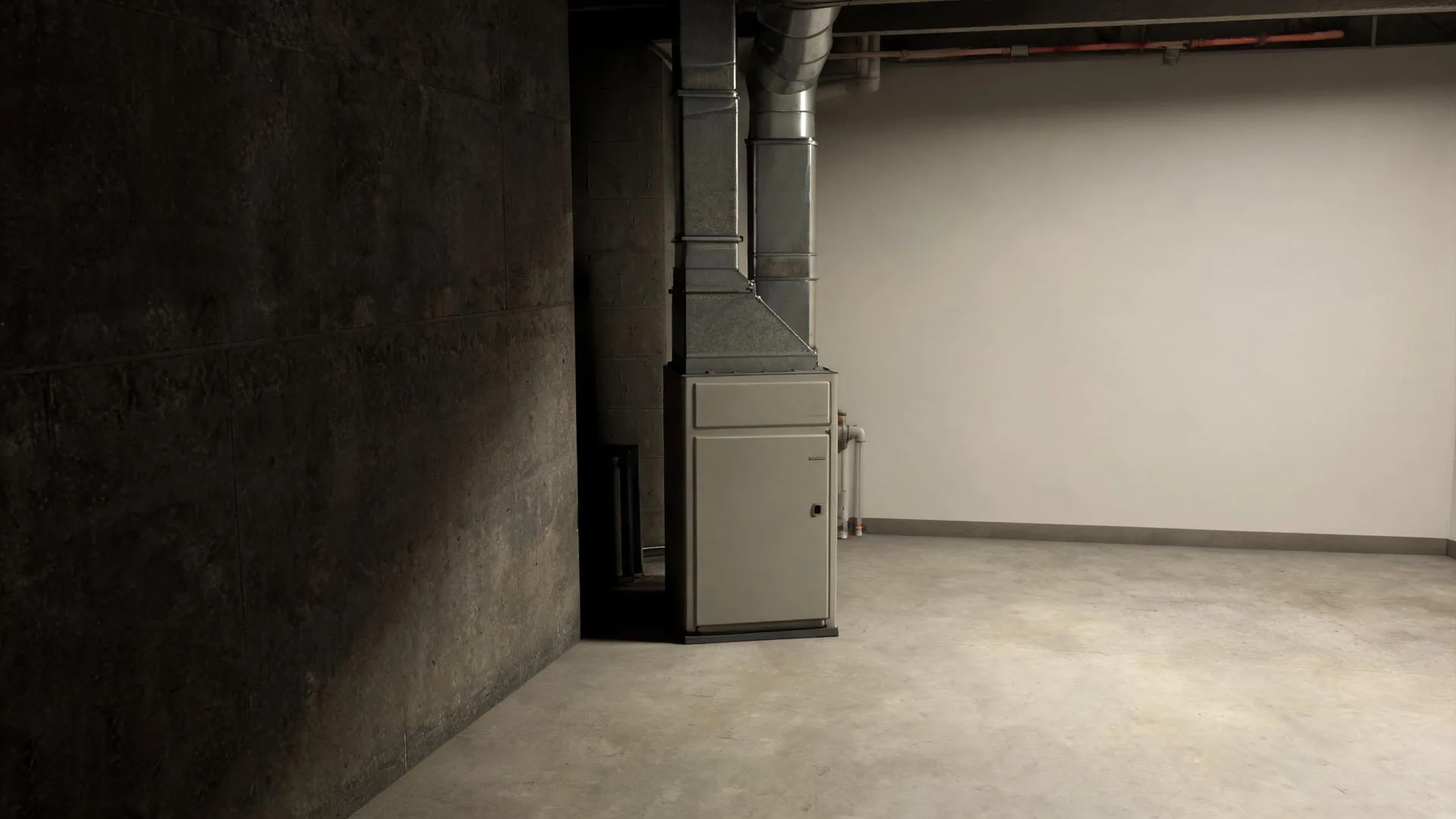
The furnace itself sits in a mechanical room, basement, or utility closet and is the central piece of the installation. A licensed contractor mounts the cabinet, connects it to the gas supply, and ties it into the flue so combustion gases exhaust safely out of the house. The air handler, if separate, goes in the same general area and moves conditioned air into the duct system.
The thermostat goes on an interior wall where it can read the actual temperature of the living space and signal the furnace to fire. Alongside it, a new installation includes the flue pipe or venting assembly that runs from the furnace cabinet to an exterior termination point, and a condensate drain line on high-efficiency units that removes water produced during operation.
The drawing shows the typical layout of these components, and a licensed contractor determines exactly what applies to this house based on its configuration and existing infrastructure.
Get matched in Allegany CountyAllegany County, by the numbers
169 severe weather events were recorded in Allegany County, Maryland between 2015 and 2024.
NOAA National Centers for Environmental Information, Storm Events Database, bulk CSV export, events 2015-01-01 through 2024-12-31.Half the homes in Allegany County, Maryland were built in 1959 or earlier (2020-2024 ACS 5-year).
U.S. Census Bureau, 2020-2024 American Community Survey 5-Year EstimatesAllegany County, Maryland holds 32,720 housing units (2020-2024 ACS 5-year).
U.S. Census Bureau, 2020-2024 American Community Survey 5-Year EstimatesOwners occupy 70.7% of the occupied homes in Allegany County, Maryland (2020-2024 ACS 5-year).
U.S. Census Bureau, 2020-2024 American Community Survey 5-Year EstimatesFurnace Installation Rules for Allegany County, Maryland5 codes & standards
What the installation actually looks like
Non-weatherized gas furnaces manufactured on or after November 19, 2015 must reach 80.0 percent AFUE.
Non-weatherized oil-fired furnaces manufactured on or after November 19, 2015 must reach 83.0 percent AFUE.
Mobile home gas furnaces manufactured on or after November 19, 2015 must reach 80.0 percent AFUE.
Non-weatherized gas furnaces manufactured on or after December 18, 2028 must reach 95.0 percent AFUE, up from the 80.0 percent minimum that applies to units manufactured before that date.
Licensing and Legal Requirements in Allegany County, Maryland
Maryland requires a state licence before an individual provides, or assists in providing, heating, ventilation, air-conditioning or refrigeration services.
Severe Weather Events in Allegany County
Allegany County's climate puts real pressure on heating equipment, and that pressure is not evenly spread across years. A furnace sized and installed for local conditions handles the swings that a generic spec misses.
169 severe weather events, 2015–2024. Source: NOAA National Centers for Environmental Information, Storm Events Database.